Society
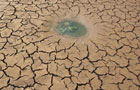
Yunnan braces for the worst drought in a century
By LIANG CHAO (chinadaily.com.cn)
Updated: 2010-03-29 13:22
 |
Large Medium Small |
Zhanyi, Yunnan province – Gao Dekun and his wife are busy preparing rice paddy for cultivating seedlings with water they took from a nearby stream to survive the worst drought to hit southwest China's Yunnan province since last August.
Gao, 48, a farmer in Shiyang Village of Zhangyi county, had nothing to harvest in the wheat he had planned in his dry farmland due to the drought.
"I lost all the crops on the hillside land for having not seen a drop of rain since last summer," he sighed, "now, I have to cultivate seeds on the only paddy field we had for the sowing season by the rainy season around mid-May, if rain arrives by then."
When it rains, the seedlings will be transplanted to farmland.


Millions of other farmers in Yunnan are sharing the same worries because of the catastrophic drought that has wiped out their summer harvest for wheat, leguminous plants and threatened the upcoming spring ploughing season. .
If the situation worsens, one alternative the authorities have planned to help farmers is to organize work outside the area as migrant workers, according to Gao Shihua, head of Qujing's agriculture bureau.
His bureau will offer free skills training for 200,000 farmers with half of them hopefully able to work outside the area to recoup the income lost due to the lack of water. .
The drought has hit Qujing, a leading grain producer for Yunnan and a production base growing and processing quality tobacco for the country, since last July, leaving nothing to harvest in 99 percent of its planned crops. Half of its 6.16 million residents are affected with more than 1.3 million of them plunged into a worsening drinking water shortage, despite the consequent losses it had in other sectors, according to Rao Wei, vice-mayor of Qujing.
"Worst of all, if the dry spell goes on for about another 60 days as weather forecast predict, we have to prepare well for the worst to come by then and prevent it from causing further havoc for the people and local economy, particularly farming," he said.
With no choices ahead, authorities and people are taking action to brace themselves for the ongoing dry spell by consolidating their existing water conservancy projects with more new ones planed or built.
While the authorities have earmarked up to 480 million yuan ($72 million) for renovating and building water supply reservoirs, irrigation wells and water cellars, farmers throughout Qujing have started cultivating seedlings of corn, potato and tobacco with various technologies adopted particularly water-saving irrigation.
According a plan unveiled over the week, 25 key, medium and small water source projects, each to hold 25 cubic meters of water, will be built throughout Qujing to improve its farming irrigation securing water for one million locals in desperate need.
By the end of April, up to 7,500 wells are scheduled to be dug by with 1,000 other pumping wells to be drilled for farming.
In Dapo, a township of Zhanyi, work for seven emergency pumping wells with the deepest one reaching 160 meters have been under way for months with one already put into operation to supply drinking water for some 6,000 residents living nearby.
Pointing at the operating well, Li Zhiwei, the Party secretary of the town, said "each of the wells cost about 300,000 yuan with half of the money we raised and the remaining paid by subsidies from higher authorities."
The rest of the wells will be completed soon with water from them linked with the town's existing water supply network for both the locals' drinking water supply and spring sowing, he said.
To securing the basic water supply for the sowing, authorities in the Xihe Reservoir, the key water supplier for Qujing's 550,000 urban residents and 290,000 mu (19,300 hectares) of farmland and its key industries downstream, had to cut down its daily water supply ration by 40 percent to support the faming in May.
"We only had 6.7 million cubic meters of water, or less than half we had in the previous year, stored this year for the Qujing Irrigation area, the largest of its kind in Yunnan, due to the drought," Wang Ziyun, head of Qujing's water bureau.
"With the supply ration, the reservoir can only supply water for 48 days from now on. Without rainfall in May, the season for the water we had will run out of use for transplanting rice seedlings in the irrigation zone," he said.
"To mitigate the damages, the government must make full use of existing water conservancy projects and call on farmers to prepare their cropland ready for the spring sowing around the mid-May in the hope of recouping the losses from the catastrophe, having corns and other cash crops sowed on time with rainfall we have longed for so much by then," he said.
"That's what we are worried about," Rao said, "we need more pumps for taking water in newly found water sources in the days following and to work out measures and counter-measures for the worst to come."
"As a traditional rain-fed farming area in Yunnan, one of the most important lessons we learned from the drought is to bring our agriculture fully into irrigation," Peng Zhineng, head of Qujing's water bureau.
Echoing him, the mayor said that's the only way out for us to secure our farming and other related sectors under such a situation "because only by relying on well operating water projects can we ensure drinking water supply for millions of people with our agriculture sustained."