Economy
Chinese tourists flock to Japan, boost economy
(Agencies)
Updated: 2010-07-05 08:59
 |
Large Medium Small |
|
|
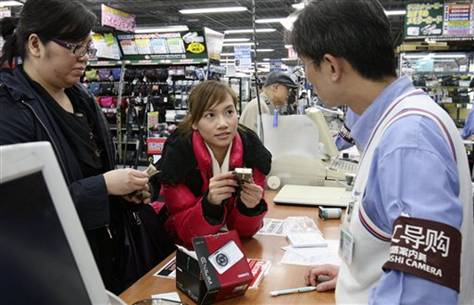
TOKYO?-- Snapping up four Japanese luxury Seiko watches, a 36-year-old Chinese tourist plunks down $4,500 in cash at a glitzy store in downtown Tokyo.
"One is for me, and the other is for my father. The rest are for my friends," says Li Jun, a computer businessman from Shanghai.
| ||||


"We want to buy Japanese products because they are known for very good quality," Li says. "We are here for shopping, not for tourist activities."
For years, Japanese auto and electronics companies have been expanding in China as its economy boomed to offset slow growth at home.
But now, Japan's languishing economy is getting a lift from hundreds of thousands of Chinese tourists who are eager to flaunt their newfound wealth by purchasing brand name goods, from Canon digital cameras to Shiseido cosmetics.
Last year, a record 481,696 Chinese tourists visited Japan, up nearly 20 percent from 2007, according to the Japan National Tourism Organization. While it's difficult to measure the precise impact of Chinese tourist spending, it is warmly welcomed by Japan's struggling retailers.
"Chinese are the saviors for us. I've never seen any foreign tourists spend as much as Chinese," says Takeshi Araki, a salesman at electronics retailer Yodobashi Camera Co. Ltd. in Tokyo's bustling Akihabara electronics district, where thousands of neon signs blink and stores blast songs from outdoor speakers.
As Japan's population ages and declines, the world's No. 2 economy will become increasingly dependent on such consumer spending from those who live outside the country?-- and Tokyo knows it.
Japan will ease tourist visa restrictions on July 1 for mainland Chinese citizens, hoping to draw more visitors?-- and their big wallets.
"The Chinese economy is booming, and China's demand for overseas travel, especially among wealthy people, is about to explode," says Kouichi Ueno, chief official of the international tourism promotion division at the government-run Japan Tourism Agency.
Thanks to years of rapid growth, China now has the world's fourth largest population of millionaires after the United States, Japan and Germany, according to a Merrill Lynch Wealth Management/Capgemini survey.
To cash in on China's rising wealth, Tokyo will start to issue tourist visas to Chinese who hold gold cards?-- credit cards granted to those above a certain income level with good credit histories?-- or who earn more than 60,000 yuan ($8,800) annually.
That's down sharply from a previous income requirement of 250,000 yuan ($37,000) per year, a threshold that apparently was imposed to keep low-income earners from staying on and becoming illegal aliens.
The revised income requirement is still well above the average income for a Chinese city dweller?-- 19,000 yuan ($2,800) last year.
For Chinese tourists, shopping is the most popular activity while in Japan. Zhang Qin, a 31-year-old tourist from Beijing, says the No. 1 appeal of Japanese products is their perceived superior quality.
She bought four Japanese digital cameras worth 560,000 yen ($6,300) at Yodobashi Camera. While similar products can be purchased in China, Zhang says she is wary of fakes.
She says she hasn't visited any tourist attractions during her five-day trip to Tokyo. "I am too busy with shopping," Zhang says.
Tokyo's upscale Ginza shopping district is getting a boost from the influx of Chinese shoppers, too.
"Chinese people don't go window-shopping in Ginza. They are in Ginza to buy, and they go for brand-name products like Burberry and Japanese cosmetic maker Shiseido," says Masatoshi Nitta, manager at the sales division at the Ginza branch of Mitsukoshi department store, one of Japan's most respected brands.
To encourage Chinese shoppers, Mitsukoshi became the first Japanese department store to accept the popular Chinese debit card known as China Union Pay.
The card is also used to withdraw money from Japanese ATMs. The value of transactions by the Chinese debit card in Japan soared to 20 billion yen in 2009 from 2.7 billion yen in 2007, according to a Mitsui Sumitomo Card survey.
A group of Japanese companies promoting Chinese travel here estimates spending by Chinese tourists will jump nearly fourfold to 430 billion yen by 2012 from 120 billion yen in 2008.
Eyeing soaring growth from China, Ueno from the Japan Tourism Agency says the government should create further incentives to encourage Chinese travelers to return repeatedly to Japan.
"We want Chinese tourists to be curious about Japan. We want them to go beyond Tokyo and spend money. This is just a beginning," he says.