Profiles
Youths learn ethics in summer
(China Daily)
Updated: 2010-07-29 07:13
 |
Large Medium Small |
WUHAN - It is summer vacation time for most students, but Huang Guiqin, a retired hotel manager in Hubei's capital city Wuhan, believes this is the best time for young children - along with their parents - to learn, not about knowledge that would ensure them future financial success, but the essential etiquette tips and mannerisms that will help them become better people.
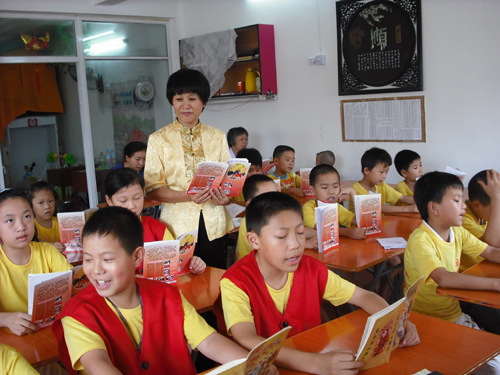 Huang Guiqin, a retired hotel manager, teaches kids and their parents Chinese traditions, morals and etiquette in Wuhan, capital of Hubei province. [Provided to China Daily]? |
Huang, 52, has been running a series of free local seminars known as "Community Loyalty and Filial Love Classes" for willing parents and their children on Chinese traditions, morals and etiquette over the past three years.
Doubts about Huang's ability to teach the class have never been in short supply, especially considering that she has no formal education and even speaks Mandarin with a heavy local accent.
But the class has nevertheless grown from less than 50 students in its first year to 200 this summer.
"Residents in the community welcome the class," Huang said.
A clearly warm-hearted woman, Huang said she has been observing the society during her first years after retirement and found many problems.
"Why do people produce poisonous food? Why do some children kill parents for money? Why do we see increasing juvenile delinquencies?" Huang asked. "Because our society too often define peoples by the money they make, and parents usually value kids only by scores they earn in exams."
Too narrow a definition for success has allowed a younger generation to ignore the importance of being a good person, such as taking responsibilities, respecting others and loving people, Huang added.
At first, Huang thought of providing Chinese classical teachings to restore understandings of traditional values.
"Classical books such as Dizigui (Standards of being a good child and student) are the best texts for this purpose," she said, adding that loyalty and filial love are essential to smooth relationships and are pillars for one's moral development.
She organized children to clean the house of a 98-year-old widow who lives alone to show the children how to help others, and asked her students to "offer the best dish to grandparents" as a practice of filial love.
For each student, Huang keeps a profile listing as many as 40 essential qualities of a good student and child. Children are required to check themselves against the list every day, and ask for their parents' signature. The list gets as detailed as "cherishing parents' money and not wasting money on unnecessary snacks".
But many parents disagree, saying her methods promote subservience at the expense of creativity and freedom. One parent who refused to send her boy to Huang's class said the "essential qualities" on her checklist were "too rigid and old-fashioned".
Gradually, Huang has come to appreciate that the best teachers for children are their own parents or grandparents. Hence she has developed many programs for children to bring along their parents and grandparents this summer.
"I notice that many young parents seldom spend time with their only child for reading," Huang said. "They tend to oversupply their only child with physical comfort rather than intellectual benefits or moral teaching."
Huang hopes her class will become a showroom where parents and grandparents learn how to maintain a healthy family environment for their children.
She has created programs, such as Chinese chess, calligraphy and Chinese paintings, for pre-students left behind by their busy parents and school children left alone during the summer vacation or after school.
"Quite often I read news saying how children and adolescents spend their after-school time improperly, going to Internet cafes to play computer games or watch pornography," Huang said. "I want to make the class a learning place at the door to kids and parents who want to live in harmony."
Her ambition is beyond her residential community.
"I have students who live far away from my residential community," Huang said. "What if their own residential community runs a similar program? They will not have to bother traveling so far."
Huang is considering registering her class as a non-profit so that similar programs can be available in multiple communities in the city. She has affiliated the class with a youth volunteer association and attracted nearly 30 volunteers to teach, 25 of which are college students with proper education and training background.
Over the past three years, Huang has spent about 200,000 yuan ($29,500) on her community class, largely from her savings and pensions. "The money is worth more when spent on the class," she said.
"It takes a considerable sum of money and it takes time," Huang said. "Still, I want to have my class registered in the future when conditions are right."
 主站蜘蛛池模板:
蕲春县|
新乡县|
剑河县|
洱源县|
万载县|
承德市|
临朐县|
抚松县|
墨竹工卡县|
行唐县|
洛隆县|
莆田市|
沙雅县|
乡宁县|
攀枝花市|
丰县|
湾仔区|
宁南县|
绍兴市|
且末县|
丰顺县|
友谊县|
新建县|
湖北省|
凤阳县|
湄潭县|
深水埗区|
亳州市|
栾川县|
兴宁市|
商洛市|
乃东县|
冷水江市|
南靖县|
余姚市|
新营市|
耒阳市|
会昌县|
普安县|
杭锦后旗|
凯里市|
赤城县|
霍邱县|
铜梁县|
两当县|
丰原市|
阜城县|
额济纳旗|
连山|
崇信县|
河源市|
偏关县|
铜川市|
清流县|
澎湖县|
夹江县|
伊金霍洛旗|
天祝|
抚顺县|
衡东县|
昌宁县|
会泽县|
涪陵区|
淮阳县|
万载县|
宁陵县|
金阳县|
临泉县|
靖宇县|
宁化县|
溧阳市|
都兰县|
桐庐县|
剑川县|
宝山区|
南丹县|
阜城县|
赣州市|
绵竹市|
林西县|
三明市|
丰城市|
主站蜘蛛池模板:
蕲春县|
新乡县|
剑河县|
洱源县|
万载县|
承德市|
临朐县|
抚松县|
墨竹工卡县|
行唐县|
洛隆县|
莆田市|
沙雅县|
乡宁县|
攀枝花市|
丰县|
湾仔区|
宁南县|
绍兴市|
且末县|
丰顺县|
友谊县|
新建县|
湖北省|
凤阳县|
湄潭县|
深水埗区|
亳州市|
栾川县|
兴宁市|
商洛市|
乃东县|
冷水江市|
南靖县|
余姚市|
新营市|
耒阳市|
会昌县|
普安县|
杭锦后旗|
凯里市|
赤城县|
霍邱县|
铜梁县|
两当县|
丰原市|
阜城县|
额济纳旗|
连山|
崇信县|
河源市|
偏关县|
铜川市|
清流县|
澎湖县|
夹江县|
伊金霍洛旗|
天祝|
抚顺县|
衡东县|
昌宁县|
会泽县|
涪陵区|
淮阳县|
万载县|
宁陵县|
金阳县|
临泉县|
靖宇县|
宁化县|
溧阳市|
都兰县|
桐庐县|
剑川县|
宝山区|
南丹县|
阜城县|
赣州市|
绵竹市|
林西县|
三明市|
丰城市|