Society
Bottlenecks clog northern artery
By Jiang Xueqing and Cao Li in Beijing and Cheng Yingqi in Zhangjiakou (China Daily)
Updated: 2010-09-14 08:12
 |
Large Medium Small |
Supply routes
 |
|
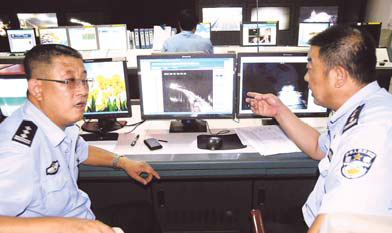
Lu Weidong (R), chief traffic police officer for Yanqing county in Beijing describes to his colleague, Xi Weizhen, how to ease traffic congestion in the transport control center on Aug 30. [Li Shu/Xinhua] |
Coal and gas reserves are concentrated in western regions of China, like Shanxi province and Inner Mongolia, while consumption is largely in the east, thousands of kilometers away.
As few companies use rail freight services, the huge demand has put even more strain on a highway network that is struggling to cope with sheer weight of traffic.
Following the widespread closure of small coal mines in Shanxi in the last two years, more provinces in North China have turned to Inner Mongolia for their supplies. Companies in the region produced almost 602 million tons of coal in 2009 (slightly less than Shanxi's 615 million tons) and that figure is expected to rise to 730 million tons this year.
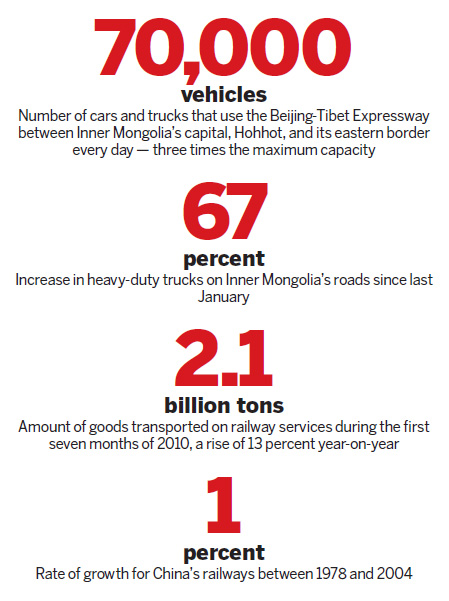
Growth in production means more traffic, however, and the number of heavy-duty trucks in the autonomous region is up 67 percent since last January, according to the Ministry of Public Security.
Hebei province, a major route for mines shipping supplies to eastern coastal areas, also saw an increase of 55 percent over the same period.
The number of vehicles on Inner Mongolia's roads was expected to hit 25,000 to 50,000 in 2033. Although no official figures were available, media reports suggest the region has already surpassed that prediction.
An average of 70,000 cars and trucks use the Beijing-Tibet Expressway between the region's capital Hohhot and its eastern border every day, three times the maximum capacity, said a toll station worker who did not want to be identified.
With winter and the peak time for coal sales approaching, road management authorities have some big challenges ahead, said traffic bureau official Zhang Minghai in Zhangjiakou, a city in Hebei.
To enter Beijing from the northwest, trucks weighing more than 4 tons must pass through the Jingxin Expressway (a section that overlaps the Beijing-Tibet Expressway) in Zhangjiakou, which later merges with Danla, Xuanda and Jingzhang expressways and National Highway 110.
Traffic jams have become a common problem and have caused huge economic losses.
"I could have driven between the two cities three times in the time I wasted stuck in the traffic jam," said trucker Lu Yong. "I could have earned around 900 yuan from each trip."
Authorities in Zhangbei county, one of the city's hottest destinations, have invested more than 2 billion yuan ($295 million) in its tourist industry, yet visitors numbers have fallen by a third since June, as travel agencies cancelled trips to avoid the congestion.
Zhangjiakou's farmers have also been affected as they largely provide vegetables for the capital.
 主站蜘蛛池模板:
介休市|
西乌珠穆沁旗|
红原县|
克东县|
清原|
德钦县|
梅河口市|
嫩江县|
内黄县|
高邑县|
武隆县|
焉耆|
九龙城区|
永福县|
嘉黎县|
仁怀市|
郁南县|
龙泉市|
新沂市|
盘山县|
拉孜县|
洪江市|
始兴县|
尚志市|
思南县|
安庆市|
雷山县|
武川县|
连州市|
鄂伦春自治旗|
东光县|
资溪县|
巴楚县|
保定市|
广饶县|
宿迁市|
包头市|
佳木斯市|
灌云县|
浮山县|
昌吉市|
广南县|
延川县|
汉源县|
武城县|
中西区|
江永县|
怀安县|
类乌齐县|
木兰县|
稻城县|
海原县|
太康县|
绥滨县|
平阳县|
凤山县|
晋中市|
江西省|
武汉市|
南宁市|
通山县|
洪泽县|
安阳市|
乌拉特前旗|
镇江市|
疏勒县|
始兴县|
黑山县|
金塔县|
长汀县|
靖州|
卢氏县|
囊谦县|
青浦区|
鱼台县|
阜康市|
长沙市|
保康县|
忻城县|
宜宾县|
陆丰市|
成都市|
主站蜘蛛池模板:
介休市|
西乌珠穆沁旗|
红原县|
克东县|
清原|
德钦县|
梅河口市|
嫩江县|
内黄县|
高邑县|
武隆县|
焉耆|
九龙城区|
永福县|
嘉黎县|
仁怀市|
郁南县|
龙泉市|
新沂市|
盘山县|
拉孜县|
洪江市|
始兴县|
尚志市|
思南县|
安庆市|
雷山县|
武川县|
连州市|
鄂伦春自治旗|
东光县|
资溪县|
巴楚县|
保定市|
广饶县|
宿迁市|
包头市|
佳木斯市|
灌云县|
浮山县|
昌吉市|
广南县|
延川县|
汉源县|
武城县|
中西区|
江永县|
怀安县|
类乌齐县|
木兰县|
稻城县|
海原县|
太康县|
绥滨县|
平阳县|
凤山县|
晋中市|
江西省|
武汉市|
南宁市|
通山县|
洪泽县|
安阳市|
乌拉特前旗|
镇江市|
疏勒县|
始兴县|
黑山县|
金塔县|
长汀县|
靖州|
卢氏县|
囊谦县|
青浦区|
鱼台县|
阜康市|
长沙市|
保康县|
忻城县|
宜宾县|
陆丰市|
成都市|