Profiles
Quiet! History speaking
By Lin Qi (China Daily)
Updated: 2010-09-19 07:36
 |
Large Medium Small |
 |
|
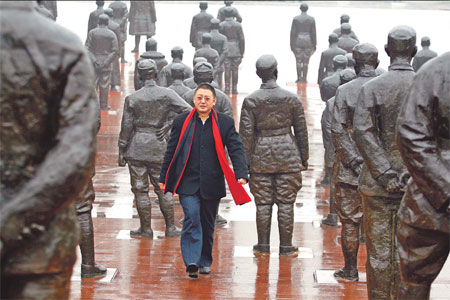
Fan Jianchuan walks among statues of Chinese soldiers in one of his museums dedicated to the War of Resistance against Japanese Aggression. He says he builds museums to advocate peace, friendship and better understanding. Provided to China Daily |
One man in Sichuan collects museums as a hobby, and he's especially proud of a cluster that is documenting the War of Resistance against Japanese Aggression. Lin Qi takes a closer look.
Fan Jianchuan plans to put together more than a hundred museums in his lifetime. He has already founded 15 in his native Sichuan, a result of spending the last 30 years of his life collecting about 8 million exhibits through private sales or public auctions.
The driving force behind his relentless collecting is his belief that history should be left to speak for itself. Throughout his Jianchuan Museum Cluster in An'ren town, an hour's drive away from Chengdu, there are signs that remind visitors: "Let's not talk loudly, history is speaking", "Shhh ... Don't drown the voice of history."


"The last 100 years have witnessed more tremendous changes in China than that of any other period, during which the country has been industrialized, modernized and civilized," he says.
Sometimes, he travels far in search of new discoveries, but at other times, they drop right on his doorstep.
One of his most unusual items, a living, breathing reminder of the 2008 Sichuan earthquake, is a pig that had been buried under the rubble for more than 40 days. Fan bought it, named it Zhu Jianqiang or Mr Piggy the Determined, and the animal now takes pride of place in his Sichuan Earthquake Memorial Museum. In a sadder tribute, he also co-built the Hu Huishan Memorial Hall in memory of a 15-year-old earthquake victim.
But the collection that tugs at Fan's heart the most is the cluster of five museums he has built to commemorate the War of Resistance against Japanese Aggression (1937-45). Saturday was the 79th anniversary of the historic Sept 18 incident in 1931, when the invading Japanese army blew up part of a railroad owned by a Japanese colonial company near Mukden (now Shenyang), and used the incident as a pretext for larger-scale war against China.
Fan grew up listening to the stories of how his father, a military veteran, fought off Japanese invaders. During the 11 years that Fan himself served in the People's Liberation Army, his interest in China's campaigns during World War II grew.
In the 1990s, he started to collect artifacts of war while he first worked at a foreign-financed company and later as a real estate agent.
Since then he has been flying to Japan often, searching for and buying original evidence of war crimes. His collection over the past decade is now estimated at more than 100,000 items, ranging from old firearms, combat charts, military intelligence and files, magazines and posters, posthumous papers, diaries and photographs of Japanese soldiers.
His latest purchases include a stack of more than 1,000 letters that a low-ranking military official wrote to his families, relatives and friends in Japan in the one year before the war ended. This soldier was in charge of cremating comrades who had died on the battlefield.
As he delves into these official documents and individual memories, Fan is beginning to see a complete picture of the Japanese story.
"Almost all public exhibitions display evidence of the invaders' cruelty, underlining their policies of 'slaughter, burn and pillage'. Historical files I found in Japan indicated that the Japanese were also disciplined," which also explains the organized crime by a state entity.
The historical data he found showed that the Japanese army had been cobbled together from a hodgepodge of social classes. For instance, one unit of mineworkers could fight violently while another unit of urban merchants knew little of combat strategies.
 主站蜘蛛池模板:
宝山区|
昌乐县|
安宁市|
丘北县|
平乐县|
名山县|
惠安县|
朔州市|
五指山市|
盐城市|
雅江县|
包头市|
宝清县|
建德市|
绩溪县|
驻马店市|
新乡市|
文水县|
达日县|
永年县|
扎赉特旗|
古交市|
米易县|
大田县|
榕江县|
高碑店市|
海丰县|
大港区|
买车|
商都县|
博客|
化隆|
汽车|
海口市|
郯城县|
嵊泗县|
隆林|
明光市|
呼和浩特市|
平乐县|
平谷区|
德州市|
清新县|
舞阳县|
岐山县|
江川县|
贞丰县|
九龙城区|
开远市|
穆棱市|
南开区|
凤山县|
皮山县|
民勤县|
惠来县|
固原市|
饶河县|
惠州市|
吉木萨尔县|
靖远县|
正蓝旗|
黑山县|
高阳县|
高碑店市|
彰化县|
阿合奇县|
星子县|
枣强县|
思南县|
烟台市|
荥阳市|
凉城县|
吉安县|
平利县|
甘南县|
乐平市|
普安县|
嘉定区|
山东|
华阴市|
大竹县|
罗田县|
主站蜘蛛池模板:
宝山区|
昌乐县|
安宁市|
丘北县|
平乐县|
名山县|
惠安县|
朔州市|
五指山市|
盐城市|
雅江县|
包头市|
宝清县|
建德市|
绩溪县|
驻马店市|
新乡市|
文水县|
达日县|
永年县|
扎赉特旗|
古交市|
米易县|
大田县|
榕江县|
高碑店市|
海丰县|
大港区|
买车|
商都县|
博客|
化隆|
汽车|
海口市|
郯城县|
嵊泗县|
隆林|
明光市|
呼和浩特市|
平乐县|
平谷区|
德州市|
清新县|
舞阳县|
岐山县|
江川县|
贞丰县|
九龙城区|
开远市|
穆棱市|
南开区|
凤山县|
皮山县|
民勤县|
惠来县|
固原市|
饶河县|
惠州市|
吉木萨尔县|
靖远县|
正蓝旗|
黑山县|
高阳县|
高碑店市|
彰化县|
阿合奇县|
星子县|
枣强县|
思南县|
烟台市|
荥阳市|
凉城县|
吉安县|
平利县|
甘南县|
乐平市|
普安县|
嘉定区|
山东|
华阴市|
大竹县|
罗田县|