Government and Policy
New move to protect film copyright
By Qiu Bo and Chen Xin (China Daily)
Updated: 2010-10-15 08:15
 |
Large Medium Small |
BEIJING - China has stepped up its efforts to fight widespread film piracy by charging Internet cafes, long-distance buses and other distributors for screening Chinese movies, starting next year.
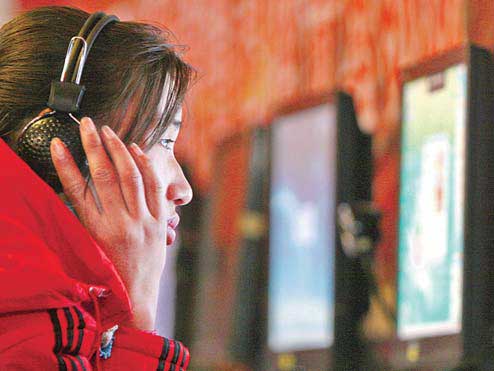 A woman uses an Internet café in Fuyang, Anhui province, in this file photo taken in 2009. [Photo/China Daily]? |
But the copyright protection move has yet to include overseas movies which have had their copyright infringed.
The National Copyright Administration released two regulations on Thursday, detailing the collection of copyright royalties for movies provided on the Internet, flights and public transport.
| ||||


CFCA President Zhu Yongde said eight municipalities and provinces, including Beijing, Shanghai and Jiangsu, will be the first to start collecting royalties.
"The new regulations target only Chinese movies this time," Shi Wenxia, CFCA spokeswoman, told China Daily on Thursday.
The association's 62 members, who own the majority of domestic movies, will share 90 percent of the royalties collected and the association will keep the remaining 10 percent as management fees, Shi said.
"We will consider including overseas movies in the copyright royalties collection mechanism," Shi said, but added that "it will not start in the near future".
Shi called on overseas film copyright organizations to discuss ways to collect royalties with her association.
"Once a deal is inked, it will be submitted to the National Copyright Administration for approval," she said.
Chinese box office earnings surged to 6.2 billion yuan ($925 million) in 2009 from less than 1 billion yuan in 2003, and are expected to reach 30-40 billion yuan in 2015 to make it the world's second-largest movie market, the China Film Producers' Association has forecast.
Film piracy has been rampant, affecting 90 percent of all films sold in China between 2005 and 2006, CFCA statistics have suggested.
Chinese Internet users, aged between 18 and 35, download an average of 31.1 movies annually, most of them pirated, according to the CFCA.
Li Guomin, CFCA secretary-general, told a film forum in Jiangyin, Jiangsu province, on Wednesday that losses caused by piracy are estimated to reach 14 billion yuan this year.
Huang Hua, a copyright expert with the Beijing-based Wowa Media Co, hailed the move to collect copyright royalties as "a good and concrete step" to fight rampant film copyright infringement.
But Huang suggested that other bodies, such as the country's top intellectual property office and film watchdog, should also do their part.
According to the regulations, Internet cafes will be charged based on the fees they charge a visitor per hour and the number of computers they own.
For an Internet cafe with 100 computers that charges a visitor 3 yuan per hour, it has to pay a copyright royalty of 22.5 yuan a day, or about 8,000 yuan annually.
Each long-distance bus will be charged from 365 to 500 yuan annually for screening movies.
A manager, surnamed Li, of Haice Internet cafe in Beijing's Chaoyang district, said on Thursday that his cafe will not accept any "unreasonable charges".
Li's cafe, which owns some 170 computers, will have to pay copyright royalties of about 14,000 yuan every year.
"The cost will definitely hurt our business," said Li.
Li said his Internet cafe is now paying around 2,000 yuan annually to an Internet-tech company, which provides movie-screening platforms.
"If they come to charge copyright royalties, they should provide us related services," Li said.
CFCA spokeswoman Shi said her association is "the sole authority to permit copyright use of online movies".
A source from the Beijing City Long-Distance Bus Company told China Daily on Thursday the charges are "unreasonable".
China began a program on cracking down on music copyright infringement in 2007 by charging karaoke parlors. But the program encountered difficulties.
"In fact, the program has not run smoothly," Wang Hongmei, publicity official with the Music Copyright Society of China, who collects fees, told China Daily on Thursday.
 主站蜘蛛池模板:
汉川市|
长治市|
本溪市|
锡林郭勒盟|
惠来县|
武川县|
闽侯县|
布拖县|
阜新|
营口市|
许昌市|
英德市|
班戈县|
望谟县|
布拖县|
扎囊县|
巧家县|
岳阳市|
新蔡县|
兰西县|
常州市|
大渡口区|
孟津县|
嘉定区|
会同县|
承德市|
凭祥市|
湟源县|
罗山县|
赤水市|
泸西县|
麦盖提县|
九江市|
洛隆县|
山阳县|
达州市|
阳山县|
武夷山市|
柘城县|
莲花县|
金华市|
浪卡子县|
钟山县|
磐石市|
堆龙德庆县|
镇原县|
渑池县|
榆中县|
滕州市|
宜川县|
万载县|
甘泉县|
象山县|
涪陵区|
台东市|
鄂托克旗|
深泽县|
宜阳县|
西和县|
乐清市|
兴山县|
姚安县|
乐东|
昌平区|
平顶山市|
田林县|
石屏县|
吴旗县|
永德县|
华容县|
凤凰县|
胶州市|
敦化市|
仙游县|
宝应县|
棋牌|
大渡口区|
潍坊市|
甘德县|
汝南县|
岳普湖县|
蒙山县|
主站蜘蛛池模板:
汉川市|
长治市|
本溪市|
锡林郭勒盟|
惠来县|
武川县|
闽侯县|
布拖县|
阜新|
营口市|
许昌市|
英德市|
班戈县|
望谟县|
布拖县|
扎囊县|
巧家县|
岳阳市|
新蔡县|
兰西县|
常州市|
大渡口区|
孟津县|
嘉定区|
会同县|
承德市|
凭祥市|
湟源县|
罗山县|
赤水市|
泸西县|
麦盖提县|
九江市|
洛隆县|
山阳县|
达州市|
阳山县|
武夷山市|
柘城县|
莲花县|
金华市|
浪卡子县|
钟山县|
磐石市|
堆龙德庆县|
镇原县|
渑池县|
榆中县|
滕州市|
宜川县|
万载县|
甘泉县|
象山县|
涪陵区|
台东市|
鄂托克旗|
深泽县|
宜阳县|
西和县|
乐清市|
兴山县|
姚安县|
乐东|
昌平区|
平顶山市|
田林县|
石屏县|
吴旗县|
永德县|
华容县|
凤凰县|
胶州市|
敦化市|
仙游县|
宝应县|
棋牌|
大渡口区|
潍坊市|
甘德县|
汝南县|
岳普湖县|
蒙山县|