Society
Drought and warmer weather threaten wheat, water supplies
By He Dan (China Daily)
Updated: 2010-12-06 08:02
 |
Large Medium Small |
|
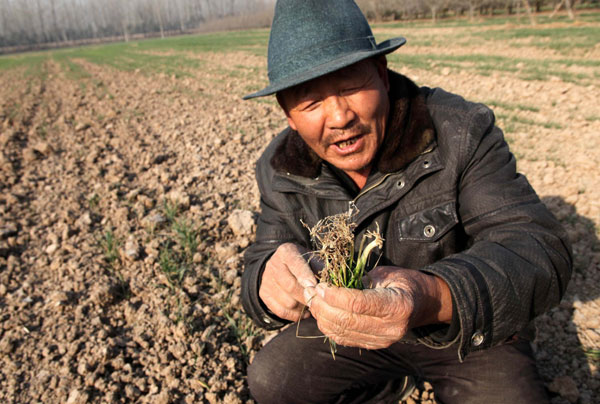 Peasant Li Xiangyin shows a withered wheat seedling on his land in Huaibei city of Anhui province on Nov 11. The city has had no rain for three months. [Yue Jianwen / For China Daily] |
BEIJING - Unusually high November temperatures and low rainfall were threatening water supply and the growth of winter wheat in the North China Plain, a senior water resource official revealed on Saturday.
| ||||


The SFDH revealed that a wheat planting area of 57.99 million mu (3.87 million hectares) was plagued by a drought caused by higher temperatures and water shortages in areas along the alluvial plain of Yellow River and Huaihe River. Some 1.77 million people and 1.55 million head of livestock have suffered shortages of drinking water.
The drought-affected area accounted for 19 percent of the country's winter wheat planting area. The drought's influence on next year's wheat yield was hard to determine as the yield will also depend on subsequent weather and drought relief work, Lu Bu, a researcher at the Chinese Academy of Agricultural Sciences (CAAS), told China Daily on Sunday.
In North China's Shanxi province, winter wheat in a planting area of 2.4 million mu (160,000 hectares) is suffering from drought, although it is not severe. The situation is likely to continue given the lingering windy and dry weather, Wang Zhiwei, deputy chief of Shanxi provincial climate center, told China News Service (CNS) on Thursday.
The average temperature in Shanxi was 3.4 C in November, 1.3 C higher than average, while rainfall in most areas of the province was down by 90 percent, CNS reported.
Chen said the drought was expanding rapidly, and the situation was even worse in areas without enough reserve water.
Chen also stressed that the government will give priority to safeguarding the supply of water for people's daily lives and to improving the management of water resources, in addition to enhancing weather monitoring and forecasting.
However, Lu from CAAS said that, in the long term, China needed to improve its water conservation to minimize losses from natural disasters such as flood and drought.
"Climate change poses many challenges for China's grain production and food security," Lu said.
"There is an urgent need to build more water conservation facilities, which will not only help us to better manage water resources but will also act as a solid foundation for natural disaster relief work."
China's National Bureau of Statistics said on Friday that the country's grain output rose 2.9 percent year-on-year in 2010 to 546.41 million tons. This marked the seventh consecutive year of growth for China's grain output.
The preliminary figure came from a sample survey in 31 provincial-level regions on the country's mainland.
According to the survey, the drought-ravaged south and southwestern regions, including the Guangxi Zhuang autonomous region, and Guizhou and Yunnan provinces, witnessed a remarkable decline in grain production this year. The combined grain output in the three provincial-level regions dropped 3.8 percent from the previous year to 40.48 million tons, the bureau said.
China's northeastern areas and the Inner Mongolia autonomous region, however, reported a 13.4 percent surge in grain production this year, with the total output reaching 117.79 million tons.
China Daily
 主站蜘蛛池模板:
潞西市|
威远县|
沙坪坝区|
嵩明县|
田阳县|
陵川县|
大关县|
嘉兴市|
茂名市|
东丰县|
西丰县|
罗甸县|
阳曲县|
微山县|
务川|
台南县|
库伦旗|
兰考县|
禹州市|
射阳县|
伊川县|
湖州市|
凤阳县|
叶城县|
华容县|
柳江县|
左贡县|
凭祥市|
探索|
永靖县|
阿鲁科尔沁旗|
开封市|
宜州市|
兰溪市|
远安县|
古田县|
衢州市|
阿克陶县|
黄梅县|
怀仁县|
会昌县|
榕江县|
舞钢市|
房山区|
筠连县|
凤庆县|
乐亭县|
西昌市|
巴里|
大埔县|
惠水县|
嘉禾县|
醴陵市|
宣恩县|
雷山县|
南雄市|
泸溪县|
辽阳市|
青河县|
巴南区|
罗城|
工布江达县|
西充县|
墨玉县|
阿图什市|
那坡县|
湟中县|
双牌县|
涞水县|
同江市|
休宁县|
麟游县|
夏津县|
井陉县|
桦川县|
茂名市|
双鸭山市|
色达县|
那坡县|
莎车县|
资阳市|
南江县|
主站蜘蛛池模板:
潞西市|
威远县|
沙坪坝区|
嵩明县|
田阳县|
陵川县|
大关县|
嘉兴市|
茂名市|
东丰县|
西丰县|
罗甸县|
阳曲县|
微山县|
务川|
台南县|
库伦旗|
兰考县|
禹州市|
射阳县|
伊川县|
湖州市|
凤阳县|
叶城县|
华容县|
柳江县|
左贡县|
凭祥市|
探索|
永靖县|
阿鲁科尔沁旗|
开封市|
宜州市|
兰溪市|
远安县|
古田县|
衢州市|
阿克陶县|
黄梅县|
怀仁县|
会昌县|
榕江县|
舞钢市|
房山区|
筠连县|
凤庆县|
乐亭县|
西昌市|
巴里|
大埔县|
惠水县|
嘉禾县|
醴陵市|
宣恩县|
雷山县|
南雄市|
泸溪县|
辽阳市|
青河县|
巴南区|
罗城|
工布江达县|
西充县|
墨玉县|
阿图什市|
那坡县|
湟中县|
双牌县|
涞水县|
同江市|
休宁县|
麟游县|
夏津县|
井陉县|
桦川县|
茂名市|
双鸭山市|
色达县|
那坡县|
莎车县|
资阳市|
南江县|