Society
For investors, glamorous bounty lies in looted treasures
By Cheng Yingqi (China Daily)
Updated: 2010-12-15 07:14
 |
Large Medium Small |
Sale of the centuries
The global economic crisis did not only strike down some of the world's biggest financial institutions, it also shook investors faith in the traditional markets, such as property and gold. Enter the art market.
"In a sense, art (and antiquities) started to look relatively safer for emerging Chinese entrepreneurs, as long as the works were authentic," said Wang Dingqian, president of My Humble House, a Taiwan antique dealers.
The price gap between relics from the reigns of emperors Qianlong (1735-95) and Yongzheng (1722-35) is a good example of the impact of hot money. Although experts believed first-class chinaware from Yongzheng's rule is more exquisite, Qianlong items attract high prices.
 |
|
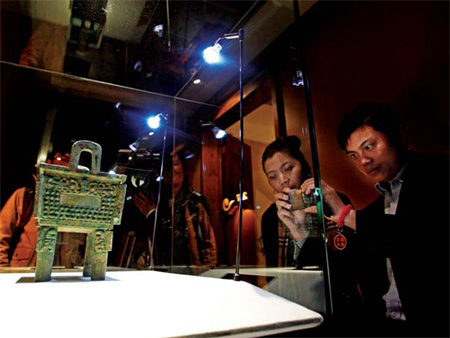
Visitors look at an ancient bronze relic at a Beijing exhibition in March. The item is one of the 300-million-yuan bronzeware bought back from abroad. [Provided to China Daily] |
Yongzheng was on the throne for only 13 years, while Qianlong ruled for 60 years, "so less chinaware was produced under Emperor Yongzheng," explained Liu at Rongbao.
"The limited number puts constraints on the total value of Yongzheng chinaware in circulation," he said. "People are naturally inclined to turn to bigger markets and, consequently, without hot money driving up the price, (items) does not reach the same prices as Qianlong chinaware."
Wang also said he believes the growing influence of mainlanders at auctions is in step with the country's economic development, and that a nation's financial clout determines the depth of its collectors' pockets.
The market for Chinese art, including calligraphy, oil painting and chinaware, started to expand in 2003 amid decline in the domestic stock and stamp market and roaring international gold prices. That year, the country's per capita GDP was $1,090 and cultural consumption volume was 580 billion yuan. Today, those figures have risen to about $3,100 and 700 billion yuan respectively, according to data published online by the Ministry of Culture.
In 2005, a blue and white porcelain pot from the Yuan Dynasty (1271-1368) went for 230 million yuan at a Christie's auction, the first time a Chinese piece had sold for more than 100 million yuan.
"The price of Chinese artwork has been low for a long time because Chinese people used to be poor," said Wang. "The price hike is a signal of China's growing economic force, especially post-financial crisis.
"In the past, Western people bought more chinaware, so we went abroad to buy antiques. Now Chinese people are buying more the auction houses are coming to us."
Auctions for chinaware before 2000 were primarily held in Europe and the US but are now in Hong Kong, while sales of ancient Chinese paintings and calligraphy have slowly shifted to the Chinese mainland.
Sotheby's now hosts exhibitions twice a year in Beijing and Shanghai to introduce the world's art masters, such as Van Gogh and Picasso, to the mainland audience.
"It's a long-term plan," added Sotheby's executive Chow. "I believe that when China's nouveau riche want to buy art, they will buy the classics."
 主站蜘蛛池模板:
云安县|
腾冲县|
页游|
拜城县|
南京市|
宜章县|
辽阳县|
库尔勒市|
远安县|
房产|
秦皇岛市|
勐海县|
华亭县|
大庆市|
肃宁县|
牙克石市|
喀喇|
弥渡县|
大冶市|
全南县|
彭阳县|
瑞金市|
麦盖提县|
白玉县|
桐乡市|
五台县|
瑞金市|
南和县|
图们市|
松阳县|
上饶县|
封丘县|
芜湖市|
永顺县|
合山市|
宁海县|
泊头市|
博野县|
巴塘县|
罗定市|
华坪县|
文成县|
上杭县|
玉门市|
青铜峡市|
巴里|
平定县|
滕州市|
宝兴县|
河源市|
通江县|
五台县|
辽中县|
东莞市|
苏尼特左旗|
仁寿县|
乐安县|
巨鹿县|
北安市|
昂仁县|
泰顺县|
闵行区|
河南省|
南岸区|
宝坻区|
红桥区|
瑞安市|
长葛市|
铁岭县|
通道|
阳新县|
平利县|
汤原县|
贺州市|
墨江|
建湖县|
青川县|
富民县|
确山县|
古田县|
开封市|
登封市|
主站蜘蛛池模板:
云安县|
腾冲县|
页游|
拜城县|
南京市|
宜章县|
辽阳县|
库尔勒市|
远安县|
房产|
秦皇岛市|
勐海县|
华亭县|
大庆市|
肃宁县|
牙克石市|
喀喇|
弥渡县|
大冶市|
全南县|
彭阳县|
瑞金市|
麦盖提县|
白玉县|
桐乡市|
五台县|
瑞金市|
南和县|
图们市|
松阳县|
上饶县|
封丘县|
芜湖市|
永顺县|
合山市|
宁海县|
泊头市|
博野县|
巴塘县|
罗定市|
华坪县|
文成县|
上杭县|
玉门市|
青铜峡市|
巴里|
平定县|
滕州市|
宝兴县|
河源市|
通江县|
五台县|
辽中县|
东莞市|
苏尼特左旗|
仁寿县|
乐安县|
巨鹿县|
北安市|
昂仁县|
泰顺县|
闵行区|
河南省|
南岸区|
宝坻区|
红桥区|
瑞安市|
长葛市|
铁岭县|
通道|
阳新县|
平利县|
汤原县|
贺州市|
墨江|
建湖县|
青川县|
富民县|
确山县|
古田县|
开封市|
登封市|