Economy
Govt to outline 2011 fiscal deficit target
By Wang Xiaotian (China Daily)
Updated: 2010-12-21 07:54
 |
Large Medium Small |
BEIJING - China is planning to outline a fiscal deficit of 900 billion yuan ($135 billion) for next year, 150 billion yuan less than this year's target, according to a report in the Beijing-based Century Weekly Magazine on Monday.
|
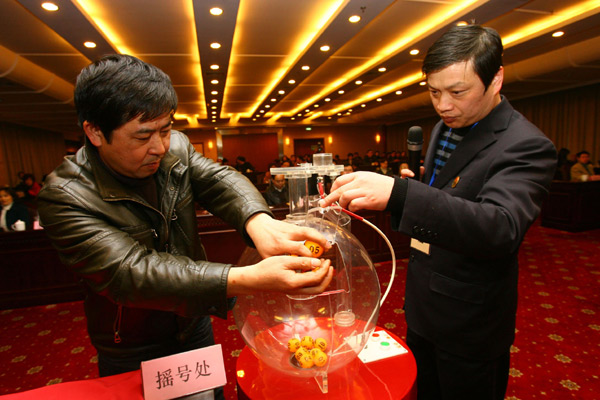 A man draws lots to get affordable housing in Ningbo, Zhejiang province, earlier this year. The government will spend more next year to build affordable housing and on other projects aimed at improving people's livelihood. [Zhang Peijian / For China Daily] |
The central government's fiscal deficit will decrease to 700 billion, while debt issued by central authorities for local governments will be maintained at 200 billion yuan, the magazine cited an anonymous source close to the Ministry of Finance as saying.
The magazine said that before the plan is passed at the annual national legislative session in March, the government might fine-tune the numbers in accordance with changes in the domestic economic situation and the level of recovery of major world economies.


"Judging by the current situation, the probability of a GDP growth rate below 9 percent is very small, which means the deficit is likely to be less than 2 percent of GDP," he said.
In March, the nation's leaders outlined an "appropriate" deficit of 1.05 trillion yuan for this year, roughly 2.8 percent of GDP, and an increase of about 100 billion yuan from last year.
The total deficit consists of 850 billion yuan in central government deficit, and 200 billion yuan in local government bonds, which will be included in local government budgets.
China's fiscal deficit hit 950 billion yuan in 2009, a six-year high, but was still less than 3 percent of GDP, considered by many economists as a security line.
Despite a shrinking deficit in 2011, the fiscal policy is still undoubtedly a "proactive" one, said Liu.
China formally decided in early December to adopt a proactive fiscal policy and a "prudent" monetary policy for 2011.
"As long as the government keeps a deficit, and tries to counter downward factors that may cause an economic slide with larger spending, it is still a proactive policy stance," said Liu, adding that China's fiscal revenue will still grow rapidly next year by between 16 and 18 percent.
Analysts said greater-than-expected fiscal revenue this year will also contribute to a smaller deficit in 2011.
Between January and November, China's fiscal revenue increased by 21.1 percent year-on-year to more than 7.67 trillion yuan, exceeding whole-year revenue in 2008 and 2009. Over the same period, fiscal expenditure rose by 27.3 percent to nearly 7.16 trillion yuan, according to the Ministry of Finance.
Liu predicted that the actual deficit for 2010 will be more than 1 percent of GDP.
Although the proactive policy will be maintained, it will still be very different from 2009 and 2010, when the government took an unusually loose fiscal stance to stimulate economic growth after the global financial crisis affected the nation, said Lu Zhengwei, chief economist with the Industrial Bank.
He added that the government's spending focus for next year will be on promoting economic restructuring, instead of guaranteeing the growth rate.
Zhang Ping, chairman of the National Development and Reform Commission, said earlier that government spending next year will focus more on building affordable housing and supporting areas such as irrigation and agricultural facilities, education and healthcare, energy saving and emissions reduction, and environmental protection.
A proactive fiscal policy could offset the effect of shrinking monetary policy and support economic growth of more than 9 percent, said Lu Ting, economist at Bank of America-Merrill Lynch.
 主站蜘蛛池模板:
凌云县|
南汇区|
桃江县|
元江|
兴城市|
遂平县|
龙里县|
琼海市|
佛坪县|
清苑县|
威远县|
岗巴县|
长乐市|
威宁|
蓬莱市|
嘉义县|
大石桥市|
中江县|
且末县|
虹口区|
榆树市|
普陀区|
集贤县|
克什克腾旗|
黄大仙区|
肇东市|
泊头市|
枞阳县|
长岛县|
广南县|
获嘉县|
漳平市|
新干县|
开封县|
梧州市|
固始县|
十堰市|
凌海市|
怀来县|
璧山县|
株洲县|
上饶市|
石屏县|
克什克腾旗|
闻喜县|
色达县|
富阳市|
惠水县|
青海省|
石阡县|
昌宁县|
普兰县|
青岛市|
庐江县|
廊坊市|
丹凤县|
上林县|
绥芬河市|
武邑县|
陆川县|
吉木萨尔县|
鄂托克前旗|
会宁县|
肇庆市|
山丹县|
彭阳县|
秀山|
新源县|
伊吾县|
长沙市|
无棣县|
迁西县|
呼图壁县|
宝兴县|
定安县|
柳江县|
鄯善县|
吉林市|
安徽省|
扬州市|
余江县|
泊头市|
主站蜘蛛池模板:
凌云县|
南汇区|
桃江县|
元江|
兴城市|
遂平县|
龙里县|
琼海市|
佛坪县|
清苑县|
威远县|
岗巴县|
长乐市|
威宁|
蓬莱市|
嘉义县|
大石桥市|
中江县|
且末县|
虹口区|
榆树市|
普陀区|
集贤县|
克什克腾旗|
黄大仙区|
肇东市|
泊头市|
枞阳县|
长岛县|
广南县|
获嘉县|
漳平市|
新干县|
开封县|
梧州市|
固始县|
十堰市|
凌海市|
怀来县|
璧山县|
株洲县|
上饶市|
石屏县|
克什克腾旗|
闻喜县|
色达县|
富阳市|
惠水县|
青海省|
石阡县|
昌宁县|
普兰县|
青岛市|
庐江县|
廊坊市|
丹凤县|
上林县|
绥芬河市|
武邑县|
陆川县|
吉木萨尔县|
鄂托克前旗|
会宁县|
肇庆市|
山丹县|
彭阳县|
秀山|
新源县|
伊吾县|
长沙市|
无棣县|
迁西县|
呼图壁县|
宝兴县|
定安县|
柳江县|
鄯善县|
吉林市|
安徽省|
扬州市|
余江县|
泊头市|