Society
City 'ants' face eviction from colonies
By Wang Yan (China Daily)
Updated: 2011-01-10 07:26
 |
Large Medium Small |
Living in a box
 |
|
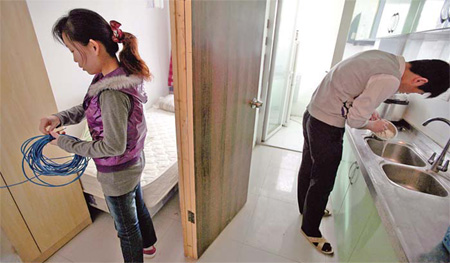
Xiao Ling (left) fixes her capsule apartment in a residential area near the East Fourth Ring Road in Beijing's Chaoyang district on Jan 8. She said she is afraid she will leave her home soon because of the new regulations. [Zhuo Ensen / for China Daily] |
Under the rules issued by the Ministry of Housing and Urban-Rural Development in December, houses and apartments must be rented based on their original designs, while the use of kitchens, bathrooms and balcony areas as bedrooms is banned. Offenders will face fines from 5,000 to 30,000 yuan.
"The regulation replaces an earlier version in the 1990s. The old one no longer fits the fast developing housing rental market in China," said Li Chang'an, a public policy professor at the University of International Business and Economics (UIBE). "However, the new one looks too advanced."
For a start, the number of low-cost public rental apartments is already insufficient to meet the demand. "Beijing alone had only about 20,000 apartments in 2010, while there were millions of potential renters looking for places," he added.
A report on the 2010 housing rental market in Beijing by the 5i5j property agency found the demand for group rentals had risen as a result of rising rental costs.
"For those who pay less than 1,000 yuan a month, the average rent is 814 yuan for an average area of 15.41 square meters. The major house types are two-bedroom and three-bedroom apartments, with each containing four to eight tenants," read the report.
Its authors added that, over the next two years, demand in Beijing will further increase due to the city's plan to renovate underground areas, including the disused air-raid shelters that house the so-called "mouse tribe".
"Although the Beijing government has initiated a number of public rental housing projects, factors including hukou and rental prices will prevent the (projects) from fully functioning for many low-income people," the report concluded. "The group is likely to keep living in Beijing's outskirts or depending on group rentals."
The latest policy also demands that the amount of living space per capita does not fall below the required standard set by local authorities. For example, in Beijing rooms should be at least 4 square meters in a bungalow and at least 10 square meters in a multi-story building.
Meeting the targets will be hard, said Lian Si, assistant professor at UIBE's school of public administration and author of the book, Ant Tribe.
A six-month survey by Lian's team last year found 59.6 percent of "ants" live in rooms smaller than 10 square meters and 20.4 percent in rooms smaller than 5 square meters. The poll included 4,807 residents in Beijing, Shanghai, Guangzhou, Wuhan, Xi'an, Chongqing and Nanjing, cities with high concentrations of "ants".
"The percentage of people living in areas smaller than 10 square meters has decreased from that of our 2009 survey, which was 69.6 percent," said Lian. "That's mainly because living areas are larger in cities other than Beijing. The figure for 2009 was only for Beijing."
He estimates the ant tribe population passed the 1-million mark nationwide in 2010. "The key is how effectively the new regulation is carried out, especially at the ground level. Based on past experiences, local governments lack the implementation capacities," added Lian.
 主站蜘蛛池模板:
溧水县|
朔州市|
罗甸县|
建德市|
五台县|
河北省|
汨罗市|
岐山县|
漳平市|
界首市|
长宁区|
望江县|
手游|
林口县|
鸡泽县|
平塘县|
龙胜|
佛教|
花莲县|
兴隆县|
金塔县|
西藏|
临朐县|
沂南县|
余姚市|
涿鹿县|
怀集县|
乌拉特中旗|
南涧|
同江市|
雷山县|
汪清县|
伊川县|
吉隆县|
琼海市|
遂昌县|
海口市|
长垣县|
华亭县|
休宁县|
桃园市|
仪陇县|
县级市|
通渭县|
乡宁县|
日喀则市|
穆棱市|
贵港市|
江川县|
呼和浩特市|
锡林郭勒盟|
盐池县|
富民县|
德钦县|
陆川县|
甘肃省|
平昌县|
淮北市|
新丰县|
木兰县|
会东县|
德钦县|
阆中市|
三江|
辽中县|
开鲁县|
大荔县|
庐江县|
原阳县|
东海县|
乌拉特后旗|
砚山县|
彰武县|
疏附县|
西昌市|
全州县|
徐州市|
永胜县|
嵩明县|
阜平县|
卢龙县|
杭锦后旗|
主站蜘蛛池模板:
溧水县|
朔州市|
罗甸县|
建德市|
五台县|
河北省|
汨罗市|
岐山县|
漳平市|
界首市|
长宁区|
望江县|
手游|
林口县|
鸡泽县|
平塘县|
龙胜|
佛教|
花莲县|
兴隆县|
金塔县|
西藏|
临朐县|
沂南县|
余姚市|
涿鹿县|
怀集县|
乌拉特中旗|
南涧|
同江市|
雷山县|
汪清县|
伊川县|
吉隆县|
琼海市|
遂昌县|
海口市|
长垣县|
华亭县|
休宁县|
桃园市|
仪陇县|
县级市|
通渭县|
乡宁县|
日喀则市|
穆棱市|
贵港市|
江川县|
呼和浩特市|
锡林郭勒盟|
盐池县|
富民县|
德钦县|
陆川县|
甘肃省|
平昌县|
淮北市|
新丰县|
木兰县|
会东县|
德钦县|
阆中市|
三江|
辽中县|
开鲁县|
大荔县|
庐江县|
原阳县|
东海县|
乌拉特后旗|
砚山县|
彰武县|
疏附县|
西昌市|
全州县|
徐州市|
永胜县|
嵩明县|
阜平县|
卢龙县|
杭锦后旗|