Foreign and Military Affairs
Hu's visit sketches blueprint for China-US ties
(Xinhua)
Updated: 2011-01-23 06:01
 |
Large Medium Small |
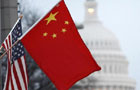
BEIJING - Chinese President Hu Jintao has just ended his four-day landmark visit to the United States.
During the visit, both sides agreed to build a China-US cooperative partnership based on mutual respect and mutual benefit, which is to lead the development of bilateral ties in the future.
It is widely believed that, in the new era, China and the United States need to enhance their political and economic relations, as well as boost cooperation in regional and international affairs.
In order to achieve that, observers from across the world hold that the key lies in common actions.
BLUEPRINT FOR BILATERAL RELATIONS
Reiterating their commitment to developing a positive, cooperative and comprehensive China-US relationship as they agreed in 2009, Chinese and US leaders also vowed to build "a cooperative partnership based on mutual respect and mutual benefit", during Hu's visit to Washington.
The two terms showed a kind of progress which represented the increasing common interests and mutual need of the two sides over the recent period, as well as more and more challenges that required the joint efforts of the largest developed and developing countries, Chinese Vice Foreign Minister Cui Tiankai said.
Yuan Peng, director of the America Studies of China Institute for Contemporary International Relations (CICIR), said the new expression of bilateral ties was positive, objective and pragmatic.
As the deepening and development of the previous expression, the new term was a highlight of President Hu's US visit, Yuan said.
The joint statement issued by both sides during Hu's stay, which is built upon bilateral efforts to establish the cooperative partnership based on mutual respect and mutual benefit, is a clear reflection of the two countries' resolution and pragmatic attitude in jointly meeting global challenges, according to Chen Kang, professor at Lee Kuan Yew School of Public Policy at the National University of Singapore.
In a nutshell, every word matters in the new expression.
As "mutual respect" urges both China and the United States to respect each other's core interests and path of development, "mutual benefit" means that both countries are expected to achieve a win-win situation rather than a win-lose one, and bring about common prosperity.
"Partnership," meanwhile, shows that the two powers, instead of being rivals, are closely linked with each other in actions to cope with regional and international issues.
Fu Mengzi, a researcher with the Beijing-based CICIR, told Xinhua, while every country attached great importance to their own national interest, their respective interests were neither unilateral nor absolute.
"When seeking its own interest, a country should meanwhile take into consideration the interest and major concerns of other countries," Fu said, adding that only by so doing could a win-win result rather than a zero-sum relationship be achieved.
PROMOTION OF POLITICAL TIES
Hu told his US counterpart Barack Obama Wednesday that the two sides should develop a political relationship of seeking common ground while reserving differences, and of equality and mutual trust.
Historically, the two countries have neither found so much common ground, which is the driving force to push forward bilateral ties, nor shouldered such great common responsibilities in a way they do today.
Both sides, not only committed to safeguarding world peace and stability, reforming the international system, and boosting the development and prosperity of the Asia-Pacific region, they have also devoted themselves to strengthening bilateral cooperation in a variety of fields to benefit their peoples.8 ? Meanwhile, admitting and tolerating their differences, and dealing with frictions in a proper way also matters a lot in promoting bilateral ties.
Despite their different cultures, social systems and levels of development, China and the United States can maintain their relations on the correct track as long as they treat each other in an objective and reasonable way, respect each other's social systems, the choice of development path, and sovereignty and territorial integrity.
Therefore, the two sides' different opinions on issues like human rights and their trade frictions can all be solved through negotiations and dialogue.
With China's rising national strength and its global influence in recent years, concepts such as a "China Threat" have repeatedly appeared in Western media, and some American politicians have even advocated for containment of China.
But as Stapleton Roy, former US ambassador to China, put it, their interests would both be harmed, if the two sides harbor mistrust towards each other.
Fu says, whether one sees each other's success as opportunities or challenges will be determinant in their view of future relations from a strategic perspective.
During Hu's visit, Obama lauded the extraordinary achievements China had made during the past decades of development, and stressed that US-China cooperation served the core interests of both sides.
The United States welcomed China's rise, and China's peaceful development benefited the US and the whole world, Obama added.
Meanwhile, the Chinese side said it welcomed the United States as an Asia-Pacific nation that contributed to peace, stability and prosperity in the region.
As both sides reaffirmed each other's status in their eyes, China and the United States should continue their efforts to boost mutual trust with a view to inject more vitality into the development of bilateral ties.
ENHANCEMENT OF ECONOMIC LINK
The economic link has been crucial in China-U.S relations in the past. So it is now and it will be in the future.
Wang Yong, director of the Center for International Political Economy of Peking University, said closer economic and trade relations were the engine and ballast stone for China-US ties.
If their economies and cooperation developed at the current rate, the interdependent China-U.S economies would also become a powerful driving force and stabilizer for the world economy, Wang said.
During Hu's visit, the two countries agreed to establish a comprehensive and mutually beneficial economic partnership, and leaders on both sides exchanged views on extensive issues on economic and trade ties, including macroeconomic policy, exchange rate policy, open trade and investment, intellectual property rights, and government procurement -- together reflecting the comprehensiveness of their economic relations.
Chen Fengying, director of the World Economy Institute of CICIR, said the comprehensiveness was also displayed as the two sides reached consensus on such global economic issues as pushing forward the Doha Round global trade negotiations, reforms of the international financial system, and strengthening G20 cooperation.
"The China-US joint statement showed both sides' willingness to continue pursuing forward-looking monetary policies with due regard to the ramifications of those policies for the international economy. The United States also supports China's efforts over time to promote inclusion of the RMB in the SDR basket," Chen said.
"Both sides will further strengthen economic cooperation in the Asia Pacific region, which will expand the China-US economic interaction to a more broad range," Chen said.
"Today, our economies are entwined, and so are our futures," US Secretary of State Hillary Clinton was quoted by the CNN as saying.
Meanwhile, British newspaper The Guardian said China-U.S economic relations were considered as interdependent relations rather than solely a trade partnership.
Currently, the United States is China's second largest export market and its major source of investment. In 2010, China's exports to the United States reached 280 billion US dollars, with more than 30 Chinese companies becoming listed on US capital markets.
In the meantime, China is the US's third largest and fastest growing export market. As the total volume of US exports to China reached 100 billion dollars, 500,000 jobs were created in the United States thanks alone to manufacturing and agricultural exports to China.
How will China and the United States be partners, and cooperate to achieve complementary development and common prosperity?
In the long run, China's economic prosperity will be positive for the US in its exports, investment and employment. For example, China will continue holding a huge number of US treasury bonds, which is key to stabilizing the status of the dollar.
Also, China's growing domestic demand has become a driving force to pull the US out of its economic woes. Moreover, China's further development needs the help of US technologies, capital and markets.
A bigger "economic pie" could not only fuel US and Chinese businesses' growth, but also boost the economic partnership between the world's two major economies, said Doug Oberhelman, chief executive officer of Caterpillar, the world's leading maker of construction and mining equipment.
COOPERATION FOR GLOBAL BENEFIT
Another important gauge of the future success of China-US relations is their cooperation in regional and international issues.
During his visit, President Hu offered new guidance for China-US cooperation in this regard.
First, both sides should intensify communication and consultation, and deepen coordination and cooperation in addressing global challenges and international and regional hotspot issues.
Second, they should pursue global cooperation as partners to fulfill common responsibilities and meet common challenges.
The two sides are expected to enhance consultation and coordination on issues like the Doha Round global trade talks, climate change, energy and resources security, food security and public health security through bilateral and multilateral channels, maintain dialogue and exchanges on regional security, regional cooperation and hotspot issues, and work together for a more equitable, just, inclusive and better-managed international system.
Third, both sides should stay committed to promoting peace, stability and prosperity in the Asia-Pacific region, engage in open and inclusive regional cooperation, and turn the Asia Pacific into an important region where China and the United States work closely with each other on the basis of mutual respect.
Hu's proposal that China and the United States should pursue global cooperation as partners was echoed by Obama's unreserved agreement.
Meanwhile, analysts held that China-US cooperation on global and regional issues was in the fundamental interest of the two peoples and all humanity for the following reasons:
-- China and the US are committed to the final goal of a world free of nuclear weapons. They will also join hands to tackle nuclear proliferation and nuclear terrorism.
-- The two countries are devoted to the stability of the Korean Peninsula and the solution of the Korean Peninsula nuclear issue. Given that the situation of the Korean Peninsula will continue to be a major regional and global concern for a long time, China and the United States will work with other concerned parties for an early resumption of the six-party nuclear disarmament talks.
-- Both sides have vowed to seek a solution to the Iranian nuclear issue. The settlement of the issue is a slow progress as the West has accused Iran of secretly developing nuclear weapons under the guise of civilian use while Tehran has always denied such charges. How to break the impasse is a difficult question for China, the United States and other relevant parties. Both countries should agree that Iran has the right to peaceful use of nuclear energy while insisting it fulfil its international obligations.
-- China and the United States are committed to addressing climate change. Both countries play important roles in tackling global warming, an issue that bears on the existence and development of humanity. In their efforts to seek a breakthrough on the issue, the two sides should adhere to the U.N. Framework Convention on Climate Change, the Kyoto Protocol, the Bali Roadmap and the Copenhagen agreement, as well as the principle of common but differentiated responsibilities.
Besides, China-US cooperation also enjoys great potential in: countering violent extremism; strengthening nuclear security; eliminating infectious disease and hunger; ending extreme poverty; countering piracy; preventing and mitigating disasters; addressing cyber-security; fighting transnational crime; and combating human trafficking.
Hu's US visit gave powerful impetus to the development of China-US ties. Looking into the future, the two countries can build a healthy and stable bilateral relationship as long as they work in concert with each other. The visit ushered in a new era in China-US relations that will benefit not only the two peoples but also peace and prosperity for the whole world.