Xizang's education development has made strides in past decades







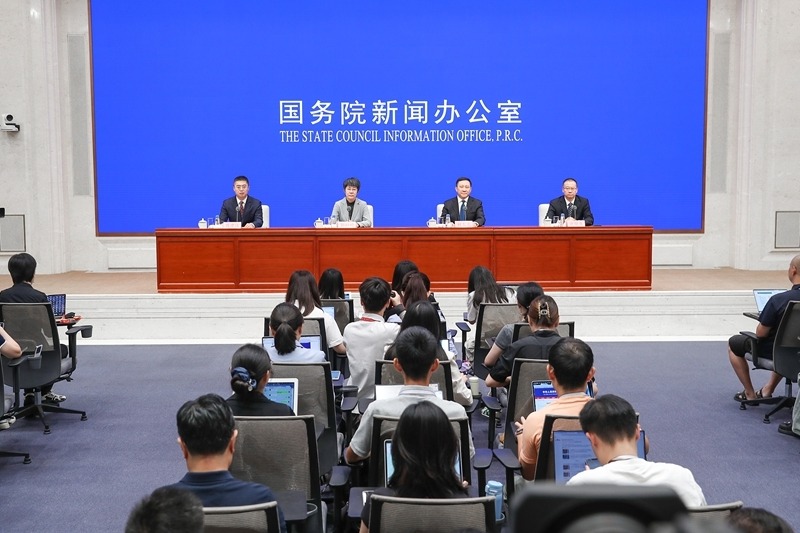
In the 60 years since the Xizang autonomous region's establishment, local education has developed dramatically, reflected in the improved facilities, teaching environment and quality, and education investment, according to the head of the regional education department.
Preliminary statistics from the regional education department showed that funding increased from 3.48 million yuan ($485,000) in 1965 (not adjusted for inflation) to nearly 40 billion yuan in 2024, a combined investment of over 381 billion yuan (also not adjusted).
Yu Han, secretary of the department's Party leadership group, stated that by 2024, Xizang had established a modern education system covering preschool education, compulsory education, vocational education, higher education, continuing education and special education.
The region had 3,618 schools at all levels and types as of last year, over twice as many as in 1965. It also had 969,900 students and 97,300 teachers, 14.4 times and 32.4 times as many as 60 years ago, respectively, according to the official statistics.
According to Yu, Xizang implemented an education policy known as sanbao in 1985 for the children of farmers and herdsmen, in which the government paid for school meals, clothing and lodging. Now, children are exempt from meals, lodging and tuition.
"Over the decades, the region has elevated the educational subsidy standards 22 times, with the per capita annual standard reaching 5,620 yuan in the autumn semester of 2024," Yu said.
As of 2024, the gross enrollment rate for preschool education stood at 91.33 percent; the consolidation rate for nine-year compulsory education was 97.86 percent; the gross enrollment rate for high school education was 91.65 percent; and the gross enrollment rate for higher education was 57.81 percent. All these rates have reached or exceeded the national average, according to the secretary.
Established in 1962, the Lhasa Experimental Primary School is one of the earliest modern primary schools in Xizang.
"Since most of our students are Tibetans, the Tibetan language is a core subject, similar to the national curriculum of Chinese language and mathematics, with six hours per week," said Yu Biqiong, the principal of the school's Jiaoyucheng branch. Yu added that the school offers more than 20 selective courses, including Tibetan classics recitation, dances, Chinese and Tibetan calligraphy, music and chess in addition to the national curriculum.
Student Zhen Phurdron said that the school has excellent teaching standards, and the teachers perform well. She selected a course in Chinese calligraphy, while her classmates studied art, Chinese and Tibetan chess, and aircraft model-making.
In addition to compulsory education, a relatively complete higher education system has been gradually established in the region, including graduate programs for master's and doctoral students, undergraduate programs, continuing education courses and programs for international students.
As of 2024, there were seven higher education institutions in the region, with a total of 50,800 students enrolled.
Xizang University began developing first-class disciplines as part of the "Double First-Class" initiative in 2022. Xizang Minzu University was elevated from college to university status in 2015, followed by Xizang University of Tibetan Medicine in 2018. They have since become doctorate-granting institutions.
Dorje Rinchen, vice-president of the Xizang University of Tibetan Medicine, said though it's relatively small, the school has a comprehensive education system with undergraduate, graduate and doctoral programs.
"In terms of cultural inheritance, our university has collected a rich variety of ancient books and documents on Tibetan medicine and saved them in the library," he said.
He credited the National Publication Foundation for making the university a leading publisher of photographic reproductions of books on rare ancient Tibetan medicines. "Early this year, the university completed the official publication of a series of postgraduate textbooks on Tibetan medicine," he said.