Society
Kitchen waste recycling rules are key ingredient
By Qian Yanfeng (China Daily)
Updated: 2011-03-21 08:30
 |
Large Medium Small |
|
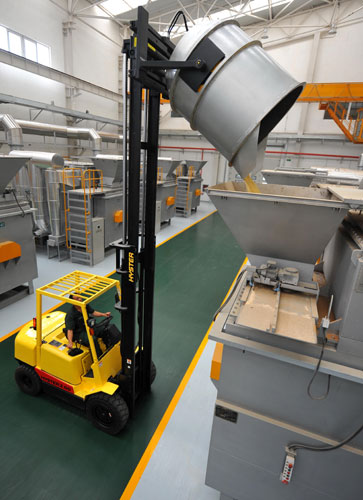 A worker uses a forklift truck to pour materials into a waste processing machine at the Gao'antun Kitchen Waste Processing Plant in Chaoyang district, Beijing, in July. The plant, which is the largest in China, is able to process 400 tons of waste a day. It began trial operations in July and formal operation started in September. [Photo / Xinhua] |
BEIJING - China should bring in national standards to regulate the recycling of kitchen waste in order to protect public health while promoting the reuse of valuable materials, said a national legislator.


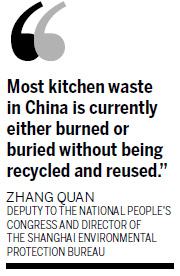
"The lack of standards in regulating the way such waste is recycled is one major hurdle."
Kitchen waste, which is also referred to as wet waste, comprises such things as leftover food and fruit peel and makes up 63 percent of household garbage in Shanghai.
Zhang said it could be turned into animal feed additives and organic fertilizer. Once it is separated from dry waste, the handling of that waste would also be simplified and sped up, he said.
"Without national standards, it's hard for the government to evaluate the quality of recycled products," he explained. "They could then run the risk of endangering public health because substandard recycled products could enter the food chain."
|
 |
Zhang said the lack of regulations and subsequent underdevelopment of the recycling industry was holding back investment.
"It means it will be difficult for technologies involved in the recycling sector, and the recycled products, to be promoted on a large scale," he said.
Since 2000, Shanghai has collected and recycled 1.2 million tons of kitchen waste - mainly from big restaurants - which is a small amount compared to the actual quantity of kitchen waste across the city, he explained.
The city currently produces more than 7 million tons of household garbage a year or some 20,000 tons a day. That equates to more than a kilogram a day per person.
The massive production of waste is putting pressure on the city's waste treatment facilities, which are supposed to handle a maximum of 18,000 tons a day.
"We're therefore promoting a garbage classification system in the city that can effectively reduce the amount of waste being treated while promoting resource recycling," said Zhang.
By the end of this year, 500,000 households in 1,000 residential communities will be asked to divide their household garbage into wet and dry waste, the Shanghai greenery and public sanitation bureau said in mid-January. The move is widely expected to facilitate the city's efforts to promote kitchen waste recycling.
But the current plan is not as ambitious as the earlier aims of the local authorities that had wanted a full four-category waste separation system across the city. That idea failed to win support from residents because of their lack of knowledge about waste separation.
Zhang said the time is right for the Ministry of Agriculture to work out a set of national standards governing the recycling of kitchen waste because several Chinese cities are now launching pilot projects for kitchen waste recycling.
Zhang also called on related government departments to combat the use of "drainage oil," which he said poses a serious health risk.
Drainage oil is made from discarded kitchen waste that has been refined. It is reportedly commonly used by small restaurants because it is cheaper than fresh oil.
While the oil may look clean, it contains toxic substances, including aflatoxin, which can cause cancer, he said.
 主站蜘蛛池模板:
芦溪县|
新疆|
德江县|
七台河市|
休宁县|
万盛区|
丁青县|
岳阳市|
浦东新区|
枣庄市|
深水埗区|
尚义县|
丰城市|
日照市|
翁源县|
鄱阳县|
修文县|
富平县|
囊谦县|
陆良县|
察隅县|
蚌埠市|
上虞市|
桃园市|
华亭县|
西藏|
大丰市|
句容市|
南昌市|
简阳市|
张掖市|
澄城县|
华坪县|
聂荣县|
高台县|
平昌县|
荥阳市|
义乌市|
荔波县|
河北区|
泉州市|
乐东|
克什克腾旗|
沧源|
衡山县|
永川市|
成都市|
泾阳县|
沈丘县|
汶上县|
青冈县|
永宁县|
湘潭市|
通化县|
西和县|
中方县|
铜山县|
浪卡子县|
潼关县|
手机|
友谊县|
澄城县|
瑞丽市|
曲阳县|
宝山区|
岳普湖县|
洪雅县|
广饶县|
西丰县|
凤山市|
武隆县|
丰原市|
得荣县|
合肥市|
湘潭市|
兰州市|
青海省|
海伦市|
辽宁省|
体育|
石门县|
余江县|
主站蜘蛛池模板:
芦溪县|
新疆|
德江县|
七台河市|
休宁县|
万盛区|
丁青县|
岳阳市|
浦东新区|
枣庄市|
深水埗区|
尚义县|
丰城市|
日照市|
翁源县|
鄱阳县|
修文县|
富平县|
囊谦县|
陆良县|
察隅县|
蚌埠市|
上虞市|
桃园市|
华亭县|
西藏|
大丰市|
句容市|
南昌市|
简阳市|
张掖市|
澄城县|
华坪县|
聂荣县|
高台县|
平昌县|
荥阳市|
义乌市|
荔波县|
河北区|
泉州市|
乐东|
克什克腾旗|
沧源|
衡山县|
永川市|
成都市|
泾阳县|
沈丘县|
汶上县|
青冈县|
永宁县|
湘潭市|
通化县|
西和县|
中方县|
铜山县|
浪卡子县|
潼关县|
手机|
友谊县|
澄城县|
瑞丽市|
曲阳县|
宝山区|
岳普湖县|
洪雅县|
广饶县|
西丰县|
凤山市|
武隆县|
丰原市|
得荣县|
合肥市|
湘潭市|
兰州市|
青海省|
海伦市|
辽宁省|
体育|
石门县|
余江县|