Economy
CNNC: Nuclear power still valid
By Liu Yiyu (China Daily)
Updated: 2011-03-26 07:49
 |
Large Medium Small |
|
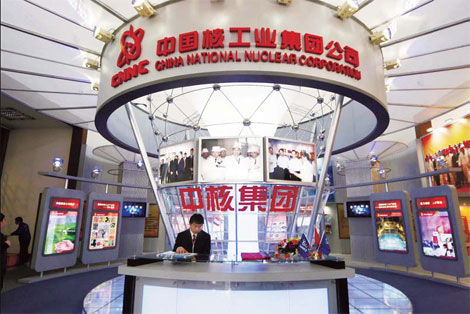
The logo of China National Nuclear Corporation at an international industry exhibition in Beijing. The company said the crisis in Japan should not cause China to back off from its planned nuclear development. Nan Shan / For China Daily |
Expert says crisis in Japan should not derail the industry's development
BEIJING - Japan's nuclear crisis should not derail China's plan to develop the nuclear power industry, said the head of research at China National Nuclear Corp (CNNC), the country's largest nuclear plant operator, on Friday.
"China should not change its development plan in the nuclear power sector," said Pan Ziqiang, director of the Science and Technology Commission at CNNC. He added that nuclear power is a major and reliable source for China to meet its energy demands, and one which is environmentally friendly.
"China has a sound record in nuclear safety," Pan said. "We have never had a nuclear incident beyond level two."
According to the International Atomic Energy Agency's (IAEA) nuclear event scale of one to seven, level two means significant failures in safety provision but with no actual consequences.
Japan raised the crisis level at the Fukushima Daiichi plant to five, similar to the level at Three Mile Island in the United States in 1979. Level five is defined as a limited release of radioactive material likely to require implementation of some planned countermeasures and to cause deaths from radiation leakage.
"China will not change its policy in developing the nuclear power industry," Sun Qin, president of CNNC, said during a visit to Qinshan nuclear power plant in Haiyan county in Zhejiang province, China's first domestically developed nuclear facility, on Thursday.
On March 19, China's National Nuclear Safety Administration ordered existing facilities to begin safety checks in the wake of the Japanese incident. The checks included location adaptability to external incidents such as floods, earthquakes or any extreme natural disasters as well as the reliability of the emergency power supply, which are all the possible factors that might cause an event similar to that in Japan.
China's State Council decided to halt new approvals of nuclear projects on March 16.
Despite this, the country is likely to start building a nuclear power plant next month in Shandong province, using fourth-generation technology, according to Huaneng Nuclear Power Development Co, the project's developer.
China currently has six nuclear power plants in operation, located along the country's eastern and southern coasts. The country is also considering building several inland nuclear stations in provinces such as Hubei, Hunan, Jiangxi, and Jilin, in addition to Chongqing municipality.
"It is necessary for China to build inland nuclear stations, but they should all be subject to stricter standards for measuring radiation," said Pan.
Japan's crisis has also raised a debate over the safety of second-generation nuclear technology. China currently uses the same second-generation nuclear technology as that employed in Japan.
The use of third-generation technology, such as Westinghouse's AP1000 reactor and Areva's EPR reactor, is gaining ground commercially.
China is currently building 28 new reactors, six of which will use third-generation technology.
China Daily
(China Daily 03/26/2011 page9)
 主站蜘蛛池模板:
余江县|
凤翔县|
尼勒克县|
贵阳市|
加查县|
哈密市|
鲁甸县|
奉新县|
诸城市|
大安市|
若羌县|
公主岭市|
韶山市|
城步|
额济纳旗|
仁化县|
榆林市|
视频|
霍城县|
玛沁县|
和硕县|
贡嘎县|
天等县|
栖霞市|
依安县|
武邑县|
孝感市|
滦平县|
孝昌县|
保山市|
玉龙|
杭州市|
广安市|
昌宁县|
金塔县|
任丘市|
宝山区|
扬州市|
长宁县|
平邑县|
廉江市|
青浦区|
招远市|
左云县|
玛沁县|
潜江市|
漳浦县|
屯门区|
邵阳县|
林西县|
洪江市|
铅山县|
平谷区|
诸城市|
宜良县|
响水县|
崇仁县|
灵山县|
开平市|
托里县|
正蓝旗|
徐水县|
乌兰浩特市|
揭阳市|
蒲城县|
璧山县|
涪陵区|
梨树县|
剑河县|
海宁市|
和顺县|
蓬溪县|
镶黄旗|
清原|
乐昌市|
紫云|
海兴县|
上饶县|
吐鲁番市|
高淳县|
洪泽县|
桃江县|
主站蜘蛛池模板:
余江县|
凤翔县|
尼勒克县|
贵阳市|
加查县|
哈密市|
鲁甸县|
奉新县|
诸城市|
大安市|
若羌县|
公主岭市|
韶山市|
城步|
额济纳旗|
仁化县|
榆林市|
视频|
霍城县|
玛沁县|
和硕县|
贡嘎县|
天等县|
栖霞市|
依安县|
武邑县|
孝感市|
滦平县|
孝昌县|
保山市|
玉龙|
杭州市|
广安市|
昌宁县|
金塔县|
任丘市|
宝山区|
扬州市|
长宁县|
平邑县|
廉江市|
青浦区|
招远市|
左云县|
玛沁县|
潜江市|
漳浦县|
屯门区|
邵阳县|
林西县|
洪江市|
铅山县|
平谷区|
诸城市|
宜良县|
响水县|
崇仁县|
灵山县|
开平市|
托里县|
正蓝旗|
徐水县|
乌兰浩特市|
揭阳市|
蒲城县|
璧山县|
涪陵区|
梨树县|
剑河县|
海宁市|
和顺县|
蓬溪县|
镶黄旗|
清原|
乐昌市|
紫云|
海兴县|
上饶县|
吐鲁番市|
高淳县|
洪泽县|
桃江县|