Green drivers
Updated: 2011-11-27 07:28
By Lan Lan (China Daily)
|
|||||||||||


BEIJING - Energy conservation and environmental protection is a long-term strategy as well as an urgent practical option for China, said Vice-Premier Li Keqiang on Saturday, two days ahead of the climate change summit in Durban, South Africa.
|
 |
|
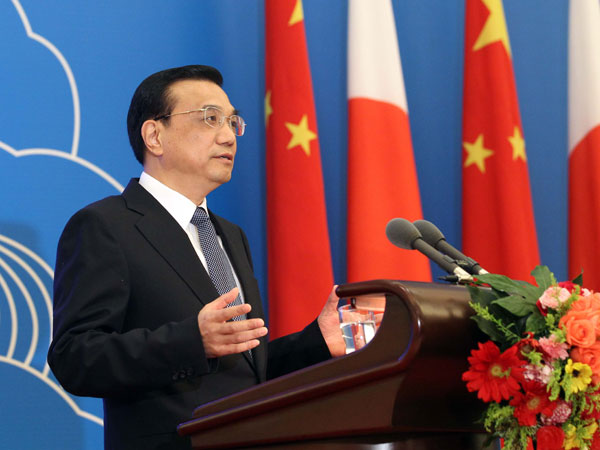
Two days before the climate summit in South Africa, Vice-Premier Li Keqiang speaks on Saturday at the sixth China-Japan forum on energy-saving and environment protection in Beijing. [Photo/Xinhua] |
The global economic scenario has become more complicated, Li said. The possibility for a long-term downturn has expanded and the process of global economic recovery may see more twists and turns.
"To maintain robust growth, it's a necessity to innovate the mode of development and nurture new driving forces," Li said at the sixth China-Japan forum on energy-saving and environment protection in Beijing on Saturday.
Energy-saving and environmental protection is in line with China's economic development transition.
Without structural adjustment and transformation, it's unlikely to maintain sustainable economic growth and a robust momentum of economic development, Li said.
China will further improve the quality of its economic growth by promoting energy efficiency and energy saving, reducing consumption and pollution, improving environmental protection, he said.
China is committed to improving "the quality of economic growth", and with this as a prerequisite, to maintain the economy with a long-term, steady and relatively fast growth.
Countries are rethinking and exploring future driving forces in economic growth amid the worsening economy, while promoting green economy has seen common consensus among countries, Li said.
Promoting energy conservation and environmental protection, as well as merging it into all sectors of society, is a strategic task, as well as a practical urgent option for China, he said.
Energy conservation and environmental protection will be a key "breakthrough point" for China's economic transformation and is beneficial to forming new driving forces.
Zhang Jianping, senior researcher at the Institute for International Economic Research under the National Development and Reform Commission, said the increasing eurozone debt crisis and financial turmoil had posed greater pressure to China's economic transition.
"It's become more urgent for China to highlight innovation and reduce its reliance on exports as all of its major trading partners are facing bleak economic outlooks," Zhang said.
Energy conservation and environmental protection are among the seven strategic emerging industries in advancing China's economic development.
China has huge potential in the energy-saving and environmental protection market, offering many opportunities for both domestic and international companies.
The output value of China's energy conservation and environmental protection is estimated to be 4.5 trillion yuan ($709 billion) by end 2015.
Zhang Ping, minister of the National Development and Reform Commission, China's top economic planning agency, said China is taking "building an economic society and environment friendly society" as its basic national policy.
According to China's 12th Five-Year Plan (2011-2015), it targets to reduce energy consumption per-unit GDP by 16 percent as compared with that in 2010.
China will take active measures in combating climate change, a common challenge facing humanity, said Zhang.
China emphasizes both mitigation and adaptation in addressing climate change, synergizing industrial structure and energy structure adjustment, in its efforts to curb greenhouse gas emissions effectively, Zhang said.
China will extensively expand international cooperation in this area to strengthen abilities in tackling climate change, under the principle of "common but differentiated responsibilities", he said.
Fifty-one projects related to energy-saving and environmental protection were signed between China and Japan during the forum, which was attended by about 1,000 officials and entrepreneurs from China and Japan.
Edano Yukio, Japan's Economy, Trade and Industry minister said it is crucial to further the strategic and mutually beneficial relationship.
The nuclear energy crisis, spawned by a massive earthquake and tsunami in March, caused power shortages in Japan and also pushed the government to make stern determinations in energy conservation, he said.
Japan is willing to share technology and experiences with countries facing energy constraints and environmental problems, Yukio said.
"China's market advantage and Japan's technology complement each other. Much can be done in this area," said Li. China also pledged to strengthen efforts in intellectual property protection to create a healthy environment for technology cooperation. Cooperation in energy and environment has become crucial in bilateral trade.
China is Japan's biggest trading partner. Japan is China's fourth trading partner and the third largest investor. Bilateral trade increased 17.7 percent year on year to $281 billion in the first 10 months this year.








Hot Topics
HIV/AIDS, Egypt protest, Thanksgiving, climate change, global economic recovery, home prices, high-speed railways, school bus safety, Libya situation, Weekly photos
Editor's Picks

|
|
|

|

|

|