Comments()
  Print
Print  Mail
Mail  Large Medium Small
Master Yuen's expounded qigong principles come under the medical category, with their primary aim to treat and heal illnesses.
He calls them the "18 forms of tai chi", and has given them colourful names like "Rowing a Boat in the Middle of a Lake", "Pushing the Waves" and "Flying Wild Goose". The set combines all three elements — temperate and soft exercise, breathing and meditation.
"Tai chi qigong comes from tai chi boxing, with the three principles of revitalizing the body, aiding breathing and enhancing mental capabilities," he says.
"It's easy to learn, allows for rapid building up of the bodily system, and is very effective for people with insomnia and heart-related problems.
"In the process, I found that qigong, together with good food and medical care, offers a powerful weapon against cancer. The exercise stimulates and increases oxygen supply to the cardio vascular system, thereby eliminating potential cancer causing cells, especially those causing lung or liver cancer."
Yuen has been an ardent advocate favoring official recognition for Chinese medical practitioners. In Hong Kong, the traditional healers have waged a long campaign to win back their status and rights.
At the height of the SARS outbreak in the city in 2003, Yuen called for herbalists to be brought in to fight the disease, citing the success of Chinese doctors in Guangzhou in treating SARS and keeping the mortality rate of the illness to a minimum.
But, the appeal fell on deaf ears.
"Western medicine and drugs deal only with combating bacteria. They're unable to get to the root of the problem — controlling the spread of disease-causing cells. Chinese medicine has its healing qualities and excellence," Yuen argues.
Yuen's association with qigong arose from his own poor physical condition at birth. "I was sick most of the time with headaches, due to under-nourishment. At 12, I had liver problems which aggravated my condition", says Yuen, who was born in Zhongshan, Guangdong province.
Qigong struck his mind after he had read books on the ancient art by a former vice-chairman of the National People's Congress. "I religiously followed the rules laid out in his articles and tried meditation. After a year, my health problems disappeared and I began to love and preach qigong", says Yuen.
In 1970 — at the height of the "Cultural Revolution", the chaotic period from 1966-1976 — Yuen decided to make a break. He fled Zhongshan and swam for five nights, surviving on peanuts and leaves, before coming ashore at Taipa in Macao.
Yuen describes his ordeal as a "journey back from the grave", adamant that he wouldn't have survived had it not been for the meditative art he had picked up as a boy. "That shows the hidden power of qigong".
He continued his qigong practice in Hong Kong and at the age of 43, sought the aid of Shaolin and Buddhist masters. "I plunged immediately into tai chi qigong (a branch of qigong). It took me more than a year to establish the basis and ideals of the '18 forms of tai chi'."
His ties with the WSMQG have been close. Since 2004, Yuen has remained the only tai chi qigong master from Hong Kong and the mainland to have staged demonstrations five times at international qigong symposiums in Beijing and Shanghai.
Currently, there are an estimated 50,000 practitioners of tai chi qigong in Hong Kong, many of them graduates of the qigong classes that Yuen started in the city in 1999.
"The qualities and aims of qigong are real. Hong Kong is an ideal place to practice it, as it requires very little space. The awareness of maintaining good health has grown immensely with an aging population. The art must be publicized to help the people overcome old age-related sicknesses," Yuen says.
He strongly believes that a real qigong master must devote himself to do a better job on a full time basis.
Yuen's next step is to take the art back to his roots — Zhongshan — the birthplace of Sun Yat-sen, widely regarded as the founder of modern China.
Yuen is teaming up with a mainland entrepreneur to run a hospital-cum-herbal center to provide "convenience store-style" medical care, treatment and facilities.
The five-story facility, located in the eastern suburb of Zhongshan, will be one of the most advanced and comprehensive in the world in terms of medical care, rehabilitative and herbal treatment and qigong training. The center is to become operational by the end of this year. It will include one floor to be used entirely for qigong teaching under Yuen's supervision.
China Daily was taken on a tour of the facility, which will be supplemented by a 1,000-hectare (660,000 square meter) farm planted with about 1 million herbal plants, vast in their varieties. The hospital will be staffed by Chinese medical specialists and nurses with equipment based on Chinese medical principles.
"Zhongshan is now home to thousands of elderly people from Hong Kong who have settled down here. We also have in mind the tens of millions of ethnic Chinese abroad who may return to Zhongshan one day for medical care.
"We will use our resources to give our people the best medical services, train talent in the Chinese medical field, help orphans and make a greater contribution to the country", says a source close to the project.
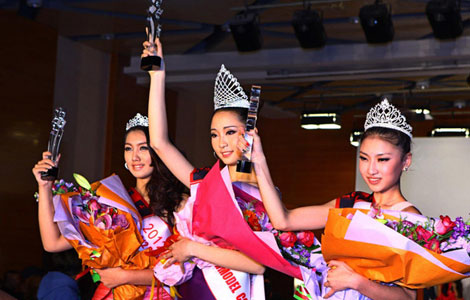
 Modeling contest part of China-US exchange
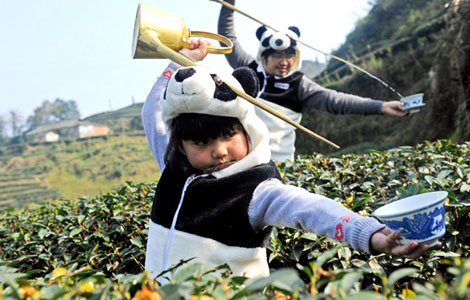 Specially fertilized tea
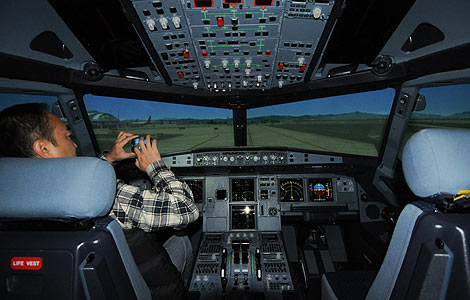 Simulator to support A320neo commissioned
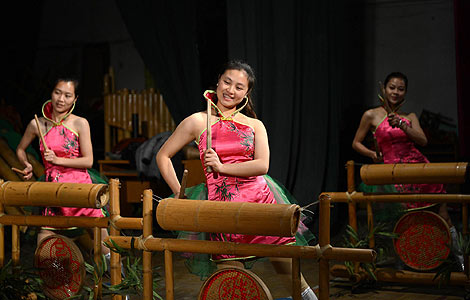 China's cultural sector sees steady growth in 2011
 Travel chaos after snowstorm hits NE China
 Inflation expected to rebound in November
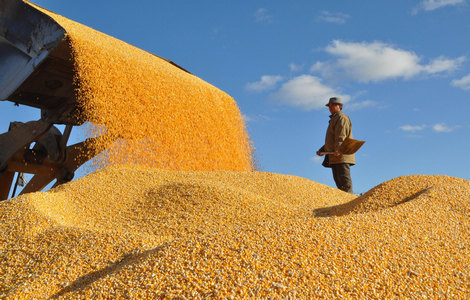 Grain output grows for 9th consecutive year
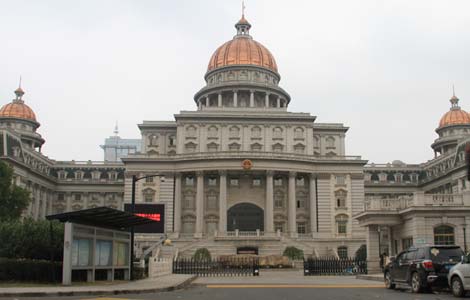 White House-like buildings in E China city
Copyright 1995 - 2010 . All rights reserved. The content (including but not limited to text, photo, multimedia information, etc) published in this site belongs to China Daily Information Co (CDIC). Without written authorization from CDIC, such content shall not be republished or used in any form. Note: Browsers with 1024*768 or higher resolution are suggested for this site.
License for publishing multimedia online 0108263 Registration Number: 20100000002731