Chemical residue in NZ milk raises concerns
Tests are being urged on dairy products imported from New Zealand to see whether they have traces of a toxic chemical, despite reassurances from the country that such products are safe.
Low levels of dicyandiamide, or DCD, were found in dairy products in New Zealand, according to Chinese media reports on Friday.
DCD residue got into the milk as farmers in the country applied the chemical to pastures to prevent nitrate, a fertilizer byproduct that also is harmful to health, from getting into rivers and lakes.
 |
|
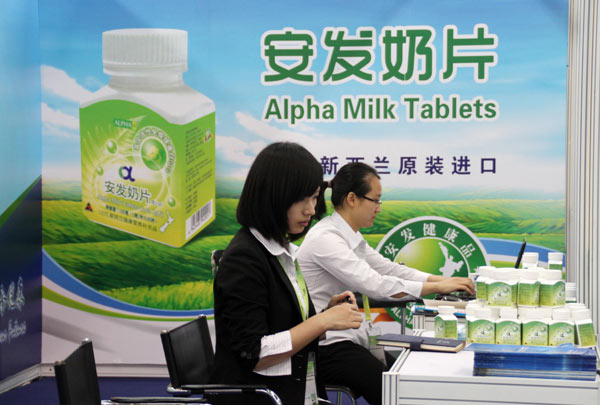
Workers arrange milk products imported from New Zealand at a dairy expo in Beijing. [Photo by Wu Changqing / for China Daily] |
Although it has a low toxicity, large doses of DCD can kill mice, said Dong Jinshi, executive vice-president of the International Food Packaging Association and an expert in food safety.
"DCD is a chemical material and is not an additive to food," he said. "It is also a material from which melamine is produced."
At least six Chinese infants died and thousands became ill after drinking melamine-contaminated milk in 2008 in China, which reduced consumers' confidence in domestic dairy products. Many customers subsequently turned to imported milk powder, especially New Zealand brands.
New Zealand agricultural authorities on Friday reassured dairy consumers in China that its products are safe, Xinhua News Agency said.
Ravensdown and Ballance Agri-Nutrients Ltd, the two New Zealand makers of agricultural chemicals, announced on Thursday they had suspended sales of DCD amid fears the residues could harm the country's valuable international dairy trade.
A New Zealand Ministry for Primary Industries spokeswoman told Xinhua on Friday that DCD residues had not affected dairy products exported to China.
"There is no food safety issue, and this is a voluntary suspension of a product applied to pastures. It is a proactive step to ensure New Zealand's export markets, including China, remain confident in the high quality of New Zealand milk products," she said in an e-mail.
"The New Zealand government's diplomatic post in China has been briefed about DCD and will be talking to their counterparts in China if required."
The New Zealand ministry believed that only "a very small amount of product might contain residue".
"This is because only 5 percent of New Zealand dairy farmers have been using DCD, and DCD affects a limited number of dairy products for a short window of time that follows its use two to three times a year," she said.
Dairy products make up a quarter of New Zealand's total exported goods by value, and last year their total export value was 14.5 billion New Zealand dollars ($12.13 billion). About 80 percent of China's imported milk comes from New Zealand, according to Xinhua.
Dong, however, said caution should be exercised to ensure safety.
"It is too soon to say these milk products containing DCD are safe, and currently there is no safety standard for DCD content in food," he said.
"The related departments, including customs and quality control authorities, should conduct risk evaluation as soon as possible for safety," he said.
The General Administration of Quality Supervision, Inspection and Quarantine had not replied to China Daily's interview request by press time on Friday.
A marketing manager at Beijing Jingkelong Co, a retailer that has more than 200 stores in Beijing and neighboring Hebei province, who asked to remain anonymous, said the company has not taken any action against milk products imported from New Zealand.
"We will certainly withdraw any products if we receive notice from commerce and industry supervision authorities," she said. "We don't know which brands of milk products were involved."
Many consumers have expressed concerns after the news made headlines in Chinese news portals on Friday.
"I have not heard the news, but I am quite surprised to hear milk powder made from New Zealand contains a poisonous substance," said a 31-year-old mother surnamed Yang in Beijing.
"I hope the related government departments can intensify tests and ensure such products are safe," she added.
Dong from the International Food Packaging Association said the incident may harm consumers' confidence in New Zealand milk products.
Contact the writer at wangxiaodong@chinadaily.com.cn