Recalling the past, looking to the future
Q+A: Zhong Nanshan
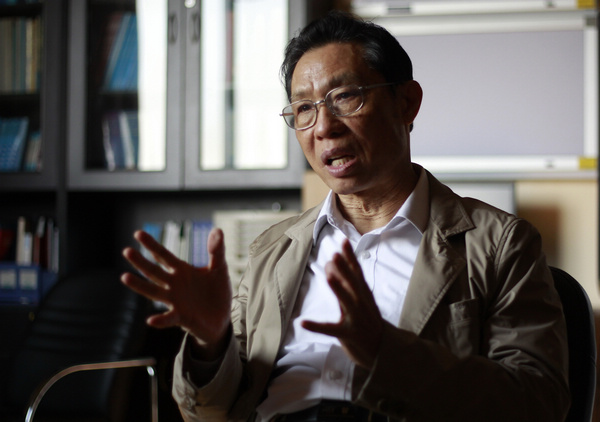
Editor's note: Zhong Nanshan, director of the Guangzhou Institute of Respiratory Disease and academician with the Chinese Academy of Engineering, talks to Jiang Xueqing.
Q: How do you view the impact of outbreaks such as SARS on national stability?
A: It's definitely a matter vital to national well-being and people's livelihoods, because SARS is also a livelihood issue. People had not expected that an acute infectious disease could be so powerful, that it could create instability and cause huge economic losses.
I think the lesson that SARS taught us is that people's livelihoods should always be our primary concern. Outbreaks such as SARS could affect the development of the national economy if not handled properly.
Q: Looking back on the measures to combat SARS 10 years ago, do you have any regrets?
A: I think the biggest regret for me is the bias that the government, society, the public and the media had against medical staff.
 |
|
ZOU ZHONGPIN / CHINA DAILY |
Many cases have shown that most of our medical professionals are fulfilling their obligations to heal the wounded and rescue the dying, even at a risk to their own lives.
People blamed medical staff for a lack of professional ethics, but the reason behind the bias was actually China's healthcare system. Many people believe that the system is too heavily geared toward profit and not public welfare, and it still lacks government funding. As a result, medical services have been forced to become market-oriented.
Q: You have said that air pollution poses a greater danger than SARS, because no one can escape it. How big a risk does it pose to health?
A: The biggest risks that air pollution poses to public health are ailments such as pharyngitis, bronchitis and conjunctivitis, but what is more damaging is the cumulative negative effect in the long run.
I am collecting information relating to air pollution and trying to find evidence to prove the relationship between a high PM2.5 index and illnesses such as cardiovascular diseases, respiratory diseases and lung cancer.
The most direct impression is that the incidence of lung cancer has risen by 60 percent in Beijing in the past decade, but some statistics suggest the number is 59 percent. Of course, the high smoking rate is the direct culprit, but that has not changed much during the past 30 years. Meanwhile, the number of patients with lung cancer has risen significantly.
While collecting the information, I hit a few obstacles, because some of the studies were carried out in countries where air pollution is far less serious than in China.
However, this is how the data correlates: As the PM2.5 index rises, hospital outpatient and admission rates increase greatly. The current air quality in China is really worrying. We need to conduct further studies in this field to obtain more conclusive information.
Q: Do you foresee the outbreak of any acute infectious diseases?
A: If there is an outbreak, I think it will be flu. The outbreak of a contagious disease usually occurs via the respiratory system. Flu spreads through the air and has greater potential to become a pandemic compared with other transmission routes such as food. The flu virus has many variations, but we only have a limited number of medicines to tackle it.
When we were conducting research in 1998 and 1999, we found the SARS corona virus antibody in the serum of blood donations. It meant that the virus may have existed in the human body for a long time.
Q: When you recall the outbreak, what impressed you most?
A: I think it's that I persisted with my own methods, no matter what other people said. When we were asked to change our treatment methods, we didn't. At that time, our team had treated a few SARS patients and found that it was not too difficult to cure them.
I asked the hospital director for permission to transfer the most severely stricken patients to our hospital. The director hesitated for a brief moment; if we cured these patients, the image of the hospital would be greatly enhanced, but if we failed, no patients would ever come to us again.
Other people said I put my responsibilities before everything else, but it's not as simple as that. I made the suggestion because I had confidence in my methods of handling the disease.
The key to persisting with one's own methods is to recognize the facts and respect them. At first, I also thought chlamydia was a likely cause of SARS, but anti-chlamydia treatments proved ineffective in curing SARS. That's why I later disagreed with the claim that chlamydia was the prime culprit behind SARS.
Q: You have said you want to build the top-ranked research center for respiratory diseases in Asia. What are the challenges?
A: The infrastructure. Guangzhou Institute of Respiratory Disease is trying to build a platform and has received great support from Guangdong's provincial government. We really hope to realize that dream. Many world-famous respiratory disease centers have contacted us, but we don't have a platform for cooperative research.
We have a three-story laboratory building with a floor area of 3,000 square meters. It's not big enough, but we plan to do a lot of research on chronic obstructive pulmonary diseases, asthma, lung cancer and emerging infectious diseases. We have many research projects, but we don't have a base that can meet the demands of our research.
Q: In Beijing, some SARS patients with sequela (a chronic condition that is a complication of an acute condition) thought they were victims of steroid abuse during their SARS treatment. What do you think?
A: We never said that we should give patients steroids if they were diagnosed with SARS. For the use of steroids, we always followed the rule of the three Rs: Right patient; right time; and right dose. We rarely let the dosage go beyond 240 milligrams a day during the treatment. In some places in Hong Kong, the steroid dose used was five to 10 times greater than what I used.
One victim of SARS sequela in Hong Kong sued the hospital for steroid abuse. In 2004, I received a letter from the court, inviting me to serve as a medical adviser for this case. I said that saving the patient's life was the hospital's top priority. Although the doctors made a mistake by overusing steroids, I don't think they violated the law.
In Guangdong province, the incidence of SARS-associated femoral head necrosis is only 2.4 percent. For those who blamed me for ruining many people with steroids, I can only smile and let it go.
It is said that a fund will be set up in Beijing for patients with SARS sequela. I'm in favor of the fund. Those patients are victims of SARS, but not victims of the doctors. No one had experience of treating such a powerful infectious disease before. Saving the patient is the primary duty of every doctor.