Historical responsibility of developed countries unevadable
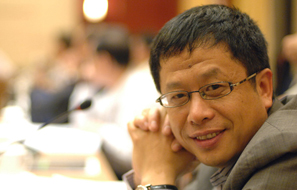
BONN - As global representatives gathering at German city of Bonn for a new round of UN climate change talks, China's Chief Negotiator Su Wei warned developed countries that their historical responsibility for climate change is unevadable.
Su urged the developed countries to increase their mitigation ambition and implement their pledge for assisting developing countries.
Key issues in the talks which ended on Friday in Bonn include the scope, structure and design for a new climate change agreement set to come into force in 2020 and enhancing global ambition for efforts against climate change in the pre-2020 period.
The decision to make the new agreement was made in Durban, South Africa in 2011, when the Ad Hoc Working Group on the Durban Platform for Enhanced Actions was established and authorized to develop a protocol, another legal instrument or an agreed outcome with legal force under the United Nations Framework Convention on Climate Change Convention and applicable to all parties. The process should be completed no later than 2015 and the instrument will come into effect and be implemented from 2020.
"The aim of Durban Platform is clear, that is to further enhance the full, effective and sustained implementation of the Convention. It is by no means a process to create a new international climate regime," said Su.
During the discussion this week, however, some developed countries tried to make a new interpretation about the key Convention principle of "equity" and "common but differentiated responsibilities", claiming that differentiation in obligations based on a developed-developing country was not suitable anymore, as the economy capacity and emission share had changed, asking developing countries to offer mitigation efforts with the same nature with those from developed countries.
"That will definitely not be accepted by developing countries," said Su.
He stressed that developed countries had a major responsibility on global climate change. A great part of green house gases that they emitted during their process of industrialization still exist in the atmosphere, which consequence is burdening developing countries, who are facing challenges of developing economy, erasing poverty and improving people's life at the same time.
"The developed countries' emission space has been used up by their historically accumulated emission. They now have to undertake ambitious, legally binding and economy-wide quantified emission reduction commitments. Developing countries' mitigation actions in the context of sustainable development should be consistent with their national circumstances and supported and enabled by adequate finance, technology and capacity building support from developed countries. This is what the principle of 'equity' and 'common but differentiated responsibility' is about," said Su Wei.
He said that China believes the dichotomy between developed and developing countries is the very foundation of the convention regime, thus should be insisted in the new agreement, which should cover all the key elements of mitigation, adaption, finance, technology development and transfer and capacity building.
Su Wei urged developed countries to continue undertaking their obligations under the Convention of providing finance and technology support for developing countries after the new agreement comes into effect in 2020, and to continue its own efforts of emission reduction at the same time.
He criticized that some developed countries hadn't made enough mitigation ambitions that could reflect their capacity and responsibility for the second commitment period of Kyoto Protocal, which would last until 2020. Their commitments to providing finance support for developing countries were not really implemented either.
"The core task of pre-2020 efforts against climate change is to implement agreements and outcomes that we had reached. Developed countries should implement commitments that they have made," said Su, adding that stakeholders should also reach an agreement as soon as possible on issues of how to apply the principle of Convention in the 2015 agreement and the agreement's scope, structure and design.
In Doha Climate Change Conference last year, the Durban Platform was asked to consider elements for a draft negotiating text for the new agreement no later than December 2014, with a view to making available a negotiating text before May 2015.
"Whether a text will be available by 2015 depends on stakeholders' will. China will continue participating the negotiations positively and constructively, helping to reach an agreement by 2015," said Su.