


Pollution control plan to slash PM2.5
Reducing coal consumption, utilizing low-sulfur fuel at heart of program
Hebei and Shandong provinces and the municipalities of Beijing and Tianjin will cut their combined coal consumption by 83 million metric tons by the end of 2017, according to a new air-pollution control plan.
The plan, released by the Environmental Protection Ministry on its official website on Monday, sets targets for six municipalities, provinces and autonomous regions in the Beijing-Tianjin-Hebei region.
 |
|
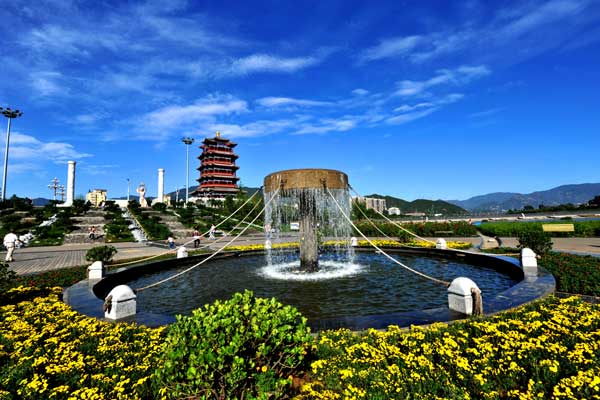
One measure of a new pollution plan calls for Beijing to subsidize taxi drivers for upgrading their vehicles to keep the air as clean as it was recently at Yongdinghe Park. Li wenming / for China Daily |
The plan aims to reduce the concentration of PM2.5 — particulate matter smaller than 2.5 microns in diameter that can go deep into the lungs — by about 25 percent from 2012 levels in Beijing, Tianjin and Hebei; by 20 percent in Shanxi and Shandong provinces; and by 10 percent in the Inner Mongolia autonomous region.
Measures that will achieve the goals include effectively reducing production capacity in many industries and controlling total coal consumption within the region.
In the steel industry, for example, Hebei is required to reduce its steel production capacity by at least 60 million tons by 2017. Shandong will cut its production capacity by 10 million tons by 2015.
The two provinces will also reduce their coal consumption by a combined 62 million tons in five years, accounting for almost 75 percent of the regional target.
The 60-million-ton quota will be allocated to cities and enterprises on Friday, said Chen Yongjiu, director of the Hebei Development and Reform Commission.
"Hebei will also cut the province's coal consumption by 40 million metric tons by 2017," Chen said. "The gap will be filled with electricity originating from outside the province, plus natural gas and renewable energy such as wind and solar power."
He said Hebei has the natural conditions to develop wind power. Its current production capacity is 10 million kilowatts.
As one of the biggest coal producers and consumers in China, Shandong has both the capacity and the obligation to reduce emissions, said Qiao Naizhen, director general of the Shandong coal industry bureau.
"I think the coal enterprises should make efforts to readjust their industrial structure to seek sustainable growth, developing some coal-related emerging industries, such as coal equipment manufacturing, modern logistics and high-end services," Qiao said.
According to the plan, coal consumption, as a proportion of Beijing's energy mix, will drop from its current mark of 25 percent to less than 10 percent by 2017.
Other major measures in the plan include comprehensive prevention and control of volatile organic compounds, starting with oil-gas recovery in all gas stations, storage tanks and tankers in the region before 2015.
Another key factor that affects the region's air quality is traffic. Public transportation will carry at least 60 percent of Beijing and Tianjin's passengers by the end of 2017, the plan said.
The plan specifically emphasized the importance for the country's three major fuel providers — Sinopec, China National Petroleum Corp and China National Offshore Oil Corp — to supply high-quality fuel with low sulfur content to the region on schedule, because previous experience shows that fuel-quality upgrades always lag behind vehicle upgrades.
The plan also asked several cities, including Beijing, Tianjin and Shijiazhuang, to implement policies such as subsidies to encourage taxi drivers to upgrade their vehicles' exhaust purification devices.
"Taxis are perhaps the most frequently used automobiles in cities, running more than 100,000 kilometers every year and emitting large amounts of pollutants into the air," said Ding Yan, deputy head of the Environmental Protection Ministry's vehicle emissions control center.
Ding said Hong Kong has already issued policies to help taxi drivers update their exhaust purification devices, which usually become invalid after the vehicles have been driven about 200,000 km. The fee is covered by the local government.
The success in meeting the targets will be evaluated every year by a special assessment team formed by the government and third parties, said Wang Jian, deputy head of the ministry's pollution prevention and control department.
He said the third parties may include industry associations, experts and think tanks, but the roles each party and the government will play have not been decided yet.
The six provinces, autonomous region and municipalities of the Beijing, Tianjin and Hebei cluster, plus Liaoning province, consume 43 percent of the country's coal, produce more than half the country's steel and suffer the most severe air pollution, Wang said.
Ju Chuanjiang from Shandong province and Zheng Jinran from Hebei province contributed to this story.









Registration Number: 130349


