Frayed ties between Asia's 2 largest economies to be concern at meetings
The two sessions are just around the corner and it is widely expected that strained China-Japan relations will be a hot topic for Chinese lawmakers and political advisers when they gather in Beijing.
|
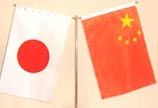 |
"Strong interdependence and mutual economic benefit with China are things that Japanese policymakers cannot ignore, despite this most difficult period in bilateral relations," said Liu Junhong, a researcher on Japanese studies at the China Institutes of Contemporary International Relations.
Statistics from the Ministry of Commerce show that trade between China and Japan in 2013 dropped by 5.1 percent from 2012. China's imports from Japan in the same period dropped by 8.7 percent following Japan's unilateral decision in 2012 to announce the "nationalization" of part of China's Diaoyu Islands.
"China's GDP surpassed that of Japan in 2010 and Tokyo will pay close attention to China's economic policy changes during the upcoming Two Sessions. ... Japan has been left feeling really threatened by China's rise," Liu said.
According to leading Japanese newspaper Mainichi Shimbun, there is strong public discontent in Japan because "there is not sign of relief on Japan's relationship with China and South Korea" and "there are voices calling for tangible results from the ruling Cabinet in regard to improving the relationships."
According to the latest polling figures published on Feb 16 by the newspaper, 71 percent of Japanese people interviewed said they were "upset" about the current situation of worsening relations between Japan and China.
The newspaper reported that even 65 percent of "the supporters of the Abe Cabinet" responded with "I am upset" when asked about the rising tensions.
Despite calls for friendlier ties, there is unlikely to be a thawing of the ice in the near future, observers say.
So far, Cabinet members in Tokyo have not shown any sign of concessions on the Diaoyu Islands issue.
"Japan has refused to recognize that the dispute exists and also has no intention of putting the dispute to one side," said Huang Dahui, a professor at the School of International Studies at Renmin University of China.
Japan's new National Security Council started functioning last December, and one of its six branches was explicitly labeled as "China and North Korea" - a move that observers said reflected Japan's identification of China as a major threat.
The hawkish Japanese Prime Minister Shinzo Abe is seeking "greater unilateral benefits for Japan" through the creation of a new blueprint for Japan's national security strategy, including the containment of China, Huang said.
To make things worse, Japan's government said last week it may "re-examine" a study that led the Japanese government to make a previous apology over forced prostitution during World War II.
Reuters characterized the new move as "a sign it is leaning toward a denial that officials were involved in organizing sex slavery."
One recent hawkish move prompted Washington, Japan's traditional ally, to deliver an unusually strong message of "disappointment" last December. The statement from the US followed Abe's visit to the Yasukuni Shrine, which endorses 14 Class-A Japanese war criminals convicted of atrocities during World War II.
Liang Yunxiang, a professor of Japanese studies at Peking University, predicted that Abe will not leave office until 2016, and his tough governing style - advocating military escalation and the revision of history - will "only become tougher".
"This serves the very interests of Japan itself, and this also relates to the issue of saving face. Abe may be defined as losing face if he softens his hostility toward China," Liang said.
"China should be prepared to deal patiently with Japan in the face of a range of provocations," said Li Xiushi, a researcher in Japanese studies at the Shanghai Institutes for International Studies.
Wang Zhuolun and Wang Xu contributed to this story.
zhangyunbi@chinadaily.com.cn
|
 |
 |
| Chinese citizens file suit against Japanese firms for forced labor | China plans national days on Nanjing Massacre, anti-Japanese war victory |


Copyright 1995 - . All rights reserved. The content (including but not limited to text, photo, multimedia information, etc) published in this site belongs to China Daily Information Co (CDIC). Without written authorization from CDIC, such content shall not be republished or used in any form. Note: Browsers with 1024*768 or higher resolution are suggested for this site.
License for publishing multimedia online 0108263 Registration Number: 130349