Chinese fight for front row seat in urbanization drive
BEIJING - For Liu Renxian and his wife, "farmer" is not the word to describe who they are, but what they do.
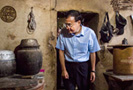
The couple lives in an apartment in a small town called Yangshan in East China's Jiangsu Province. They work at a 3,300-square-meter peach orchard that used to be their own.
Until recently, they had to worry about pests and weather, which could take a toll on the orchard's harvest. But not for now and the years ahead, as they have transferred the orchard to others and their old home in the countryside to the government. What Liu and his family get in return is a life in town.
Liu is among the dozens of families who have kissed their rural lives goodbye after the township government launched a program to encourage them to live in the urban area. Unlike migrants elsewhere in China who work in cities but don't enjoy the welfare urban dwellers do, those who give up their rural land are compensated with new homes in town and social benefits.
Wu Ligang, the communist party secretary of Yangshan township, said giving farmers full urban status is the guiding principle of the program. He added that participation is completely voluntary. The plots of land farmers exchange with local authorities for homes and urban social security coverage are then revamped for large-scale farming, sightseeing and other purposes.
Wu said yields at the orchard improved significantly after land plots were consolidated and farmed more efficiently. Some of the plots were reinvented into a sightseeing villa, becoming a steady source of tourism revenue for Yangshan.
The party secretary touted his program as having gotten "the best of both worlds" by retaining rural land while helping farmers transition smoothly into urban life.
Yangshan's approach is a good example of China's urbanization drive. However, people in some areas of China often find themselves in confrontation with local authorities when the two sides fail to agree on a compensation package for uprooting farmers from their land.
This confrontation sometimes turns into violent clashes. The stakes are high for the central government in Beijing. Authorities want to turn farmers into urban consumers to help steer economic growth away from reliance on investment to mass consumption-driven growth.
But the journey to cities is full of hurdles for average Chinese farmers. China's household registration system, known in the country as "hukou," blocks farmers' access to urban social benefits. This means China's massive population of migrant workers who work in the city will eventually have to return to the countryside if they cannot change their rural hukou to an urban one.
China had more people living in the cities than in the countryside for the first time at the end of 2011. Yet urban-registered Chinese account only for roughly 35 percent of the population, as many who live in the city don't have an "urban hukou."
This has prompted authorities to recalibrate their urbanization strategy by putting people at the center of the country's renewed urbanization drive.
In a high-level conference on the topic of urbanization, leaders stressed that they will put strict caps on population growth in major population centers such as Beijing, Shanghai and Guangdong and instead focus on creating small-sized cities and towns for farmers to settle.
Work is already under way. The state council, China's cabinet, has announced goals to unify rural and urban pension systems by 2020. The ruling Communist Party of China also set a target of granting urban resident status to 100 million migrant workers by the end of 2020.
Experts believe successful implementation of these reforms will earn rural Chinese a front row seat at the renewed urbanization drive.