|
|
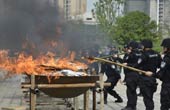
The original text of confession written by Suzuki Keiku. [Photo/saac.gov.cn] |
According to testimony written by Suzuki Keiku in July 1954, he was born in Fukushima Prefecture, Japan in 1890 and joined the Japanese War of Aggression against China in northeast China in 1934, serving as assistant commander of the 28th Infantry Regiment. In Apr 1945, he became lieutenant general and commander of the 117th Division. He was captured in Jilin on Aug 31, 1945.
|
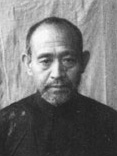 Suzuki Keiku [Photo/saac.gov.cn] |
Major crimes:
Around June 1934: "Killed two Chinese peasants" in Jinzhou.
Around early March 1935: Assisted Colonel Takagi to "burn down two villages with a total of 300 households near Shangban City and kill many Chinese people".
Sept 1940: "Used poisonous gas to brutally kill all" of about 50 anti-Japanese soldiers hidden indoors in a battle in Xuancheng, Anhui province.
1941: Set up a comfort women station in Chaoxian County, Anhui province and abducted 20 "Chinese and Korean women as comfort women".
Nov 1941: In an attack on the Eighth Route Army in Zaoqiang, Hebei province, "killed 10 soldiers, burned down two villages with around 600 households, and also slaughtered 100 Chinese peasants".
Dec 1941: "Forced inhabitants" "in the area within 2 kilometers of the Great Wall" "to relocate and made the area a depopulated zone".
|
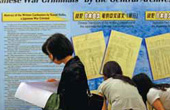 |
| Confessions of other criminals |
Jan 1942: Ordered Taisuke, the Colonel, to "burn down the houses of about 800 households and slaughter 1,000 Chinese peasants in a mop-up operation" in Tangshan.
Apr 1942: In Tianguanying, Fengrun, Hebei province, "brutally killed soldiers of the Eighty Route Army and used poisonous gas in an attack to murder about 100 cadres and soldiers of the Eighth Route Army in the caves in Lujiayu", "cruelly killed 235 Chinese peasants seeking refuge in a village near Lujiayu (cutting open the bellies of pregnant women among them), burned down houses of about 800 households, killed 5 captives to be delivered to Yutian, and raped as many as 100 women".
July 1942: In Fengrun, "burned down civilian houses of around 500 households and brutally killed about 100 Chinese peasants".
Sept to Dec 1942: In order to "create depopulated zones, i.e. to force all residents to move out" of regions including Qian'an and Zunhua, "burned down the houses of over 10,000 households in those regions, forced tens of thousands of people to relocate and also massacred many people".
Oct 1942: "Murdered 1,280 peasants in Panjiadaizhuang village, Luanxian county in such cruel ways like shooting, bayoneting, slashing and burying alive and burned down the houses of all 800 households in the village".
1942: Ordered "to set up comfort women stations" in all regions where Japanese troops were stationed and "to lure about 60 Chinese women to serve as comfort women".
May 1944: In Xinxiang, Henan province, "attacked anti-Japanese guerrilla forces and killed about 10 of their soldiers, burned down about 300 houses in villages close to the battlefield and killed about 100 Chinese peasants".
July 1944: In Fengqiu, Henan province, "killed about 40 soldiers of the anti-Japanese guerrilla forces, burned down a neighboring village of about 400 households, and killed about 100 Chinese peasants".
Aug 1944: "Attacked and killed about 10 soldiers" of the anti-Japanese troops in Huaiqing, Henan province, "burned down farmhouses of about 400 households, and brutally killed about 30 Chinese people".
Nov 1944: "I ordered the infantry to invade the southern part of Linxian county. When the troops were pulling out of the region, I ordered the Epidemic Prevention and Water Supply Squad to spread cholera virus in three or four villages. Afterwards, I received a report saying that 'more than 100 Chinese people in Linxian were infected with cholera, and the death toll was also high'". After this, in a village in Changlu county "I burned down the houses of about 300 households and killed 660 Chinese peasants of the village in extremely brutal ways like shooting, bayoneting and burning". "Also during this attack, 30 captives were killed by soldiers under my command".
"In order to test the method of killing people with air injection, I ordered in spring of 1945 the division field hospital in Huaiqing to 'conduct an experiment, which is to test it on a hospitalized Chinese soldier of the Puppet County Guards with an extremely high price'".
Spring 1945: "Killed about 500 peasants and burned down houses of all the 600 households" in a village in Huaiqing;
Around spring 1945: "Burned down the houses of about 400 households in villages" near Jiaozuo, and "brutally killed about 100 Chinese peasants".
1945: "Ordered to set up comfort women stations in the regions occupied by Japanese troops, and lured about 60 Chinese and Korean women to serve as comfort women".
Mid-July 1945: "Invaded Liquan, and slaughtered about 40 Chinese people".
"During the war of aggression against China", and "based on my own memory, 5,470 Chinese people were killed, and houses of 18,229 Chinese households were burned down or damaged. The actual number (may) be much higher."


Copyright 1995 - . All rights reserved. The content (including but not limited to text, photo, multimedia information, etc) published in this site belongs to China Daily Information Co (CDIC). Without written authorization from CDIC, such content shall not be republished or used in any form. Note: Browsers with 1024*768 or higher resolution are suggested for this site.
License for publishing multimedia online 0108263 Registration Number: 130349