|
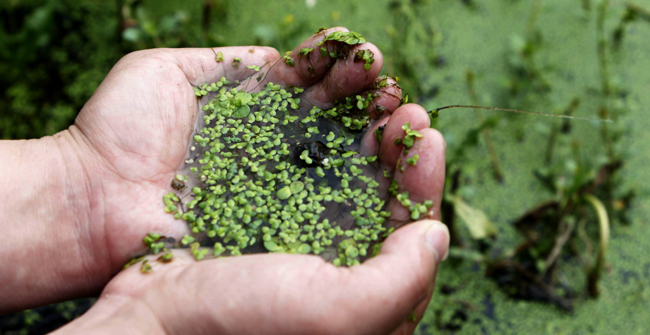
The water quality in a section of the Weihe River in Xi'an, Shaanxi province, has recovered thanks to the harsh punishments handed down to polluters. Wang Xinshi / for China Daily |
The initiative undertaken in Wuhan is now being echoed in other parts of the country as the central government intensifies the fight to protect the country's water resources.
In April, the government released the Action Plan for Water Pollution Prevention and Control. According to the plan, 70 percent of the water in the country's seven major river basins, including the Yangtze and Yellow rivers, must be classified as being in "good condition" - at least Level 3 of the national standard, which means the water is clean enough to swim in - by 2020, rising to 75 percent by 2030.
Gao Jixi, director of the Nanjing Institute of Environmental Sciences at the Ministry of Environmental Protection, said the fight against water pollution will be even tougher than the battle against airborne pollution. "Controlling pollution in lakes is particularly difficult. It could take close to 100 years for the ecological chain to recover," Gao told Xinhua News Agency in March.
In May last year, Chen Mingzhong, director of the Department of Water Resources at the Ministry of Water Resources, said only 28.6 percent of the country's lakes reached Level 1 national standard, the highest of the four-tier water quality ranking system, indicating that they are as clean as the source water that feeds rivers and other natural outlets.
Experts say large-scale public participation will be key to a successful antipollution campaign.
"The role of the public should not be limited to patrol activities, organizing seminars and distributing circulars. They should be given firsthand data and encouraged to play a greater part in the pollution-control process," said Ma Jun, director of the Institute of Public and Environmental Affairs, an NGO that researches water pollution.
"The way to guarantee public participation is to ensure that the authorities publish the results of monitoring more frequently, so we can identify the areas where things are going wrong," he added.
At the annual meetings of China's top lawmakers in March, Chen Jining, minister of environmental protection, said the country would encourage greater public participation in pollution control. The ministry also plans to introduce a new platform that will enable citizens to report sources of pollution via WeChat, a hugely popular instant messaging platform.
The action plan outlined ways of promoting public participation and social supervision, and also required local authorities and major polluters to release details of water quality in specific areas and information about how polluted water is being treated.
Ma said easier access to detailed information would encourage more people to participate in the prevention and cleanup efforts, and that unlike air pollution, which is a very noticeable phenomenon, problems with water quality are less obvious, so people don't understand the gravity of the situation.
"What's the point of telling the public the target numbers when they don't even know what the current situation is?" he said, adding that one of the major challenges facing environmental NGOs is how they can deepen their involvement in pollution prevention and control, rather than just organizing public events.
In Wuhan, illegal land reclamation has been effectively stopped thanks to the combined efforts of the local authorities and residents. However, as the quality of the water in the city's lakes continues to worsen, it's important that the public joins in with efforts to improve standards, he said.
Ke said the government's determination and the recent new guidelines have given NGOs a huge boost: "We were thrilled, because the government's action plan clearly states that the country will support the monitoring work undertaken by environmental NGOs and volunteers."
However, he added that more concrete measures are needed to support voluntary organizations, which are already providing additional muscle to the official efforts. "We need funding support from the authorities to organize events. The volunteers deserve a bottle of water, a lunch box or a T-shirt after a day spent trekking around checking for illegal polluters," he said.


Copyright 1995 - . All rights reserved. The content (including but not limited to text, photo, multimedia information, etc) published in this site belongs to China Daily Information Co (CDIC). Without written authorization from CDIC, such content shall not be republished or used in any form. Note: Browsers with 1024*768 or higher resolution are suggested for this site.
License for publishing multimedia online 0108263 Registration Number: 130349