China issues white paper on right to development
V. Promoting Cultural Progress
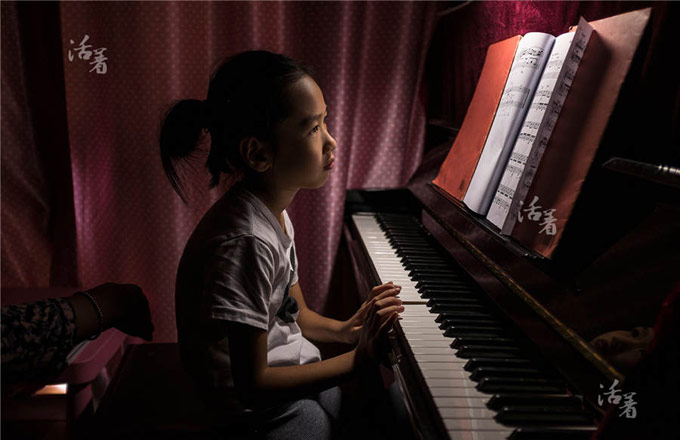
The Chinese government endeavors to restructure China's cultural system, free and develop cultural productivity, so as to create equal opportunity for all citizens to enjoy benefits of cultural development and to have access to cultural development opportunities, and ensure realization of their right to cultural development.
The building of a public cultural service system has been accelerated. In 2015, the Chinese government issued "Opinions on Accelerating the Building of a Modernized Public Cultural Service System" and "Guidance for National Basic Public Cultural Services (2015-2020)," presenting an all-round plan for accelerating the building of a modernized public cultural service system, promoting standard basic public cultural services and equal access, and protecting the people's basic cultural rights and interests. China has accelerated public digital cultural programs, such as the National Public Culture Digital Platform, and the National Digital Culture Network (http://www.ndcnc.gov.cn/). By the end of 2015, the National Cultural Information Resources Sharing Project had completed 1 national center, 33 provincial centers, 2,843 municipal and county centers, 35,719 township and town (sub-district) stations, and 700,000 village (community) stations. China has improved the public cultural infrastructure network and increased the capacity of community-level cultural services. By the end of 2015, China had 2,037 art performance troupes, 3,139 public libraries, 3,315 cultural centers, 2,981 museums, 40 provincial digital libraries, and 479 municipal and prefectural digital libraries. Continuous efforts were made to open public cultural facilities to the public for free, including public art museums at all levels, and basic public cultural services in libraries and cultural centers (stations) at all levels. By promoting projects such as Radio and TV Programs for Each Village and Each Rural Household, Town and Township Comprehensive Cultural Centers, Rural Cinema, Rural Libraries, and Rural Digital Culture, China has greatly enhanced rural cultural service capacity.
Literature, arts, news, publishing, radio, film, television and sports are thriving. In 2015, China published more than 43 billion copies of newspapers, 2.9 billion copies of periodicals, and 8.7 billion copies of books. The number of books published per capita reached 6.32. A total of 236 million households subscribed to cable TV, including 198 million subscribers to digital cable TV. At the end of the year, the radio coverage rate was 98.2 percent of the total population, and TV coverage was 98.8 percent of the total population. In 2015, China produced 395 TV serials totaling 16,560 episodes, 134,000 minutes of TV animation, 686 feature films, and 202 popular science films, documentaries, animation and special films. China has adopted value-added tax exemption for revenues from rural cinemas. It has also given support to small and micro cultural businesses, and implemented policies offering construction subsidies, financial support and differentiated land designation for county cinemas in central and western regions. China has launched an "All People Reading" campaign nationwide. The 2016 "Literary China" series of activities has benefitted over 800 million participants, forming a congenial social atmosphere for reading. China has accelerated the development of the sports industry under a policy that has the combined support of government, society and enterprises. China has launched a nationwide fitness campaign, basically established a corresponding organizational network, and greatly increased the number of sports venues and facilities. In 2015 China allocated RMB870 million in subsidies to support large sports venues and facilities to open to the public for free or at low cost. In 2014 the sales of the National Sports Lottery reached RMB174.6 billion, and the funds raised for the public totaled RMB45.5 billion.
Cultural programs in ethnic minority areas are developing. China has vigorously supported cultural development in ethnic minority areas. Through such programs as the Frontier Cultural Corridor Project and National Cultural Information Resources Sharing Project, China has improved the public cultural service system in ethnic minority areas. By the end of 2015, nine natural and cultural sites scattered in China's ethnic minority areas, including the Potala Palace in Tibet, were added to UNESCO's World Heritage List. Fourteen ethnic minority arts including Uygur Muqam of Xinjiang were added to UNESCO's Representative List of the Intangible Cultural Heritage of Humanity, and another four, including the Qiang ethnic group's New Year Festival, were added to the List of Intangible Cultural Heritage in Need of Urgent Safeguarding. Ten experimental zones for cultural protection in ethnic minority areas have been established. A total of 479 ethnic minority heritage items have been included in the four lists of national representative intangible cultural heritage, and 524 trustees from ethnic minority groups have been put on the four lists of national representative trustees of intangible cultural heritage. The book series of explanatory notes on ancient books of ethnic minority groups, titled Synopsis of the General Catalogue of Ancient Books of Ethnic Minority Groups of China, was published in 2014. China has promoted the regulation, standardization and computerized processing of languages and scripts of ethnic minority groups. Projects have been initiated for the research and formulation of regulations on the transliteration of personal names into standard Chinese from Mongolian, Tibetan, Uygur, Kazakh, Yi and other ethnic minority languages. China has set up databanks for ethnic minority languages on the brink of extinction, and initiated and implemented the Project for the Protection of Chinese Language Resources. By the end of 2015 a total of 54 ethnic minority groups were using more than 80 spoken languages of their own ethnic groups, and 21 ethnic minority groups were using 28 scripts of their own ethnic groups. Now nearly 200 radio stations nationwide broadcast in 25 ethnic minority languages; 32 publishing houses of various types publish books in ethnic minority languages; 11 film dubbing centers, using 17 ethnic minority languages and 37 ethnic minority dialects, finished the dubbing of movies, amounting to over 3,000 versions from 2012 to 2015. In 2015, China produced many publications in ethnic minority languages, including 69.12 million copies of 9,192 book titles, 196.09 million copies of newspapers and 12.45 million copies of periodicals.
Cultural development for the elderly, the disabled and rural migrant workers has received high attention. Relying on public libraries, cultural centers and other cultural facilities, China has opened a group of demonstration universities for the elderly to meet their multi-level cultural demands. China has also improved the environment for the disabled, encouraging them to participate in cultural and sports activities. By the end of 2015, China had more than 300,000 liaison stations for volunteers helping the disabled, with 8.5 million registered volunteers, providing 100 million interventions on behalf of the disabled. China has issued the "Outline for the National IT Application Development Strategy," enhanced information accessibility of government websites, and encouraged non-governmental organizations to provide individualized information services to the disabled. The official website of the State Council (http://www.gov.cn/) has opened a special column for services for the disabled. The China Braille Library and China Digital Library for the visually impaired went online. By the end of 2014, China had set up 1,515 reading rooms for the visually impaired in public libraries at all levels nationwide. By the end of 2015, China had set up 65,918 public e-libraries, mainly to serve the elderly and rural migrant workers.