New, authoritative titles are shedding light on the workings of the Chinese Communist Party. Mei Jia reports.
Editor's note: This is the third in a series of articles China Daily will publish in the next few days looking at the structure, history and influence of the Chinese Communist Party as it celebrates the 95th anniversary of its foundation.
From its first, secretive meeting in Shanghai attended by 13 of the party's then-50 members in July 1921, membership of the Communist Party of China has grown to more than 87 million, larger than the population of Germany.
Under the Party's leadership, "ancient China rediscovered its youth and transformed the economy, which now has the second-highest GDP in the world and the largest foreign exchange reserves on the globe", according to Xie Chuntao, 53, a professor at the Party School of the CPC Central Committee.
"Unlike the situation in the Western political scene, the CPC, being the sole governing party, takes credit as well as responsibility, instead of passing the blame to others. We made mistakes in the past, and the leaders faced the problems with insight and resolution, and redirected the people onto the right path," said Xie, speaking in 2012 in response to a question from Brian Cotter, a member of the British House of Lords, about whether the CPC would take credit or avoid its duties.
Xie said similar questions had already inspired him and six colleagues to write Why and How the CPC Works in China in 2011. The book, published in Chinese and English, was produced in conjunction with the New World Press.
Publishing boom
The book was a huge success, making Xie one of the most successful and popular narrators of the Party's story and its "mysteries". It has sold 800,000 copies in Chinese and about 10,000 in English, plus at least 1,000 copies each in German, French, Russian and other languages, according to Zhang Hai'ou, editor-in-chief of New World Press.
"It quickly became an example for other publishers to learn from," he said.

?
A glut of similar books followed. Instead of sticking with the previous propagandist model, the authors explained how the CPC has led the country to its current level of prosperity and development.
"We discovered that the books young Chinese people like to read are highly likely to be well-received by readers overseas," Zhang said. "We know such books are in demand because China's rising role in global affairs has spurred wider interest."
The series has been extended to five books. Three of them are already available in Chinese and English: Governing China: How the CPC Works, focusing on how the Party rules; Challenges for China: How the CPC Makes Progress, looking at the problems the Party faces; and Fighting Corruption: How the CPC Works, explaining the work of the government's anti-graft campaign. The final book, on the Party's management techniques, will be published soon.
The books attempt to "convey idea through telling stories and letting others make comments on the CPC", Zhang said.
Zhang, of New World Press, said the style and tone were the result of many discussions and trials, and many sentences were redrafted several times for better effect.
Xie said the style also comes from familiarity with the subject matter: "My experiences and those of the writers as teachers of Party history help the narration, making it understandable."
Robert Lawrence Kuhn, an international strategist, echoed that view. "Foreigners can disagree with the CPC, argue with the CPC, but all who need to know China and all who think they know China must understand the CPC," he said.
"I am impressed by the strong meritocracy of the CPC, whose leaders are highly intelligent and well-educated, have wide-ranging experience, and focus on the operational numbers and statistics. CPC officials are generally some of the most capable in the world."
Openness
The most notable feature of the series is an openness rarely seen in previous books.
Xie said he met a German journalist, who was shocked to discover that the books don't flinch from discussions of past mistakes, because they are seen "as representing the official voice. Problems are there whether you see them or not. Once you clearly state how mistakes were made and why the Chinese people maintain their faith in the Party and accept it as before, then you have made a valuable contribution."
That attitude was reiterated when the Foreign Language Press published a series called China Today: Understanding the CPC in several languages, planned by the Organization Department of the CPC Central Committee.
"We're facing and coping with the problems and challenges we meet, and we tell readers about that. That's the reason we keep making progress," said Zhao Fan, a department official.
Xie believes "faith" is the CPC's key strength: "The unchanged faith for 95 years, what we now call the 'Chinese Dream', to fight for an independent, prosperous, equal country where people are happy and better-off, is where the CPC's power lies and why the people support it. A party is easily abandoned by the people if it only considers its own good."
Corruption remains a major challenge. "Before the 18th National Congress of the CPC, some even doubted if corruption could ever be tackled. The leadership is keenly aware of that and has proved that tangible progress has been made," Xie said.
Contact the writer at meijia@chinadaily.com.cn
In their own words
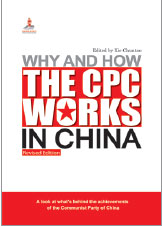
"China can only rely on itself, not other countries, to feed itself. Despite various unfavorable factors, the CPC still keeps a sober mind in addressing the problem of food security. Past experience has shown that the main methods of solving the problem are policy, investment and science and technology. China is intensifying its efforts in these respects.
Therefore, world public opinion holds that China has confidence in and the capability of addressing the problem of food, as it has successfully demonstrated in the past few decades."
Why and How the CPC Works in China by Xie Chuntao
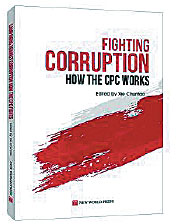
"The most effective way to change the style of work is for leading officials to set an example. Soon after taking office, the CPC Central Committee, with Comrade Xi Jinping as general secretary, pledged that the Political Bureau should take the lead in changing the style of work. Leading officials should also do what they ask others to do and avoid what they ask others to avoid. This fresh attitude of the new central leadership is fully reflected in the eight measures the Political Bureau of the CPC Central Committee decided on, which will maintain close ties with the people."
Fighting Corruption: How the CPC Works by Xie Chuntao
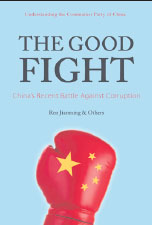
"Punishment is an important component of China's anti-corruption strategy. On the one hand, it directly hits at the conduct of actual corruption to make the corrupt pay the price, and on the other, it deters potential corruption to scare those who are ready to commit corruption. In terms of the so-called 'magnitude' of corruption, the focal point of China's fight against corruption has undergone two rounds of change; i.e., from 'investigating and punishing cases, but usually small ones' to 'investigating and punishing major cases' and then to 'hunting down both tigers and flies'. In most countries, the means of punishment usually include sanctions by law and by discipline. China's policy against corruption also attaches equal importance to both."
The Good Fight: China's Recent Battle against Corruption by Ren Jianmin and others
"The CCDI (Central Commission for Discipline Inspection) is a mysterious department in the eyes of ordinary people, most of whom do not even know where it is located in Beijing. On September 4, 2014, 50 foreign scholars and seven Chinese scholars attending the Party and the World Dialogue 2014 departed from a hotel in Wanshou Road, West Beijing, and arrived at 41 Ping'anli West Avenue, a location neither shown on maps nor in directory enquiries and having no official identification on its outer wall. The yard is enclosed by gray walls 4 meters high and 1 meter thick and is guarded by soldiers, although there is no sign indicating this is a military restricted area. 'I had passed by this yard on numerous occasions since the 1980s, but I had never recognized this is where the CCDI is located," said Suisheng Zhao, a Chinese professor at the University of Denver in the United States. 'This time I have come [to know] the identity of the office'."
Fighting Corruption: How the CPC Works by Xie Chuntao
|
Xie Chuntao, a professor at the Party School of the CPC Central Committee |



Copyright 1995 - . All rights reserved. The content (including but not limited to text, photo, multimedia information, etc) published in this site belongs to China Daily Information Co (CDIC). Without written authorization from CDIC, such content shall not be republished or used in any form. Note: Browsers with 1024*768 or higher resolution are suggested for this site.
License for publishing multimedia online 0108263 Registration Number: 130349