Opinion
'China model' and the role of the Party
By Carlos Aquino (China Daily)
Updated: 2011-07-01 08:28
The rise of China as an economic power combined with its political stability - under the leadership of the Communist Party of China (CPC) - more or less defines what the "China model" is assumed to be. Another definition would be that of an economic system where private and public sectors coexist and competed in the economic field, but where the State still has a great say in the economy and a political model in which the CPC plays the leading role.
That model has been credited with giving China three decades of continuous high economic growth - on average 10 percent a year - lifting hundreds of millions of people out of poverty. The CPC has the merit of having introduced the reform itself and leading the country's development in an environment of political stability.
The CPC is the major surviving communist party in power. A wave of reforms saw most of the communist parties in the East Bloc losing power. In contrast, it is the CPC's continuation in power that has made China's economic miracle possible.
The CPC, which will celebrate its 90th anniversary on July 1, has been evolving with each passing year. It has overcome many challenges, from the Kuomintang attacks to Japanese brutality to the challenge of leading the revolution in 1949. It experienced the vicissitudes of the "cultural revolution" (1966-1976) and the change of leadership on Mao Zedong's death in 1976. Two years later, it decided to open up the country to the outside world and introduce economic reform, becoming the first socialist country to do it successfully.
The world is talking about the so-called China model because China, under the leadership of the CPC, has achieved so much success.
The advantages China has with the CPC leading it can be seen, for example, when it is compared to India, another fast emerging country. Because India has a multi-party political system, it takes time to make a decision and gets bogged down in fruitless debates at times when quick decisions are needed. But the CPC's dominant role in China's political system assures that decisions are speedy. The result is that things get done faster in China than in India. China thus enjoys an advantage over India in terms of higher economic growth and political stability.
The CPC's role in the economic growth of China is laudable. But it has to continue its efforts to enhance its role in the political field. For that to happen, China has to overcome several challenges in its economic, political and social systems, for these are the tests the so-called China model faces.
First, the widening wealth disparity across the country and the gap between urban and rural people's income must be narrowed. The emphasis on development of the coastal areas at the beginning of the reform and opening-up put inland areas at a disadvantage. Now the focus of development should shift to the "neglected" regions and the agricultural sector. The thrust of the education sector should be to grant poorer sections of society easy access to higher education so that they can earn better salaries and reduce the income gap. This policy should get priority in inland regions.
Second, people may develop a certain sense of frustration when their needs are not fully met, which can weaken social harmony. Examples of such situations are workers not being paid properly, eviction of farmers without proper compensation, and ignoring victims' cry for justice. These issues have to be resolved properly and as soon as possible.
Third, after having fulfilled their economic needs, people will like to have a say in the political decisions that affect them. The CPC must prepare for that, because that is what it ultimately wants.
Perhaps the Chinese mainland's miracle is similar to those of the Asian tigers - South Korea, Singapore, and Taiwan and Hong Kong. They achieved high economic growth under political stability from the 1960s to the 1980s. And when a sizable middle class emerged in those economies, a kind of political democratization began. Only in Singapore the party that spearheaded the high economic growth period has remained in power. How did it do it? Possibly because it attended to the challenges mentioned above. The CPC can learn from that experience.
The CPC has overcome many challenges, showing a unique flexibility to adapt to new situations. It can keep doing so again and again.
The author is a professor of economics at San Marcos National University in Lima, Peru.
 CPC Heroes
Zhu De
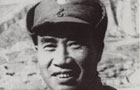
Zhu De, born in Yilong County of Sichuan Province in 1886 and passed away in 1976, is a great Marxist, proletarian revolutionary, statesman and military strategist.
Chen Yi
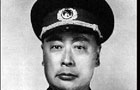
A native of Le Zhi, in Southwest China's Sichuan Province, and awarded by the People's Republic of China the military rank of marshal; Served as the country's Vice Premier (1954-1972) and Foreign Minister (1958-1972)