The US published the Country Reports on Human Rights Practices for 2014 in June of this year, saying that "there were no formal restrictions on women's participation in the political system, and women held many lower-level government positions. Female cadres in the TAR accounted for more than 41 percent of the TAR's total cadres." What is the current situation of women in Tibet then? Let us look at the statistics from the Chinese side.
Participation in political system
Since the democratic reform was conducted in Tibet in 1959, a large number of Tibetan women have held leadership positions from the towship level all the way up to the regional level, including the first female vice- chairman of the Tibet political consultation conference(top-level political advisor), the first female deputy secretary of the Party Committee of Tibet Autonomous Region, and the first female vice chairman of the Tibet autonomous region government.
Statistics show that in the Tibet autonomous region, women comprise seven percent of provincial-level leadership, 85.71 percent of prefectural- (city) level government leadership bodies, 90.43 percent of county-level government leadership bodies, and that women comprise 65 percent of leadership groups throughout the 74 counties.
In Old Tibet, women were classified as low-level people, their "price of life equal to that of a straw rope", they were deprived the rights of political participation and education.
After the Democratic reform, there were fundamental changes to Tibetan women's political, economic, cultural, social, and family status. As of 2013, 37 percent of employees in the Tibet Autonomous Region were women, with women comprising 35.5 percent of the urban working population.
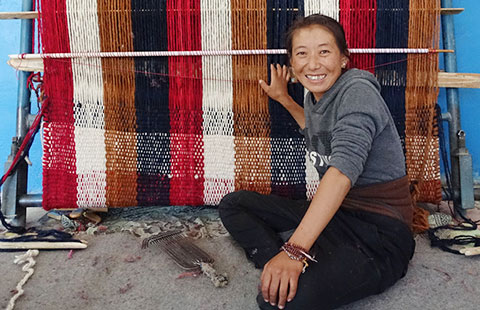
Women are working in all kinds of fields, in particular, ethnic handicrafts, tourism, health care, education, arts and culture, finance, telecommunications, and accounting. Women in rural and pastoral areas account for more than 60 percent of the total rural workforce. They are not only housewives, but also active participants in the development of the economy in the rural and pastoral areas, becoming a major force in the production of agriculture and animal husbandry.
Education
Before the peaceful liberation of Tibet in 1951, Tibet did not have a single modern school, and the majority of children from women and serfs did not have the opportunity to attend school. The illiteracy rate was more than 95 percent of the population.
After Tibet's peaceful liberation, the government organized for young women to go to schools in inland China and various schools across Tibet to eliminate literacy. As a result of the improved in compulsory education, higher education, adult education, vocational education, and special education systems, have provided more and more women and children with opportunities to attend school.
The current preschool enrollment rate in Tibet is 51.98 percent; the enrollment rate of primary school-age children is 99.59 percent, and 99.53 percent of girls; the middle school enrollment rate is 98.75 percent, and 99.89 percent of girls. The number of women receiving higher education continues to increase. There are also female master students, doctoral students, professors and technological personnel.
Medical care
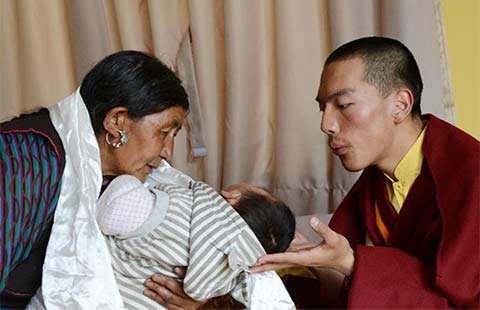
The health status of most women and children in Old Tibet was not guaranteed due to the social system due to its backward economy. Moreover, because of the influence of religion, female reproduction was considered unclean, and women could only give birth in sheds of livestock. Maternal and infant mortality rates were very high.
After the Tibet autonomous region was established in 1965, general hospitals with their own female Tibetan doctors, Tibetan medicine doctors, nurses, laboratory technicians were established. After the reform and opening-up, the country increased its investment into health care in Tibet, establishing a network of health care for women and children in counties, prefectures and the region across Tibet.
The women's employment rate across various levels of health care institutions reached around 70 percent. The region's maternal mortality rate has declined since the beginning of the peaceful liberation from 5,000 per every 100,000 births to 108.86 per every 100,000 births, and the infant mortality rate has declined from 43 percent to 1.68 percent. Tibetans' average life expectancy has increased from age 35.5 in Old Tibet to age 67 today. At the end of 2013, the region had a total population of 3.12 million people, of which 1.53 million were women.
Protection of legal rights
The Tibet Women's Federation was established in 1960. Fifty years later, it has become Tibet's largest and most influential women's organization.
After the Tibet Autonomous Region was established, the Tibet autonomous region People's Congress drafted some laws and regulations related to women in accordance with the national constitution and regional ethnic autonomy , including the "Tibet autonomous region's Regulations on Enforcing the 'Marriage Law of the People's Republic of China'" and the "Tibet autonomous region Methods on Implementing the 'Law of Protection for Women's Rights of the People's Republic of China'".
Since the 1990s, the People's Government of Tibet autonomous region has drafted three development plans for Tibetan women. The Women's Federation has opened a hotline of 12338 for protection of women's rights in the women's federations above counties and prefectures, and established 70 agencies for legal aid. In addition, Tibet also provides a full range of services including promoting the establishment of a collegiate bench for the women and children, an anti-domestic violence rescue mechanism, an urban police service posts for the protection of women and children's rights, which has formed a full-range service system.
Over the past 50 years, Tibetan women have obtained real liberation under the leadership of the Communist Party of China, which has made contributions to the cause of world human rights and the women's liberation movement.
Related Stories
Copyright 1995 - . All rights reserved. The content (including but not limited to text, photo, multimedia information, etc) published in this site belongs to China Daily Information Co (CDIC). Without written authorization from CDIC, such content shall not be republished or used in any form. Note: Browsers with 1024*768 or higher resolution are suggested for this site.
License for publishing multimedia online 0108263 Registration Number: 130349