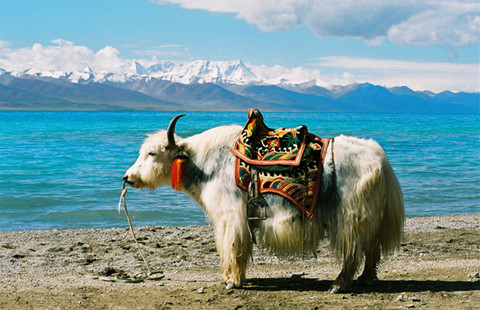
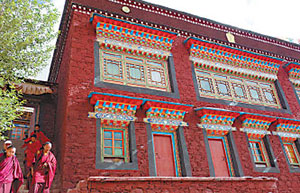
This year marks the 50th anniversary of the founding of the Tibet autonomous region and the beginning of the modern age for people from the Tibetan ethnic group in China's western highlands.
Recently, on two separate journeys, we visited the source areas of two important rivers in the highlands traditionally populated by Tibetans. The first was the Bailongjiang River, a main tributary of the Jianglingjiang River, which cuts through Sichuan province and Chongqing before joining the Yangtze River.
The other was the Lancang River, which runs through Yunnan province before entering the Indochina Peninsula, where it becomes the Mekong River.
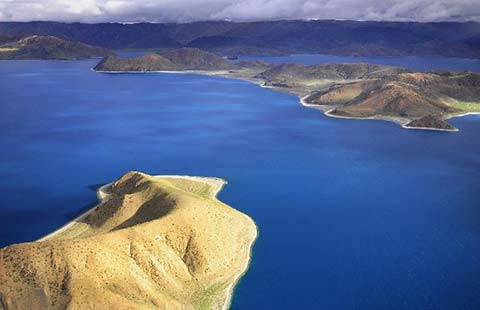
The most impressive thing was the counterintuitive fact that these great watercourses rise in areas covered not by lush forests - there are few trees 4,000 meters above sea level - and not even by shrubs, but by a thin covering of grass.
The vast grassland in the Tibetan plateau is beautiful to observe in summer, but much of the land is covered by short grass in a thin layer of topsoil. To protect this fragile environment, large areas of grassland have been cordoned off to prevent sheep and yaks from grazing and tearing up the grass by the roots. The enclosures are clearly visible as one drives along newly built roads in southern Gansu province and western Sichuan.
How can economic development be achieved in such sparsely populated and ecologically fragile places? How can the local people, mostly ethnic Tibetans, join the rest of the nation and create a decent, modern lifestyle for themselves?
It's obvious that attempting to develop these areas through large, high-yield farming or big smokestack industries would be a waste of capital, at the very least. At worst, ill-advised plans could easily destroy the areas that are the precious sources of some of the world's most important rivers.
Many mistakes have been made since the 1960s and '70s, and they should not be repeated.
The dilemma is that if things are left to be decided entirely by market forces, or with the intention of rigidly maintaining local traditions (however they were interpreted in the past), the economic discrepancy between the highlanders and their countrymen in the industrialized coastal cities will only grow wider and uglier.
One way of getting around this dilemma would be to develop tourism and related local services via a central government-coordinated aid program. China is already a motorized society, and the highland landscapes and Tibetan culture, including Buddhist monasteries, are popular attractions for the ever-increasing numbers of self-drive tourists from other parts of the country.
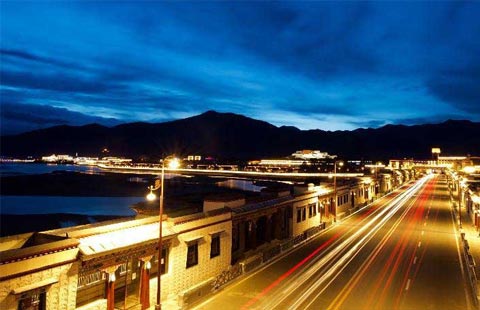
Regrettably, however, so far the government has done too little to help. In comparison with the would-be financial districts and high-rise government office towers in the larger cities, the Tibetan plateau still lacks basic tourist facilities. Services that should be provided by some of the largest State-owned national monopolies are well below normal standards.
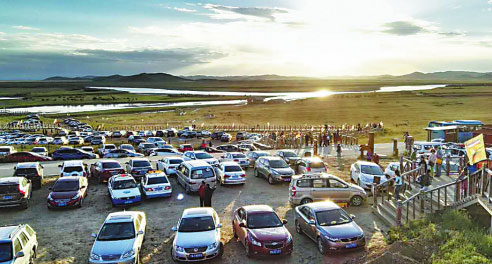
In Zoige county, in the northwestern corner of Sichuan, people still have to drive 60 kilometers along a bumpy dirt road, a three-hour journey, to view the magnificent sunset at a feature called Yellow River's First Turn.
We saw a few machines busily widening the roads, but there seemed far too few of them to achieve much before the first snowfall of the year. The project may well take two years to complete.
Telecommunications are even less dependable. At a time when smartphones are part of everyday life in China's coastal cities, many mountain valleys still lack access to even the most primitive mobile telecommunications service, which means emergency assistance is virtually impossible to come by.
In the meantime, there is also a lack of measures to prevent "tourism pollution", such as the collection and processing of garbage and waste, and ensuring the grassland and water resources are not overexploited.
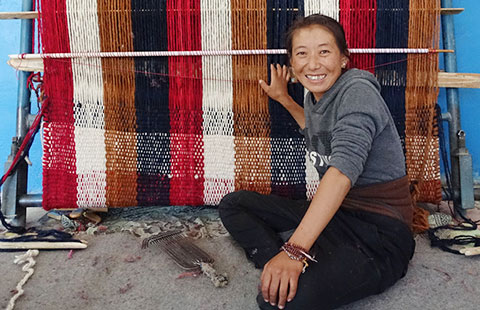
The encouraging thing is that the highland dwellers are by no means uninterested - as some old stereotypes suggest - in making money from providing services to tourists, such as lodgings, guidance on horse riding, and traditional foods, such as delicious yogurt made from yak milk.
The government and the State-owned national corporations really should be doing a better job of helping the people of the region build their new lives in their own way.
Contact the writers through edzhang@chinadaily.com.cn
|
Visitors assemble to see the sunset at a feature called Yellow River's First Turn in Zoige county, Sichuan province. Ed Zhang / China Daily |
(China Daily 08/14/2015 page6)
Copyright 1995 - . All rights reserved. The content (including but not limited to text, photo, multimedia information, etc) published in this site belongs to China Daily Information Co (CDIC). Without written authorization from CDIC, such content shall not be republished or used in any form. Note: Browsers with 1024*768 or higher resolution are suggested for this site.
License for publishing multimedia online 0108263 Registration Number: 130349