 |
|
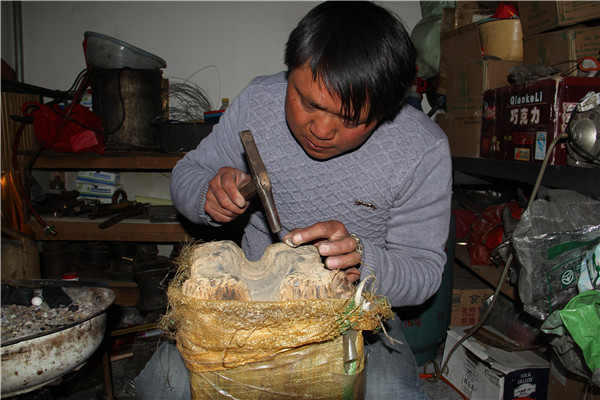
Li Fuhua takes nearly two hours to finish a silver decoration for a bracelet. Photos by Norzom |
In Lhasa, the capital of the Tibet autonomous region, ethnic Bai silversmiths are using their ancestral skills to make Tibetan-style objects including ornaments, jewelry and religious items.
One of them, Li Fuhua, 36, owns a shop in the west section of the Lingkor route, the biggest Buddhist pilgrim circumambulation path in Lhasa, and the sound of his constant hammering draws the attention of passers-by.
With his deeply suntanned skin, it is hard to believe that Li is not a native of Lhasa. He settled in the city 11 years ago after traveling to many cities in China and now regards Lhasa as his second home.
The city's residents are fond of silver items, and their constant demand has helped Li develop his skills.
He was born in the Dali Bai autonomous prefecture in Yunnan province. The region has produced generations of silversmiths and is famous for producing silver items.
At age 18, Li learned to become a silversmith from his father, who was the third generation engaged in the craft.
"The old rule was that it takes at least six years to become a silversmith - three years for learning, and three years for paying back the master," Li said.
Many apprentices do not have the patience, and the learning period has been reduced from three years to two.
"The shortened learning period is a major cause of the deterioration in the quality of silver goods," he said, adding that quality is the soul of the craft.
Li has four apprentices who come from Qinghai province. He said Tibetan people are reluctant to learn the skill because they have traditionally discriminated against trades such as blacksmith and silversmith, and yet it is highly regarded in Bai culture.
According to a Bai saying, "A craftsman will not starve to death even if a drought lasts three years."
"I was discriminated against when I first arrived in Tibet in 2004, but now the situation has changed," Li said with a smile.
He takes his work seriously and has to be completely satisfied with every piece.
Gyatso, a neighbor of Li's, said, "The quality of his work has gained popularity among locals in Lhasa."
Copyright 1995 - . All rights reserved. The content (including but not limited to text, photo, multimedia information, etc) published in this site belongs to China Daily Information Co (CDIC). Without written authorization from CDIC, such content shall not be republished or used in any form. Note: Browsers with 1024*768 or higher resolution are suggested for this site.
License for publishing multimedia online 0108263 Registration Number: 130349