As an ancient performance ritual, the Xuan dance was once dedicated to the god and kings of western Tibet.
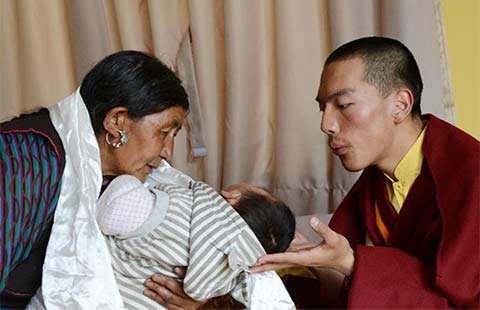
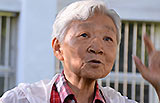
Now, courtesy of a Tibetan grandmother named Drolkar, an 84-year-old inheritor of the dance, people are still able to enjoy the beauty of the 1,000-year-old dance, which incorporates song, rhythmic movement and narration, and also a number of other elements, such as Tibetan Opera.
"It was a paid job back then. Women from every family in the village had to dance the Xuan, mostly in the monasteries during ritual performance or other celebrations," Drolkar said, recalling her original links with the dance.
Before Drolkar started to take apprentices in 2010, when she was named as the inheritor of Xuan as an intangible cultural heritage, very few people knew about the dance.
"Almost all the people who danced with me back in the old days are dead now," she said.
The mysterious dance was reasonably easy to learn, according to Drolkar, who started learning it in her early 20s. "I was a quick learner when I was young, and I could remember all the steps in a very short time," she said, adding that although dancing was a job, she always enjoyed performing.
According to records held in Ngari prefecture, the dance can be traced back to the 10th century in Zanda, which was the center of the ancient Guge kingdom.
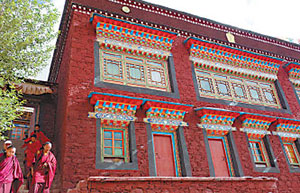
The dance also featured in murals in the local monasteries. In the Red Temple of the ruins of the Guge kingdom, a painted scene depicts the Guge king hosting a welcome party for Atisa, an Indian master of Buddhism, in which 10 women were dressed in special attire to perform the Xuan dance at the ceremony.
The dance has 13 forms, which are performed on specific occasions, and Drolkar knows nine of them.
"If a village is filled with singing and dancing, it must be a happy place to live. Every time I see people dancing the Xuan on stage, I am happy. Now that the number of people who know the dance is rising, I am even happier," Drolkar said, adding that although the dance was banned during the "cultural revolution" (1966-76), she continued to chant the lyrics under her breath and practiced the steps quietly. "I liked dancing the Xuan, and I couldn't stop," she said.
She began to perform the dance again during the 1980s. In 2008, the Xuan was listed as an intangible cultural heritage and Drolkar was named as the only inheritor.
Since then, cultural bureaus have increased investment to protect and inherit the dance.
Drolkar took nine apprentices and has also guided a local folk art troupe.
Yudron, a Tibetan folk dance graduate from University of Tibet, knows many traditional Tibetan folk dances, but she didn't know how to dance the Xuan until she arrived at Ngari.
"At first I found it easy to memorize the steps and narration, and gradually, I have begun to realize the Xuan's charm," said Yudron, who is the director of the Ngari Folk Art Troupe and knows five forms of the dance.
Ma Qinglin, Party chief of Zanda county, said the dance has long links with the area. "Zanda was where the royal family lived, and the Xuan dance was the king's favorite entertainment," Ma said.
Contact the writers at luowangshu@chinadaily.com.cn
(China Daily 09/08/2015 page6)
Copyright 1995 - . All rights reserved. The content (including but not limited to text, photo, multimedia information, etc) published in this site belongs to China Daily Information Co (CDIC). Without written authorization from CDIC, such content shall not be republished or used in any form. Note: Browsers with 1024*768 or higher resolution are suggested for this site.
License for publishing multimedia online 0108263 Registration Number: 130349