Various beans in cuisine offer healthy protein
In my home country we are typically unadventurous when it comes to beans. Baked beans (tinned beans in tomato sauce), which I despise, seem to rule the roost. In China, however, a broad array of beans incorporated into all aspects of dining - from drinks and soups, to main courses and desserts - is available.

Red bean (hong dou) is the common name for the Azuki bean, a culinary staple throughout Asia. In Chinese cuisine it is typically ground with sugar into a paste and used as a sweet filling for mooncakes, baozi (dumplings), tangyuan (glutinous rice balls) and even zongzi (which I'm sure you were all munching during your Sunday's Dragon Boat Festival celebration).
Red bean paste often makes surprise appearances in Western-style snacks (I must admit to mild disappointment more than once upon discovering a Pain au hong dou masquerading as a Pain au chocolat).
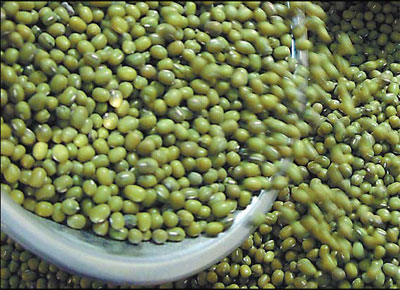
Mung beans (lu dou) are tiny green beans eaten with or without their shells. Whole beans are used to make lu dou tang, a sweet refreshing soup made simply by bringing a cup of pre-soaked mung beans and 1/3 cup of sugar in six cups of water to the boil, simmering the liquid for an hour and letting it chill before serving. Mung beans are also often included in various types of sweet and savory congee.
Mung beans with their shells removed are made into a paste that has a more overtly mealy texture and bean-like flavor than red bean paste, but with similar applications.
My favorite mode of mung bean is that in its sprouted form (dou ya), available in most Chinese green grocers. But you can also grow your own by simply soaking dried mung beans overnight, letting them germinate in a damp, dark place for a few days (depending on how big you like your sprouts) and rinsing them every 12 hours.
These succulent sprouts are wonderful in a crisp Asian-style salad with cold shredded poached chicken, grated carrot and cucumber and a grated ginger, lemon juice, rice vinegar and coriander dressing.
Soybeans are most frequently used to make tofu or soybean milk in China, but the unadulterated soybean should not be overlooked. In Japanese cuisine, these are steamed in their pods and served with a little salt as an appetizer called edamame.
I generally blanch soybeans before adding them either to salads or black rice as a colorful accompaniment to grilled chicken or fish. They can also be salted and fermented to produce the black beans (dou chi) used to make black bean sauce. These beans have a wonderfully strong, almost yeasty flavor, and are often paired with fish and ribs to good effect.
|
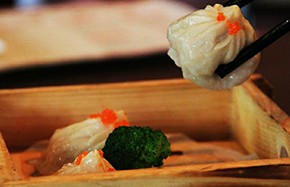
Mung beans are often included in sweet and savory congee. Liu Junfeng |
Unprocessed beans share similar nutritional traits. They contain large amounts of oligosaccharides - a type of starch indigestible to humans that acts as a pre-biotic (food for the friendly bacteria in your gut). Oligosaccharides help maintain overall bowel health, relieve Irritable Bowel Syndrome (IBS) symptoms and reduce risks of colon cancer.
What should be borne in mind by those less accustomed to bean eating is that they might experience unaccustomed flatulence and gas as a result of friendly bacteria-produced methane.
Savory bean dishes in Chinese cuisine, however, often include what are known as carminatives, such as fennel, cumin, anise and coriander, which reduce antisocial side effects.
Beans, in addition, are a rich source of protein (although less so in their sprouted form), which is why they are a favorite with vegetarians and vegans. Low in fat, beans have been proved, in combination with a heart-healthy diet, to significantly lower cholesterol levels.
This nutrition-related column is written by Nina Lenton, a qualified dietitian living and working in Beijing. Contact her at nina_lenton@hotmail.com.
(China Daily 06/11/2008 page19)