Joint efforts needed for a new, just global order
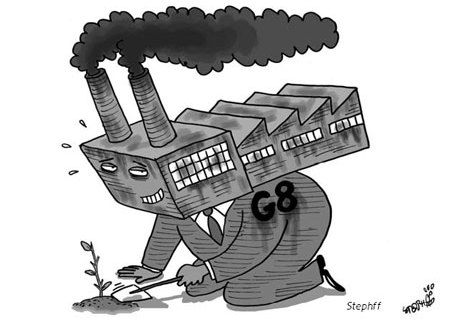
The latest round of dialogue between the Group of Eight (G8) and the countries concerned ended in Hokkaido, Japan on July 9. Parties at the gathering managed to go beyond their differences and reached a number of consensuses on such issues as the world economy, security of energy resources, climate change and environmental protection and Africa's development. The process represented quite fully the spirit of making joint efforts through proactive dialogue, communication and pragmatic cooperation to handle common challenges.
Because of the nature of the G8 forum and the informal nature of its dialogue with the countries concerned the joint declaration and statements issued at the meeting do not offer any specific solutions to the most pressing issues facing the world today. Instead, they mainly express the countries' common view about and stand on major issues and their common desire to resolve them with joint efforts. It is fair to say the dialogue reached the goal as expected and reaped a bumper harvest.
Objectively speaking, the dialogue between G8 member-states and the countries concerned is becoming an important platform for major nations of the world to exchange views, hold talks, increase consensus, boost cooperation and explore the direction of human development.
There were three fundamental and also key reasons why countries at the gathering were able to put aside their differences in order to seek and broaden consensus. The first is that, amid globalization, the interdependency between national interests of different countries is growing as they face increasing common risks and challenges. The urgency to handle them through cooperation is greater than ever, leaving working together the only way to overcome the difficulties. The second is that, because the development of the humankind is at a vital crossroads, all nations must join hands as soon as possible to make sure the world progresses in the right direction. The third is that the existing international system and mechanism no longer suit the fast-changing power equations in the world and nations of the world must work together to build up a new global system capable of protecting world peace, stability and sustainable development.
How should we start? As President Hu Jintao suggested in his speech to the gathering, we "should keep in mind long-term development, think in global and strategic terms and start with basic issues such as system and mechanism". This means we should first work hard to build up a new system of global cooperation.
For a start, all nations, be they developed or developing, should make a joint effort by shouldering the responsibility to the best of their abilities. But, responsibilities should vary from country to country according to each country's ability to perform it. Developed countries should take the lead in assuming greater responsibilities rather than playing up and even exaggerating the "developing major powers" theory or habitually blaming developing nations whenever a problem arises.
Next, developed countries and developing nations should make full use of various platforms and channels such as the dialogue between G8 and the countries concerned, step up talks and build up a global partnership in development based on equality, mutual benefit, cooperation and all-win results. They should do these in accordance with the principle of being proactive and pragmatic and seeking common ground without necessarily abandoning their differences. Developed countries should treat developing nations equally and give them more power to participate and make decisions. Only by doing so can they ensure their partnership suits the new situation.
To be more specific, again as President Hu spelled out in his speech at the dialogue meeting, developed countries and developing nations should join efforts, starting with constructing a world economic system of sustainable development, an inclusive and orderly international financial system, a just and reasonable international trade system, and a fair and effective global development system.
This does not require the complete abandonment of the existing international systems but rather seeks to gradually remold them into new shapes on the basis of the existing systems and through reform, reorientation and transformation.
It is by no means an attempt to prevent G8 from playing its role but rather a plea to the major powers to be more receptive to developing nations' voices and views and give them a greater say on global affairs.
It is by no means an attempt to overthrow the existing international financial institutions but rather aimed at pushing the World Bank to offer more assistance to developing nations in their bid to adapt better to globalization and support the International Monetary Fund in stepping up monitoring and early warning of risks posed by short-term capital flow and financial innovation.
It is by no means against the multilateral trade system but rather trade protectionism and is in support of an early breakthrough in the Doha round of the World Trade Organization (WTO) negotiations.
Nor is it an attempt to weaken the United Nations' authority. Rather, it is in support of the UN's role as a more effective coordinator in various areas.
This demands that developed countries absolutely forget about their self-claimed leadership status in the existing international system, work harder on securing the common, harmonious and sustainable development of the whole humankind, instead of on keeping themselves in the driver's seat as long as possible, adjust their attitude and policies accordingly, and treat the development and rise of developing nations represented by emerging economies rationally.
The author is a researcher and deputy director of the Institute of Strategic Studies of the China Institute of Contemporary International Relations
(China Daily 07/16/2008 page8)