Cultures are valued among all ethnic groups
Before 1949, Xinjiang had no professional arts groups or academic research organizations for arts. In the past six decades, with extensive support from the government, arts and cultural facilities of all types have been established step by step, providing rich and colorful cultural activities to local communities. Statistics show that, by 2008 the region had 119 arts and performance groups, two literature and art research institutes, two arts creation centers, 15 mass art galleries, 94 cultural centers, and 1,034 village and town cultural stations. A total of 4,355 individuals became creative and performance professionals. The region has 93 public libraries and 47 museums. In addition, it has six radio stations and eight TV stations at the autonomous regional level, and 93.5% of the local population has access to radio and TV programs. By 2008 households subscribing to cable TV services reached 1,638,900, while those with digital cable TV exceeded 324,200. Since the implementation of the western region development strategy, the state has invested a total of 2.484 billion yuan in developing Xinjiang's cultural facilities. In recent years, the Xinjiang government has initiated a series of cultural programs for the general public, including organizing cultural and recreation activities in city squares and rural villages. The government also schedules professionals to go on tour to rural villages, publicizing cultural, scientific and medical knowledge. Public cultural construction projects have also boomed, introducing different cultures and promoting diverse folk cultures as well as Silk Road border cultures. The government has also set up village libraries, and radio and TV stations all over the autonomous region, to connect local peoples with the rest of the world. Other key projects include sending books and publications to Xinjiang and constructing information centers to share resources with other areas of the country. These measures have significantly promoted the development of Xinjiang's cultural programs and endeavors.
Before 1949 outbreaks of endemic and epidemic diseases were frequent due to the low level of Xinjiang's health and medical services. The overall mortality rate was 20.82 for every 1,000 people, while infant mortality rate was an astonishing 420-600 for every 1,000 births. The average life expectancy was below 30 years. In 1949 Xinjiang had only 54 medical centers, which were located in a few cities and towns, with a total of 696 beds. Every 10,000 persons had to share 1.6 beds and 0.19 doctors. Over the past 60 years, the central government has been making more and more investments in Xinjiang's medical services. By 2008, Xinjiang had altogether 7,238 medical service centers, including 1,629 hospitals with a total of 93,600 beds, and 43,800 doctors. That means 36 hospital beds and 21 doctors for every 10,000 people. Health and epidemic prevention institutions have been established out of nothing, and a systematic urban and rural health and disease-control network has been formed. Local disease control and prevention capabilities have greatly improved; some endemic diseases, such as smallpox, have been eradicated, and the incidence of other endemic and epidemic diseases has been significantly reduced.
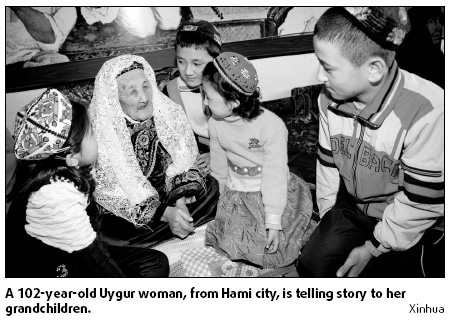
Since the mid-1970s, Xinjiang has implemented a planned immunization program, with the vaccination rate rising steadily over the years. The improvement of healthcare services has greatly improved people's health conditions and quality of life. According to 2008 statistics, the general mortality rate was 4.88 for every 1,000 persons, and infant mortality was 29.76 per 1,000 births. The population's average life expectancy has reached 72 years. Health services in farming and pastoral areas have significantly improved, and a three-tier disease-prevention and healthcare network has been established in counties, townships and villages. Xinjiang implemented the new rural cooperative medical care system in 2003, and 89 cities and counties, or 94.6% of the rural areas, were included in the system by 2008, covering 10,059,000 farmers and herders, and those who actually participated in the program were 9,503,000, or 94.5% of the population covered by the program.