Wang Kaihao
( China Daily ) Updated: 2016-05-26 08:20:30
 |
|
[Photo/CFP] |
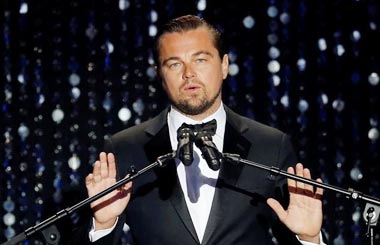
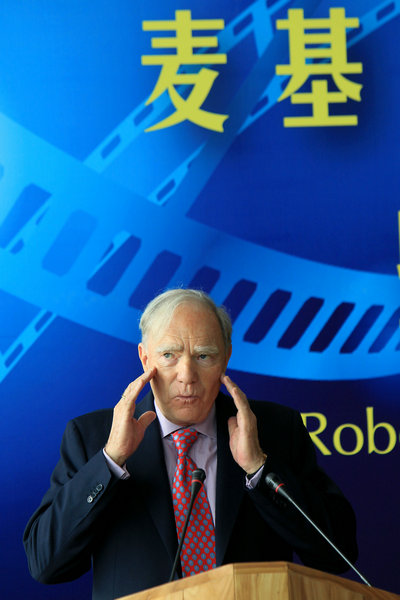
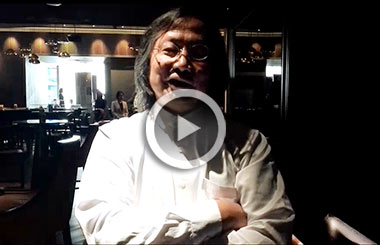
Guru of cinematic writing Robert McKee says trying to be popular leads to bad work, Wang Kaihao reports.
In his three decades of teaching screen writing, Robert McKee has seen a long list of his former students win the Oscars, Golden Globe Awards and the Emmys.
But when asked why none of his scripts have been adapted into films, the guru of cinematic storytelling, now 75, responds: "Aristotle never wrote a play."
McKee arrived in Beijing earlier this week to offer a four-day training workshop, tickets for which were almost immediately sold out-some at 9,800 yuan ($1,500).
His book Story: Substance, Structure, Style and the Principles of Screen writing, has been dubbed the screenwriters' Bible.
It has been published many times in the United States since its first edition in 1999 and was translated into Chinese in 2014. A paperback edition was published in China in April.
"Novelists can directly invade the mind, but you cannot drive a camera through a character's forehead (in films) and photograph thoughts," he says, explaining the difference between cinematic and book writing.
"When you write a screenplay, the inner life has to be implied," he says. "A bad screenwriter will try to make it explicit by putting the characters' deepest thoughts and even subconscious feelings directly into what they do and thus create very bad movies."
The strength of cinema lies in its images. The best screenwriter would write a virtually silent film, telling the whole story through acting and only using dialogues as second choice, he says.
"The story is a metaphor for life and dialogue a metaphor for people's talk," he says. "In most films we see, all characters talk the same, and they probably all talk like the writer, but that's how it is like in life. People have unique speech styles."
McKee discovered that many dialogues in today's Chinese films repeat facts that have already been shown through the characters' actions.
He says that most theaters worldwide will shut down by 2050, based on his observation of the American market. People increasingly want films on their phones and other hand-held devices and they want to pick a time and place to watch them.
But even so, he opposes screenwriters' feeding the trend by analyzing big data, as seems to be the case in China these days.
"A screenwriter can either want to be loved or respected. It's better to want to be respected," he says.
"People go out to survey the taste of the audience, try to be popular and … create the worst writing," he adds.
Although China has become the world's second-largest film market with more than 44 billion yuan in total cinema ticket sales in 2015, McKee points out a problem in today's Chinese cinema in a straightforward way: Chinese films are obsessed with popularity and money.
"Unfortunately, China is becoming the 'Hollywood-est'," he says. "There is an argument that 'we just give people what they want'."

|
|
|
|
|
|
|
|

Copyright 1995 - . All rights reserved. The content (including but not limited to text, photo, multimedia information, etc) published in this site belongs to China Daily Information Co (CDIC). Without written authorization from CDIC, such content shall not be republished or used in any form. Note: Browsers with 1024*768 or higher resolution are suggested for this site.
License for publishing multimedia online 0108263 Registration Number: 130349 
















 Raymond Zhou:
 Pauline D Loh:
 Hot Pot
 Eco China
 China Dream
 China Face