 |
|
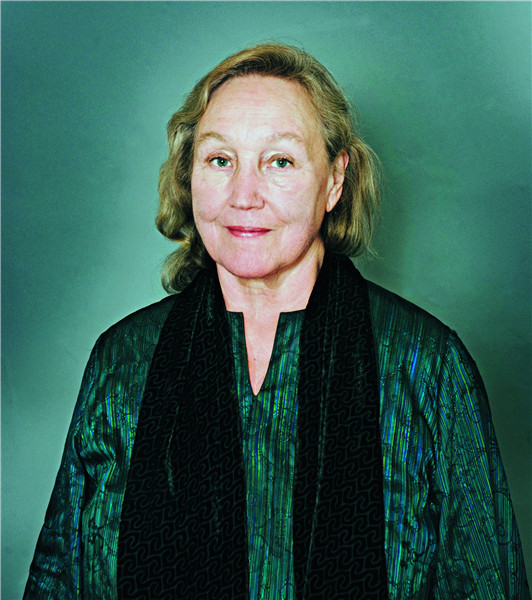
Cecilia Lindqvist,Swedish Sinologist. [Photo provided to China Daily] |
They also gave her a guqin from the Ming Dynasty (1368-1683) because it was impossible to buy one anywhere.
In 1971, Linqvist started teaching Chinese at a high school in Sweden.
Like her teacher, Karlgren, she told the students about the origin, development and structure of Chinese characters by showing them pictures of oracle bones and bronze scripts.
But during her teaching stint she often found the existing material was very limited and could not answer many of her questions. So she kept a close eye on the new archeological discoveries then being made in China.
In the 1970s and 1980s, China was on a building spree, and many archeological sites were being discovered as the ground was being excavated for the new structures.
Lindqvist then returned to China to visit some of the sites to see how the new discoveries related to her studies.
She also traveled extensively to discover the origins of characters.
In the course of her travels, she even went to a silk factory in Suzhou, the hometown of silk, and saw women there producing silk fiber from silkworm cocoons that were immersed in water.
Recalling her visit, she says: "I saw then how the ancient character silk had evolved."
Speaking about how the idea of writing Characters Kingdom developed, she says that, at first, she wanted to write an academic book about characters. "I thought I had found an interesting topic." But gradually she found that academic circles did not really "appreciate what you've done. They just criticized what you got wrong."
So, she - based on her teaching experience - wrote a book about 266 Chinese characters with more than 500 pictures to show the origin and development of the characters.
A great storyteller, she began the book with people, people's faces and bodies, and then the places where they lived, the natural surroundings like mountains, rivers and forests. From there, she moved on to animals, wild and domesticated, such as dogs, sheep and horses.
The characters included in the book range from those related to clothes and vehicles to architecture.
"I chose characters that interested me, and through them I can tell a lot about Chinese culture and people's lives," she says.
Sometimes, she explains the structures of characters from a modern Western perspective, like in the cases of 奴 (slave) and 怒 (angry).
"奴 consists of a woman and a hand, possibly implying the woman has to do a lot of work at home. And 怒, with a 奴 on a heart could reflect the reaction of women to the life they were forced to live," she writes in the book.
Lindqvist, who took 15 years to write the book, visited China more than 50 times for research.
She saw Chinese characters everywhere. "All through, it was wonderful for me. It took a long time. But it has become some kind of a way of living," she says.
Contact the writer at yangyang@chinadaily.com.cn

|
|
|
|
|
|
|
|

Copyright 1995 - . All rights reserved. The content (including but not limited to text, photo, multimedia information, etc) published in this site belongs to China Daily Information Co (CDIC). Without written authorization from CDIC, such content shall not be republished or used in any form. Note: Browsers with 1024*768 or higher resolution are suggested for this site.
License for publishing multimedia online 0108263 Registration Number: 130349 
















 Raymond Zhou:
 Pauline D Loh:
 Hot Pot
 Eco China
 China Dream
 China Face