The poetry of pain defines author's new collection
 |
|
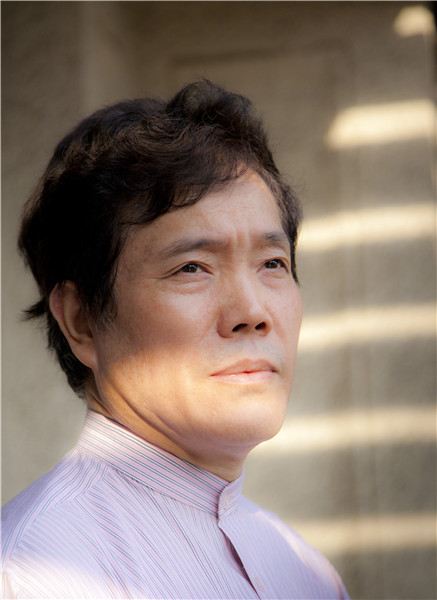
Zhao Lihong says writing poems is like brewing wine-it takes time to turn words and sentences into verse. [Photo provided to China Daily] |
While Zhao Lihong is defined by his prose in China, the writer says poetry is what drives him.
In November, Zhao released a collection of his poems that delve into an eternal literary theme - agony and pain.
Titled Pain, the book contains 51 poems, most of which were written in the past three years.
"Writing poems is a very personal thing. When ideas come to my mind, I note them down," Zhao said during a book tour in Beijing last month.
"Some ideas appear during my travels on planes and trains, and some come to me in my dreams."
Zhao's collection includes a poem from his unpublished writings of 1982, in which he writes: "Joy is the shell, but pain is the essence."
Born in Shanghai in 1952, like many from his generation, Zhao experienced the "cultural revolution" (1966-76) when normal college education was interrupted in the country.
In those years, he was sent to work on the farmlands of Chongming, an island county on the Yangtze River. The work exhausted him and the lack of books or companions bored him. It was then that he started to write - both prose and poetry.
"I wrote about the hard work, the hunger, the longing for love and about how nature soothed me," Zhao recalls in his essay Why I Write.
"I never thought those writings would find readers, nor that I would become a writer. I just felt that writing eased my loneliness, relieved my pain and gave me hope."
Zhao was among the first college students after the "cultural revolution" ended. In 1981, he graduated in Chinese literature from East China Normal University. Then, he joined Sprout, a literary journal featuring works by young writers, as an editor.
In the past few years, Zhao has published dozens of works of prose and won many awards. Several of his writings are referenced in textbooks on Chinese literature up to the university level.
His book The Shadow of A Sundial won the Bing Xin Prize, the top award for prose in China, in 2002.
Today, Zhao is the vice-president of the Shanghai Writers Association and editor-in-chief of Shanghai Poets, a bimonthly journal.
"Many readers don't know that I write poems," says Zhao. "But I never stopped writing poetry."
Zhao says he carries a small notebook with him all the time, and writes down words and sentences that inspire him, in addition to his feelings. He dips into such material for his poems.
"It's like brewing wine. Words and sentences become poems when the time is ready," he tells China Daily in Beijing.
In his latest collection, Zhao writes about pain in different poems that are titled Scars, The Arrow of Time, Storm and so on.
While pain is constant, how poets express it differs, says modern Chinese poet Xi Chuan.
"In Zhao's poems, he expresses pain not by screaming but in a self-restrained manner, like a gentleman," Xi adds.
Zhao's book is expected to be out in English early next year.
Karmia Chan Olutade, a Chinese-Canadian writer and translator with a degree from Stanford University, has done the translation.
"Translating this slender body of work was like going to a birthday party, during which a respected elderly gentleman is decked in vibrant colors to celebrate his second childhood - the gentle birth of an innocence after all the labors of the world have ceased and the debt of youth has been fully and finally paid," Olutade writes in a review of the book published in Shanghai Daily.
The book's publisher, People's Literature Publishing House, says that translations in Spanish, Bulgarian and Serbian are also in progress.
xingyi@chinadaily.com.cn