Preserving the past for posterity
 |
|
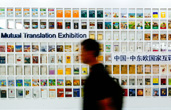
Visitors at the exhibition that runs in tandem with the international forum on the authentication, restoration and protection of ancient Chinese calligraphy and paintings at Renmin University in Beijing. [Photo provided to China Daily] |
Mixing of schools
According to Zhang Jigang, a professor at Renmin University who launched the forum, the event will move to the University of Hong Kong in 2017 and then to Yale in the United States the year after.
"Paintings and calligraphy represent the spirit of the Chinese and their philosophy. They are common treasures of humanity. So, such an event helps the study of scattered Chinese art," Zhang says.
Still, mindsets vary when it comes to the restoration of ancient Chinese paintings in China and in the West.
For instance, at the British Museum, restoration is linked to specific programs and exhibition schedules.
Kosek says: "It's (restoration) very exhibition-focused and access-focused. If we want to allow a research program on the paintings of an artist, we make sure they are safe to be handled. The structure of the scrolls has to be sound, and there have to be no cracks."
At Beijing's Palace Museum, things work differently.
Yu Hui, a senior painting researcher at the Palace Museum, prefers to first rank the museum's collections and then set a restoration timetable for the paintings according to their importance.
The museum houses 56,000 paintings. Most were collected by royal families of the Qing Dynasty (1644-1911).
"With such a huge number of works, we have to know which ones are the most important," says Yu. "And that leads to the combining of painting authentication-which explores historical information-and restoration, which is more chemical and physical work."
Yu adds the two fields used to be seen as separate entities, but the forum at Renmin University shows they are gradually coming closer.
"Without historical research, restorers can easily be distracted by the appearance of the painting," says Yu. "But what if they are counterfeits?"
So, as the two fields intersect, experts are also calling for the use of technology in the restoration process.
"The work needs to be measurable with modern instruments rather than relying solely on experience," Shan Guolin, a researcher at Shanghai Museum, says. "Scientific methods and new materials need to be introduced."
Still, Yu says that, although technical methods are now used to check the authenticity of the paintings and analyze the materials used to create them, most of the restoration process is manual.
"We once tried to mount paintings using machines," he says. "It was more efficient, but the results were not very satisfactory."