The best porcelain of the Ming era is on show in Beijing
 |
|
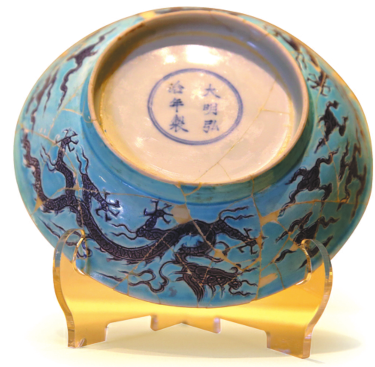
A porcelain piece produced during the Hongzhi reign in Jingdezhen, the "porcelain capital" of China, is among the exhibits on show at the Palace Museum. [Photo by Jiang Dong/China Daily] |
When talking about Ming Dynasty (1368-1644) porcelain, people usually focus on artifacts from the rule of Chenghua (1465-87), considered the peak of porcelain-making in China.
Since 2015, a series of exhibitions at the Palace Museum - China's former royal palace, also known as the Forbidden City - has aimed to give visitors a more comprehensive view of Ming porcelain. The third of four exhibitions recently kicked off at the museum's Zhai Gong (Hall of Abstinence) to review the lesser-known but splendid post-Chenghua porcelain ware.
The display, Imperial Porcelain from the Reigns of Hongzhi and Zhengde in the Ming Dynasty, is a comparison of porcelain pieces unearthed from the imperial kiln site in present-day Jingdezhen, Jiangxi province, and the imperial collection originally from the Palace Museum. It shows some 162 artifacts and runs through Feb 28.
Jingdezhen started its porcelain kilns exclusively serving the Ming court in 1369. Since then, it began to be known as the "porcelain capital" of China.
Only the best artifacts made in these kilns were taken to the Forbidden City, while the rest, even with the slightest flaws, were broken and buried in Jingdezhen under strict supervision.
"Only through a comparative exhibition, putting artifacts from two places together, can people fully understand the achievements made by Ming's porcelain-makers," Wang Yamin, deputy director of the Palace Museum, says of the wares unearthed in Jingdezhen and those in the Forbidden City's collection.
"We can have a whole view of management system of kilns from the different shapes and types of the exhibited artifacts," he says. "Items from the two places prove each other's identity."
Relics of the imperial kiln site in Jingdezhen were found in the 1970s when archaeologists unearthed "tons of porcelain samples" that provide crucial references for studies of the Forbidden City's own collections.
Among the exhibits are pieces that remained intact in the palace while others were restored from broken pieces in Jingdezhen.
But Lyu Chenglong, head of the porcelain research institute at the Palace Museum and curator of the ongoing show, says some porcelain types unearthed in Jingdezhen could not be matched with any item found in the Forbidden City, and vice versa.
"If we hadn't done excavations in Jingdezhen, we wouldn't have known about some types that once existed," he says.