Sound effects


When an award-winning composer finds music in the bustling sounds of old Beijing, the result is magical, Chen Jie reports.
If he had not become a composer, Zhou Long would have liked to be an industrial designer.
As a 5-year-old, Zhou enjoyed disassembling a radio and making model planes, but his vocalist mother wanted him to play the piano.
 |
|
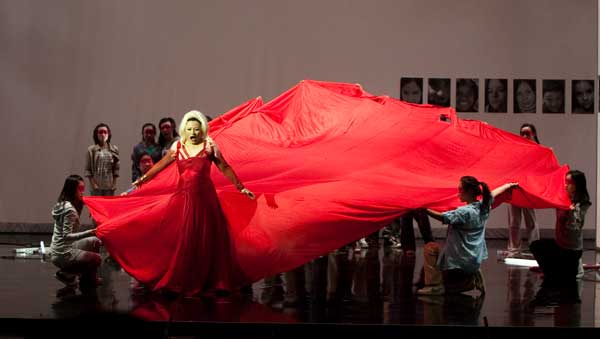
One scene from Zhou Long's opera Madame White Snake, commissioned by Opera Boston and the Beijing Music Festival. Photos Provided to China Daily |
She wrote the names of 20 pieces of music on 20 strips of paper and stuck them on one side of the piano. Whenever Zhou finished playing a piece, he could move one strip to the other side. Zhou always tried to move more than one strip after playing a piece if mother was not watching him. One day when he "finished" all 20 and rushed to open the door, he found it was locked. Without any hesitation, he broke the window, cutting his hands.
"The boys of my age were playing so loudly in the courtyard that I could not help rushing out to join them," Zhou says. His home was in a hutong near the China Central Academy of Drama where his father taught set design.
He says he often hung around the area's hutong, observing peddlers, street barbers, people fluffing cotton or sharpening knives, and they made all kinds of noises or, say, music. It was even more fun during the temple fairs.
Half a decade later, Zhou puts all those sounds and his boyhood memories into his composition Beijing Rhyme — Symphonic Suite for orchestra. Its premiere by Beijing Symphony Orchestra on June 15 was a success and on Thursday, Beijing Symphony Orchestra performed it again under the baton of its music director Tan Lihua at the National Center for the Performing Arts to warm applause.
The first movement Wind of Bell and Drum features Chinese percussion and brings to life Beijing's Bell and Drum Towers area where Zhou lived. You can also hear the pigeons whistling in the sky, a common sound in old Beijing.
The second movement Wind of Temple Fair, dynamic with constant changes in rhythms, also features percussion from Chinese gongs. In the third movement Wind of Beijing Rhyme, the composer adapts the techniques of jingyun dagu and meihua dagu, two kinds of ballad-singing drumbeat performances popular in Beijing, to the timpani.
The last movement Wind of Hasty Beats features the elements of errentai, a folk performance form popular in Hebei province — but it is played on the violin.
Zhou was commissioned to write a piece in the name of Beijing last summer in Kansas City, where he works as distinguished professor of music at University of Missouri. Tan called him from Beijing.
They had not met each other. Tan was on the jury of a national composition competition in 2012. He appreciated Zhou's symphony Humen 1839 very much and the piece won the final prize. As director of Beijing Symphony Orchestra, Tan wishes to commission a work for the city and since Zhou was born and grew up in Beijing, Tan reached out to Zhou.
In Beijing Rhyme, conductor Tan says, Zhou creates a unique style by incorporating Chinese percussion and folk music elements of Beijing into Western conceptions of harmonic notions.
In addition to the Beijing flavor, Beijing Rhyme features many music elements of North China's Hebei and Shanxi provinces and the Inner Mongolia autonomous region, reflecting his life in those regions before he started his college education.
When the "cultural revolution" (1966-76) broke out, the students all dropped out of school and he "had nothing to do, so I learned to play the accordion".
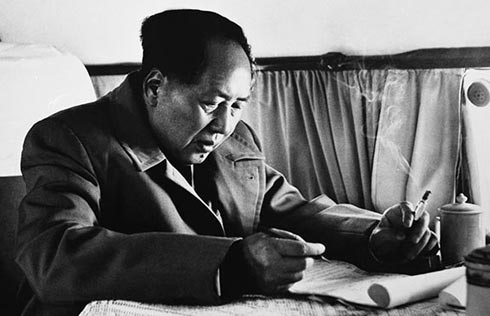
Upon Chairman Mao's call, millions of students went to the countryside to learn from farmers. The 16-year-old Zhou went to Beidahuang, in Heilongjiang province in October 1969.
"When the train set off from Beijing, girls started to cry, but we boys all felt somehow romantic. I carried an accordion and imagined playing it on the wild grassland," recalls Zhou.
It was not romantic as he imagined. It was hot in the daytime and the mosquitoes buzzed around them while they farmed. The nights were so cold that even the toothpaste was frozen.
|
|
|
| East sounds West | Festival of dreams |