|
Home>News Center>World | |
|
|
|
|
|
|
|
|
|
|
|||||||||||||||||||||||||||||||||||||||||||||||||
|
|
Clashes bring Uzbekistan death toll to 42
Gunfire and explosions resounded in the capital Tuesday as Uzbek forces battled for hours with suspected Islamic militants after two more suicide attacks. Officials claimed 20 terrorists and three police died in the fighting.
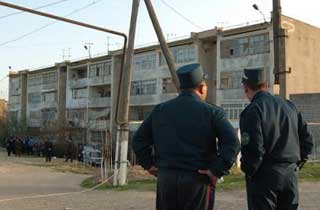
The clashes Tuesday were centered in the Yalangach neighborhood, just outside the city limits off the road heading to the official home of President Islam Karimov.
An Associated Press reporter saw four separate sites of fighting in the district: remnants from two suicide bombings on roads, a burned-out building pockmarked with bullet holes and the bodies of at least five suspects splayed out in front of an apartment house.
The Interior Ministry said in an statement read on state-run TV that 20 terrorists and three police were killed in the confrontations that began about 7:20 a.m., while five other police were wounded.
"Twenty of them blew themselves up using self-made explosive devices," the ministry said of the alleged terrorists.
The clashes began with a pair of suicide bombings.
Police stopped a small car, and two alleged terrorists jumped out and detonated explosive-laden belts, killing themselves and three police and wounding five more officers, said a National Security Service officer at the scene who declined to give his name.
Down the road, a woman detonated explosives after refusing to heed police orders to stop approaching a bus, according to witnesses who said she set off the blast after officers shot her in the legs.
The suicide bomber was decapitated in the blast, said Hairniso Supiyeva, 64, whose front gate was pitted with shrapnel from the explosion. Three black-clad women who had been in a car with the bomber fled to a nearby apartment building, where police then began a nearly five-hour standoff with them and other suspects.
An Interior Ministry officer said 16 suspected terrorists - 11 men and five women - were killed in the apartment building.
Some were shot by police but others killed themselves with grenades, said the officer, who refused to give his name. His comments contradicted the Interior Ministry statement, and the bodies on the sidewalk also appeared intact and not torn apart by an explosion.
Five men escaped, said a building resident who refused to give her name. She said the women in the car wore veils revealing only their eyes, rare attire in secular Uzbekistan. She said they were speaking another Central Asian language she could not understand.
The people had moved into an apartment in the four-story building in January, the resident said, adding that a young man who spoke Uzbek with an accent signed the rent agreement. She didn't know how many people lived there, saying they spent their days elsewhere and returned in the evenings.
Another building several hundred yards away showed signs of heavy fighting, its walls blackened by fire and pocked by dozens of bullet holes. Neighbors who were cleaning up charred books and other debris said four young men were killed in the house and that none of its residents were home at the time of the shootout.
It was unclear whether the four were among the 16 the Interior Ministry officer reported killed in the siege.
Security was increased across the city, with soldiers on patrol and hotels deploying metal detectors and not allowing vehicles to approach. Soldiers with dogs patrolled the airport, but flights continued.
Nineteen people were killed and 26 wounded Sunday and Monday in violence that included the first suicide bombings in formerly Soviet Central Asia.
Secretary of State Colin Powell offered assistance Tuesday to the Uzbek government in its investigation.
A U.S. counterterrorism official, speaking on condition of anonymity, wouldn't comment on whether the United States was helping with surveillance or other aspects of security in Uzbekistan, nor could the official provide any details - or "signatures" - on the bombs.
State Department spokesman Richard Boucher said the United States had no information on who was responsible for the current attacks but noted the Islamic Movement of Uzbekistan has been the dominant threat in the country.
The group was believed to have been decimated in the U.S.-led anti-terror operations in Afghanistan, and Pakistani forces this month hunting al-Qaida fugitives on the Afghan border said they wounded the IMU's political leader.
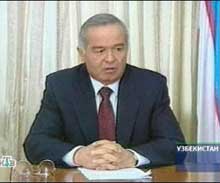
Karimov has blamed the violence on Islamic extremists, and said several arrests had been made. He said Monday that backing for the attacks might have come from a banned radical group that has never before been linked to terrorism - Hizb ut-Tahrir. The group denied involvement.
Uzbek authorities claim Hizb ut-Tahrir is a breeding ground for terrorists and have sought unsuccessfully to have Washington label it a terrorist group.
Karimov said the attacks were planned six to eight months ago and maintained the organization and funding required to carry out such attacks indicated they had outside support.
However, David Lewis, project director in Central Asia for the International Crisis Group think tank, noted that only local targets were attacked.
"This looks like a series of attacks directly on the Uzbek regime, and specificially on the police," he said. "In that sense it looks less like IMU with its more global outlook than some more domestic group."
New York-based Human Rights Watch released a report Tuesday documenting the government's campaign of religious persecution, including torture and arrests of people engaged in legitimate religious activity - and expressed worry that the latest violence could spark a renewed crackdown on Muslims who choose to worship outside state-run mosques.
As police worked to gather evidence Tuesday fighting, residents worried that the violence wasn't over.
"Yesterday, Karimov said everything was fine in Uzbekistan and today it is happening again," said Farida Raupkhajayeva, 50. "We are afraid there will still be more."
|
|
|
|
|
||||||||||||||||||||||||||||||||||||||||||||||
|
|
|
|
|||||||||||||||||||||||||||||||||||||||||||||||||