|
Home>News Center>World | |
|
|
|
|
|
|
|
|
|
|
||||||||||||||||||||||||||||||||||||||||||||||||
|
|
'Fear premium' pushes gas prices higher
A "fear premium" is driving up gasoline prices well past US$2 a gallon. Motorists may be paying as much as 36 cents a gallon more at the pump because of the petroleum industry's anxiety that terrorists might disrupt oil supplies, a fear that increased with two murderous rampages by al-Qaida-linked gunmen at oil compounds in the heart of Saudi Arabia.
Estimates vary, but some energy economists said as much as US$10 to US$15 is being added to the cost of every barrel of crude oil because of fear that terror in Saudi Arabia, violence in Iraq or unrest elsewhere could disrupt future oil supplies.
The fear factor went up a notch over the long holiday weekend with the attack in Khobar, Saudi Arabia, that killed 22 people, mostly foreign oil workers. It was the second attack in a month against oil workers in the Islamic kingdom.
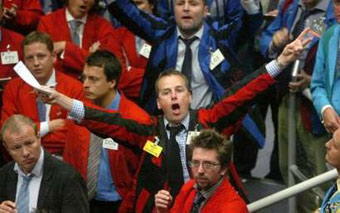
Oil prices surged more than US$2 a barrel Tuesday, the first trading day since the Khobar attack. The price of gasoline jumped 6 cents a gallon on the New York Mercantile Exchange.
"There obviously is a fear premium," said Seth Kleinman, an oil market analyst at PFC Energy, a Washington-based consulting firm. While there always has been such a premium in oil prices, with the targeting of Saudi's oil industry, "It's gotten a lot further, and it's gotten a lot bigger."
One reason is that Saudi Arabia, which pumps 10 percent of the world's oil, is the only producer that has significant spare capacity to produce more as needed to stem demand and prices, economists said. While the attacks did not target Saudi pipelines, terminals or oil fields directly, the psychological impact has rattled the markets.
After receding somewhat last week, the price of light crude for July delivery jumped US$2.45, settling Tuesday at a record US$42.33 a barrel on the New York Mercantile Exchange.
"Increasing terrorist activities around the world and uncertainty and instability have driven oil prices over the last six months. It's not a lack of supply," argues Fadel Gheit, an energy strategist for Oppenheimer and Co. in New York.
Gheit estimates that when oil prices were at roughly US$42 a barrel, as much as US$15 might have been generated by traders pushing up prices because of worry over disruptions. Other estimates have put the fear premium at US$5 to US$12 a barrel.
The size of the premium, whatever it may be, is of less importance than that it exists and has helped propel gasoline prices to record levels to the current average of more than US$2 a gallon nationwide.
The cost of crude accounts for nearly half of the cost of a gallon of gasoline at retail pumps, according to the Energy Department. Energy economists estimate an additional US$1 in the cost of crude adds 2.4 cents to the retail price of gasoline.
Analysts said tight crude supplies, growing demand and a refining industry struggling to produce enough gasoline has added to the gas price surge.
But the Khobar rampage and the killing on May 1 of six Westerners at Yanbu, a Saudi refinery and petrochemical hub, have escalated the fear factor because they dissolved the notion that Saudi Arabia could protect its oil complexes, according to analysts.
These incidents "have shattered the market's confidence that everything was well-protected in Saudi Arabia," said Amy Myers Jaffe, a director of energy programs at the James A. Baker Institute for Public Policy at Rice University. "Before, there were pipeline attacks in Iraq, general instability. But the (Saudi) attacks turned ongoing anxiety into deep anxiety."
Al-Qaida terrorists, claiming responsibility for the Khobar attack, said the aim was to disrupt oil markets, psychologically if not by blowing up a pipeline, oil terminal or tanker. A similar message was made clear to oil markets when Iraqi insurgents recently unsuccessfully targeted an Iraqi oil terminal.
Many oil industry analysts estimate that without the cloud of uncertainty posed by terrorists and the continued violence in Iraq, oil prices probably would be in the US$30 range. They say there's still plenty of oil available.
Some analysts believe speculators are using the fear of possible disruptions to game the system and push prices beyond where they should be even assuming some disruption.
The Bush administration's high-profile stance that it will not use its emergency government oil reserves has made it easier for oil speculators to drive up prices, contends Jaffe. "He is giving them (speculators) a security blanket," agrees Gheit of Oppenheimer, explaining that traders have been able to push up prices for oil deliveries at a future date without fearing they may be caught in a price squeeze if the government should release oil from its emergency stocks. Has the fear premium become a permanent part of today's crude oil markets? "The fear factor might narrow a little bit," said Gheit. "But I doubt it will completely disappear. We better get used to it." |
|
|
|
|
|||||||||||||||||||||||||||||||||||||||||||||
|
|
|
|
||||||||||||||||||||||||||||||||||||||||||||||||