|
Home>News Center>China | |
|
|
|
|
|
|
|
|
|
|
|||||||||||||||||||||||||||||||||||||||||||||||||||||||||||||||||||||||||||||||||||||||||||||||||||||||||||||||
|
|
Economist: No hurry for change of yuan rate
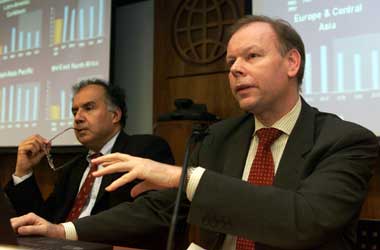
China should not revamp its exchange rate regime before the conditions are ripe, a senior World Bank economist said yesterday. If Chinese policymakers want to refocus the renminbi's exchange rate system, they should strive to build a more flexible one instead of simply revaluing the currency, said Hans Timmer, a senior economist at the bank.
China is under pressure from some major trading partners to revalue its currency, which they claim is undervalued and has been giving Chinese exports an unfair advantage. The Chinese Government has insisted it will not resort to any simplistic revaluation of the currency but pledged instead to gradually improve the exchange rate forming mechanism. While the renminbi faces upward pressure, it is not because it is undervalued, but mainly because of hefty capital inflows, Timmer said. "We don't see any obvious signs, from the trade perspective, that the currency is either significantly overvalued, or undervalued." Timmer made these remarks as the bank launched its annual Global Development Finance 2005 report simultaneously in Beijing and Paris. Bert Hofman, the lead economist at the World Bank's Beijing office, said this was the first time the bank launched a global report from Beijing, which highlights China's growing role as a global economic player. According to the report, China accounted for 88 per cent of foreign direct investment in the East Asia and Pacific region last year, which stood at US$63.6 billion, up from a low of US$49.9 billion in 1999. The country accounted for 78 per cent of portfolio equity inflows to the region last year, up from 65 per cent in the previous year, and accounted for 90 per cent of the foreign exchange reserve increases recorded in the region, which came in at US$230 billion. The report, entitled Mobilizing Finance and Managing Vulnerability, finds that although growth in developing countries remains robust, it is becoming more sustainable. But it points out that global imbalances remain a serious risk factor, and that slow growth and higher interest rates could jeopardize the finances of developing countries. Soft landing attainable While China's strong 9.5 per cent economic growth and soaring investment and loan growth last year has prompted worries an overheating of its economy, the nation is well on track for a soft landing in the next two years, Asian Development Bank economists said yesterday. Zhuang Jian, the bank's senior economist, said China's fast fixed asset investment, stable retail sales market and high export growth witnessed in the first two months of this year suggested its gross domestic product could grow at a higher rate. "China's economy is likely to grow 8.5 per cent in 2005, 8.7 per cent in 2006 and 8.9 per cent in 2007," he told a press conference in Beijing yesterday. The bank's previous forecast for China's 2005 economic growth was 8 per cent. This means the country's economy will achieve its targeted soft landing this year and in the next two years, he said. According to the Asian Development Outlook 2005 published yesterday, China's fixed asset investment is expected to grow about 18 per cent this year and around 13 per cent in 2006-07, slowing from last year's 25.8 per cent. Overheated sectors such as steel and cement will face the biggest cutbacks, the bank's report said. But the government may have difficulties in curbing investment growth, as construction of unfinished projects will continue, it said. Private investment will also continue to grow rapidly and foreign investment looks set to remain strong. The report stated that consumption will maintain its double-digit growth rate, but this will be significantly lower than the rate for investment. The government should take a series of effective measures including increasing rural incomes to stimulate consumer demand, it said. The bank's report pointed out that China's export growth will fall to 12 to 20 per cent in 2005-07 from more than 30 per cent last year. Slower global economic growth, increasing trade protectionism and anti-dumping actions against Chinese exporters, as well as rising labour costs and higher oil prices, will have an impact on the country's exports, it said. China's consumer price index, policy-makers' key inflation measurement, is expected to rise 3.6 per cent this year, 3.3 per cent in 2006 and 3.2 per cent in 2007, the report said. Zhuang said the higher producer prices, increasing labour costs, and local governments' strong desire to raise the prices of public utilities such as water and electricity will increase inflationary pressures. Judging from the present economic and inflation situation, China still has room to further raise the renminbi interest rate, said Chief Economist Tang Min from the Asian Development Bank's Resident Mission in China. "The interest rate for savings deposits is still in negative territory, when considering the inflationary factors," he said. "The lending rate was also quite low." According to Zhuang, a possible rebound in fixed asset investment remains a concern for China's economic development this year. China's fixed asset investment grew 24.5 per cent year-on-year during the first two months of 2005. This was still a fast rate, although it was on the way to a soft landing, he said.
(China Daily 04/07/2005 page9) |
|
|
|
|
||||||||||||||||||||||||||||||||||||||||||||||||||||||||||||||||||||||||||||||||||||||||||||||||||||||||||||
|
|
|
|
|||||||||||||||||||||||||||||||||||||||||||||||||||||||||||||||||||||||||||||||||||||||||||||||||||||||||||||||