|
Home>News Center>World | |
|
|
|
|
|
|
|
|
|
|
|||||||||||||||||||||||||||||||||||||||||||||||||||||||||||||||||||||||
|
|
Records give voice to Guantanamo detainees
A terror suspect held at Guantanamo Bay asked his U.S. military judge a pointed question: "Is it possible to see the evidence in order to refute it?" In another case, a judge blurted out: "I don't care about international law."
Court documents reviewed by The Associated Press are giving dozens of Guantanamo detainees what the Bush administration had sought to keep from public view: identities and voices.
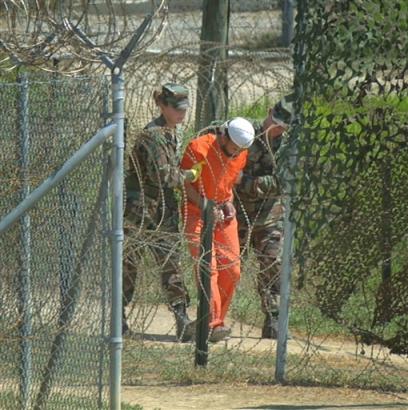
The government is holding about 550 terrorist suspects at the U.S. Navy base in Cuba. An additional 214 have been released since the facility opened in January 2002 — some into the custody of their home governments, others freed outright.
The previously anonymous detainees provide accounts of their imprisonment and impressions of U.S. justice. Some express defiance, others stoic acceptance of their fate.
The detainees appeared last year before military tribunals which, after quick reviews, confirmed their status as "enemy combatants" who could be held indefinitely.
Omar Rajab Amin, a Kuwaiti who graduated from the University of Nebraska in 1992, wanted to see the evidence. The "tribunal president," the de facto judge for the proceeding, replied that he could review only unclassified evidence.
Some of the exchanges grew heated.
"You are not the master of the Earth, Sir," Saifullah Paracha, a Pakistani businessman, told a tribunal president.
Feroz Ali Abbasi was ejected from his September hearing because he repeatedly challenged the legality of his detention.
"I have the right to speak," Abbasi said.
"No you don't," the tribunal president replied.
"I don't care about international law," the tribunal president told Abbasi just before he was taken from the room. "I don't want to hear the words 'international law' again. We are not concerned with international law."
The tribunal found Abbasi to have been "deeply involved" in al-Qaida, yet four months later the government released him, saying his home country of Great Britain would keep an eye on him.
The Guantanamo Bay detainees come from about 40 countries and were picked up mainly in Afghanistan and Pakistan following the Sept. 11, 2001, attacks, designated enemy combatants by the Bush administration.
In a landmark decision, the Supreme Court ruled last June that the detainees may challenge their imprisonment. The Pentagon hastily responded nine days later, creating the tribunals and pushing through reviews of everyone at Guantanamo by year-end.
A military spokeswoman said Friday the Pentagon believes the tribunals allow for the review called for by the court ruling.
"We believe the tribunal process gave each detainee a fair opportunity to contest their detention," said Navy Capt. Beci Brenton, a spokeswoman for the Defense Department office overseeing the prisoners at Guantanamo. Administration officials repeatedly have said the prisoners are not entitled to the internationally accepted legal protections given prisoners of war. In the filings, some detainees seemed stunned by the speed of the process. "How long will it take before you decide the results of this tribunal?" one detainee asked. "We should have a decision today," the tribunal president replied. The tribunals brought out previously unknown information regarding the war on terror. In one proceeding, the government identified detainee Juma Mohammed Abdul Latif Al Dosari as an al-Qaida recruiter who persuaded six Yemeni-Americans in suburban Buffalo, N.Y., to join the terrorist group. The tribunal also disclosed that Dosari had been questioned by Saudi Arabian authorities about the 1996 Khobar Towers bombing in Saudi Arabia that killed 19 members of the U.S. Air Force. A number of detainees told the three-member panels they had been mistreated or tortured. They complained about the evidence, too. "You believe anyone that gives you any information," detainee Mohammed Mohammed Hassen, who was arrested in Pakistan, objected to his tribunal. "What if that person made a mistake? Maybe that person looked at me and confused me with someone else." The unclassified evidence against Hassen, 24, was that a senior al-Qaida lieutenant had identified his picture as that of someone he might have seen in Afghanistan. The tribunals also had access to classified evidence that the detainees were not allowed to see, a key reason a federal judge said in January that there were constitutional problems with the tribunals. An appeals court is considering that issue. The tribunals in some cases rejected requests for witnesses or documents that detainees said would help prove their innocence. Boudella Al Hajj requested a copy of a court document from Bosnia. The tribunal president ordered the document produced, but military personnel couldn't locate it, so the proceedings commenced without it. A tribunal dropped an effort to find some documents requested by Mustafa Ait Idr after the detainee decided not to participate any further in the proceeding. Terminating the search "was within the tribunal president's discretion," the panel's legal adviser wrote. Idr told the tribunal that soldiers at Guantanamo had broken two of his fingers and "put my head on the ground, and then another soldier came and put his knee on my face." "There are a lot of things regarding the soldiers, but I won't talk about all of them," the detainee told the tribunal, which referred his and other allegations of mistreatment up the chain of command. |
|
|
|
|
||||||||||||||||||||||||||||||||||||||||||||||||||||||||||||||||||||
|
|
|
|
|||||||||||||||||||||||||||||||||||||||||||||||||||||||||||||||||||||||