男女羞羞视频在线观看,国产精品黄色免费,麻豆91在线视频,美女被羞羞免费软件下载,国产的一级片,亚洲熟色妇,天天操夜夜摸,一区二区三区在线电影
World
Analysis: Obama using populist appeals in 2010
2010-Jan-19 10:12:17
|
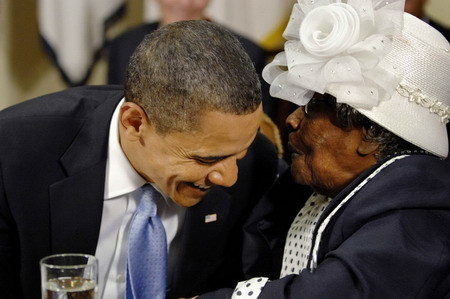
US President Barack Obama (L) smiles while talking with Mabel Harvey, 101, as he holds a conversation with a small group of African-American seniors and their grandchildren on the legacy of the civil rights movement, at the White House in Washington January 18, 2010. [Agencies]
|
WASHINGTON: President Barack Obama is using strikingly populist appeals to an angry electorate in Massachusetts' Senate race, a likely preview of his November strategy to curb steep Democratic Party losses in Congress.
In the short-term, Democrats hope the late-game pitch by Obama is enough to push Democrat Martha Coakley over the edge in her surprisingly competitive campaign for the Senate seat held by the late Ted Kennedy. Long term, Democrats hear Obama toying with a potential antidote to the angry populist rhetoric of hard-charging Republicans.
At stake in Tuesday's special election is the 60th Senate vote Democrats need to pass items on Obama's agenda, and, specifically, his sweeping health care overhaul plan that's nearing completion. In the fall, Democrats could lose big chunks of their majorities in the House of Representatives and Senate.
Republican Scott Brown, a little-known state senator, turned an expected blowout into an even race by casting himself as a pickup truck-driving man of the people. He tapped into animosity and resentment coursing through the public over Wall Street bailouts, budget-busting spending and big government.
It's the same bitter sentiment that the Republican party is trying to play to as it opposes Obama's agenda, the same state of mind that a year ago ignited the so-called "tea party" movement. Drawing from the 1773 tax revolt, it's a grassroots network of people fueled by antiestablishment frustrations over the economy, bailouts and the government's hand in health care.
Fighting populism with populism, Obama and his Democrats have attacked Brown for opposing the president's proposed bank bailout tax.
"When the chips are down, when the tough votes come, on all the fights that matter to middle-class families ... who is going to be on your side?," Obama asked Sunday, shedding his executive-like tie as he campaigned for a struggling Democratic candidate - and tested a midterm election message.
His answer: Democrats work for the little guys on Main Street while Republicans do the bidding of Wall Street.
If successful, Obama's us-against-them approach could serve as a roadmap for how the White House and the Democratic Party will defend seats in Congress and statehouses during the first midterm elections of Obama's presidency.
"That's a lot of what 2010 is going to be about," White House press secretary Robert Gibbs said. "People are going to have to decide whether the people they have in Washington are on the side of protecting the big banks, whether they're on the side of protecting the big oil companies, whether they're on the side of protecting insurance companies, or whether they're on the people's side."
He said the president will talk a lot about that between now and November.
In truth, Obama and fellow Democrats have little choice but to take the populist route, given how sour the mood is across the country in the year since the president and the Democratic-controlled Congress orchestrated an enormous federal intervention into the teetering US economy.
In his first weeks, Obama successfully pressed for a massive $787 billion measure intended to stimulate the economy, took over the flailing automotive industry, pushed forth the second installment of the Wall Street bailout that began under Bush, and started work on a complete overhaul of the country's health care system.
Now, just one year after Obama took the helm under the banner of hope, there is animosity and resentment over federal spending and government expansion, if not regret over electing the Democrat.
A new Washington Post-ABC News poll found that just 37 percent of people think the nation is on the right course, and a majority of Americans prefer smaller government and fewer services to larger government with more services. Obama's job performance rating hovers just above or below 50 percent, depending on the survey, and more than half of the country doesn't approve of how he's handled top domestic issues, including the economy, health care and the federal budget deficit.
While there are different types of populism, politicians often resort to the us-vs.-them style during periods of economic downturn to identify with the middle class. Most recently, Bill Clinton talked about putting people first in 1992, while Richard Nixon talked about the "silent majority" of middle America.
Given voter attitudes and Republicans' success in addressing them, Obama now is making a new pitch. And he's sounding far more populist than he ever did during his own campaign, when he left that role to Democrats John Edwards and Hillary Rodham Clinton.
[Jump to ]
Nation | Biz | Comment | World | Celebrity | Odds | Sports | Travel | Health
m.chinadaily.com.cn
To subscribe to China Daily, call 010-64918763 or email to circu@chinadaily.com.cn
主站蜘蛛池模板:
河曲县|
栾城县|
广安市|
东宁县|
尼勒克县|
夏邑县|
汝阳县|
新乡县|
会同县|
全南县|
福海县|
固原市|
淮滨县|
江北区|
嘉荫县|
昭苏县|
右玉县|
吉林省|
太湖县|
惠州市|
资溪县|
涿州市|
天长市|
土默特左旗|
九龙县|
新建县|
阳江市|
沅陵县|
沈阳市|
吉安县|
玛沁县|
常州市|
泗洪县|
隆子县|
高要市|
桂平市|
灵山县|
惠东县|
余江县|
林甸县|
天峨县|
长宁县|
轮台县|
西城区|
阳城县|
托克逊县|
治多县|
长春市|
聊城市|
河南省|
龙州县|
荥经县|
桃源县|
德清县|
额尔古纳市|
林口县|
繁峙县|
康乐县|
遂昌县|
竹溪县|
海城市|
阳朔县|
道真|
得荣县|
永顺县|
南木林县|
娄底市|
田东县|
咸阳市|
凭祥市|
新闻|
新蔡县|
丹巴县|
桐柏县|
莲花县|
汝南县|
鲁甸县|
江陵县|
平阴县|
富川|
于田县|
牡丹江市|