| To celebrate the 60th anniversary of the founding of the People's Republic of China, a photography exhibition entitled “The Joy Happy Family - the journey taken by China’s 56 Chinese ethnic groups in past years” was held recently in Beijing.
The photo show was jointly organized by the China Federation of Literary and Art Circles (CFLAC) and China Photographers Association with support by China Photo Press, Nationality Pictorial, China Pictorial, and Wangfujing Area Construction and Management Office.
The following photos, selected from the exhibition, are portraits of people from the?Shui ethnic group.
There are in China 406,902 Shuis, the majority of whom dwell on the upper reaches of the Longjiang and Duliu rivers that meander across plains and rolling land interspersed with vast expanses of forests in southern Guizhou Province. They live in compact communities in the Sandu Shui Autonomous County and in Libo, Dushan and other counties. Some Shuis have their homes in the northwestern part of the Guangxi Zhuang Autonomous Region.
The areas in which the Shuis live are a land of plenty, abounding in fish and rice. Wheat, rape, ramie are also grown besides a great variety of citrus and other fruits. The forests are a source of timber and medicinal herbs. The Duliu and other rivers teem with fish.
The Shui language belongs to the Zhuang-Dong branch of the Chinese-Tibetan language family. The Shuis used to have an archaic writing script. Some of their words were pictographs, while others resembled Chinese characters written upside down. Except for scores of these ancient words that are still used for religious purposes, the Shuis use Chinese in their daily lives.
The Shuis boast a treasure house of colorful oral literature and art. Their literature includes poetry, legends, fairy tales and fables. Among the various forms, poetry, which consists of long narrative poems and extemporaneous ballads, are generally considered the most prominent.
|
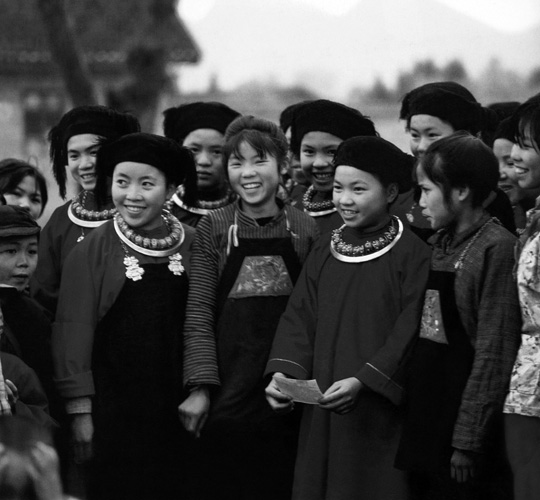
Young girls of the Shui ethnic minority group in Guizhou in 1998.(Photo by Zeng Xianyang) |
|
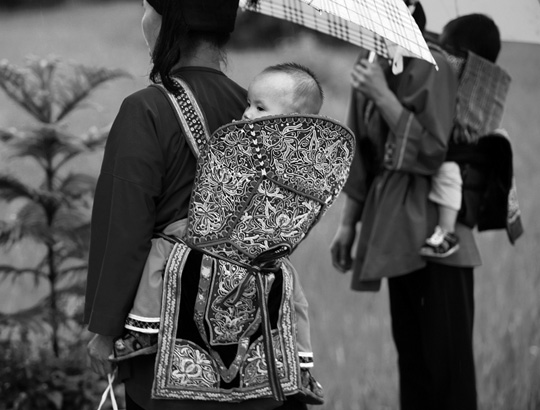
Infants of Shui ethnic group are carried in unique horsetail embroidered blankets, 2009. (Photo by Nationality Pictorial)
|
|
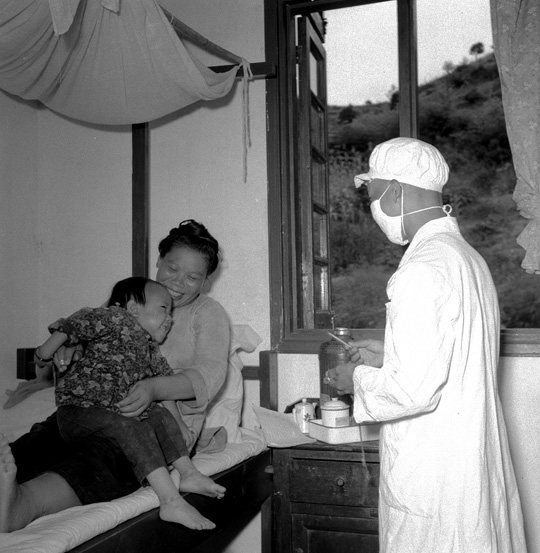
A Shui ethnic mother and her daughter receiving good medical care and treatment in the People’s Hospital in 1958. (Photo by Jin Chiyuan) |
|
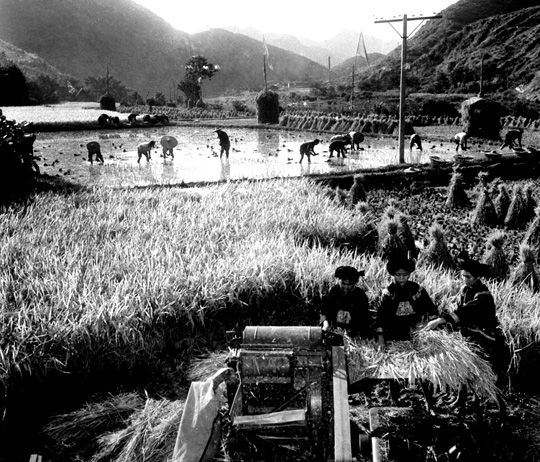
Members of Shui ethnic minority group in Guizhou province’s Shandu are harvesting their early season rice, and planting the late season rice seedlings in 1970. (Photo by China Pictorial)
|
|
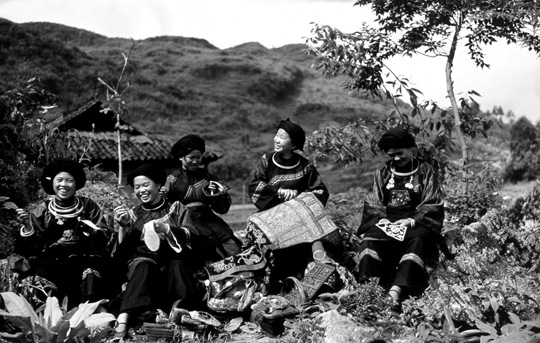
Shui women do needlework in the fields during a slow farming season, 1978. (Photo by Wang Fuzun) |
|
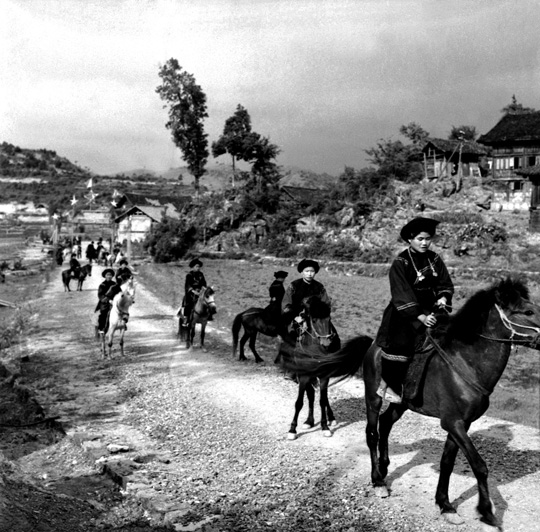
Shui ethnic female riders set out for the racetracks to take part in a riding competition. (Photo by Wang Fuzun) |
|
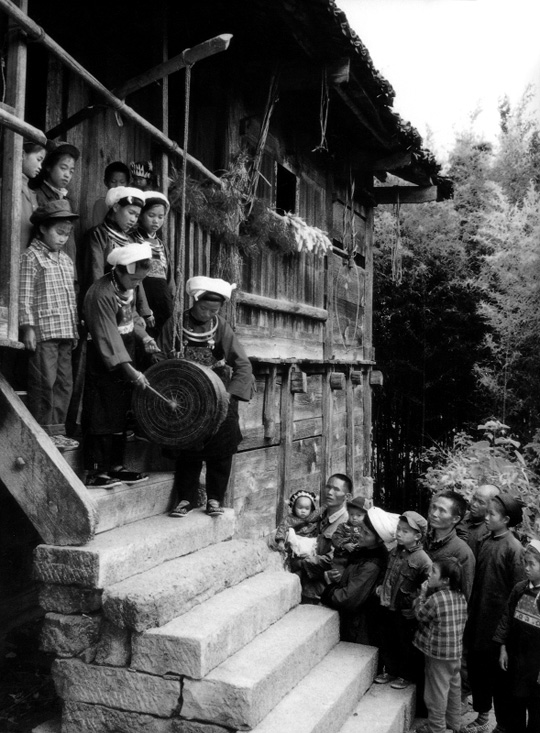
Shui ethnic villagers group playing the bronze drum to celebrate their traditional New Year Festival in 1982. (photo by Nationality Pictorial) | |