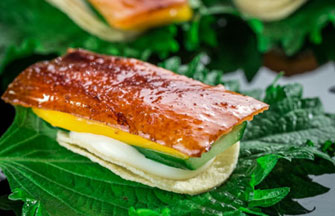
A duck dish to die for


Like ducks to water, visitors to Nanjing search out restaurants near the city's famous Confucius Temple for one thing and one thing only - Nanjing Saltwater Duck. Pauline D Loh explores this pride of the South
Despite its rather plebeian name, Nanjing Saltwater Duck holds its own effortlessly in the Chinese epicurean stakes. This tender, succulent bird is the pride of the city, and its cooking process is even more complicated than the preparation of its famous northern cousin, the Peking Duck.

Ducks have been favored for centuries by Chinese. Famous dishes include Nanjing Saltwater Duck and Peking Duck. Zhang Chunlei
It all starts with a stockpot. Nanjing chefs guard their master stocks with their lives, quite literally. Through wars and natural calamity, through changes of government and historical tremors, the precious pot is protected from the enemy without and the enemy within.
This is the white master stock passed down through generations, boiled and re-boiled as it captures the essence of a thousand ducks. This is the ambrosia that makes the Nanjing Saltwater Duck so rightly famous.
The first birds were reputedly slaughtered more than 1,000 years ago, when Nanjing was the "southern capital". Ingredients and processes were simpler then. But through the use of salt, a precious commodity, and spices brought back via the Silk Road, this delicate dish gained and maintained its popularity.
It was during the Qing Dynasty (1644-1911) that it became most popular. Eateries and teahouses sprang up around the vicinity of Nanjing's Confucius Temple, the site of the Imperial examinations. To whet and satiate the appetites of scholars and supporters, restaurants started specializing in this dish. To this day, many still do, although they now cater to mainly visitors and tourists.
The chefs who first cooked the duck were masters of flavor, scent and texture. Through a series of processes that involved macerating, blanching, cooling and then soaking, they created a bird that offers taut skin, with a thin layer of creamy fat that yields with a pleasant bite.
The duck meat is tender and redolent with the lingering musk of Sichuan peppercorns, licorice, star anise and cinnamon, evoking the fragrance of osmanthus flowers. This explains why the dish is also known by its nickname, guihua yazi, or Osmanthus Duck.
The starter stock is prepared with its own bundle of precious spices, carefully tied up in muslin, and brewed with the double alchemy of ginger and scallions.
The bird will be plunged into this briefly, and then allowed to slowly cook as meat and stock cool together, with the duck soaking up the flavors of the stock. In return, the duck will scent the stock with a meaty richness that will be transferred to the next bird cooked in the master stock.
Much time, patience and culinary devotion goes into the cooking of the perfect bird, but the result is a dish fit for the gods. It was certainly one fit for the emperors who demanded ducks as tribute from Nanjing.
This recipe I am sharing was a reward for an eight-hour interview conducted with an old-school Nanjing chef more than 20 years ago. The venerable chef has since passed on, but the recipe and the memory of his passion pay tribute to a Chinese culinary classic.
Nanjing Saltwater Duck

Ingredients:
1 large duck, at least 1.5 to 2 kg
Dry rub for duck:
100 g Sichuan peppercorns
100 g sea salt
Master Stock spice mix:
100 g old ginger, sliced
6 stalks spring onions, cut into 4 cm lengths
100 g rock sugar
100 g sea salt
5 star anise pods
5 cinnamon quills
3 tsp fennel
3 tsp cumin
3 tsp Sichuan peppercorns
1 whole dried Chinese citrus peel
50 g licorice root slices
5 liters water
Method:

1. Prepare the dry rub by toasting the Sichuan peppercorn and salt mixture over a gentle fire. When the mixture releases its fragrance, remove, cool and pound the mixture until the peppercorns are well incorporated with the salt.
2. Rub the mixture vigorously over the duck skin and pay equal attention to the body cavity. Make sure a generous layer of the salt/peppercorn mix covers the whole bird. Place the duck in a zip-lock bag and let it stand in the fridge for at least 48 hours, longer if possible.
3. While duck is marinating, prepare the white master stock.
4. Place all the dry spices in a muslin bag (or soup bag), tie tightly and add to a full pot of water (about 5 liters). Bring to a boil, add the salt, rock sugar, spring onion sections and the old ginger slices. Allow the master stock to return to a boil. Skim the surface to remove any scum.
5. After 5 minutes, reduce to a simmer for 30 to 45 minutes. Remove the ginger and spring onions. Keeping them in the stock will make it bitter.
6. On the day you want to cook the duck, rinse off the bird in COLD water and let it sit covered in iced water for an hour. This will remove the surface saltiness.
7. Bring a pot of water to the boil and plunge the duck in. Immediately remove and refresh in ice-cold water. This step tightens the skin, and removes any "flabbiness".

8. Heat up the white master stock and when this is boiling, ease the duck into the pot. Bring the stock back to boiling point, then IMMEDIATELY remove the whole pot from the stove. Set it down to cool, with the duck still in the pot.
9. After half an hour, drain the duck and allow to cool completely.
10. When the master stock has also cooled to room temperature, replace the duck and allow it to sit in the stock overnight.
11. To serve, remove the duck, drain well, and cut into serving pieces.
12. Return the master stock to the stove and bring it up to the boil. Turn off the heat, cool and store. The master stock gets better and better with every duck it cooks, so make sure you keep it safe in a corner of the fridge.