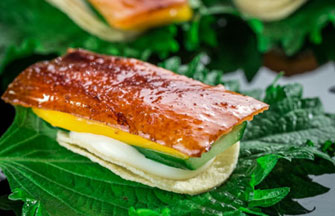
A purple wonder


You love it or hate it, sing its praises or avoid it like the plague. Pauline D Loh puts the eggplant on the cutting board
No other vegetable quite enjoys such a contentious reputation, but with more than 2 million hectares of land devoted to its cultivation worldwide, the eggplant must be doing something right.
Chefs all the way from the Mediterranean to Asian countries all have distinctive signature dishes made from the eggplant, also known as brinjal or aubergine.
In Italy, the eggplant is used often in casseroles, where it is braised long and slow with its distant relative, the tomato. Nearby, the Greeks have traditionally enjoyed eggplants, too, and one of their most famous dishes is the classic Moussaka, a highly seasoned layered eggplant and meat sauce combination, which, in turn, reflects the Arabic influence on the Mediterranean fringes.
Arabic cuisine also points us to yet another famous eggplant dish - baba ghanoush, the dip served in restaurants from Cyprus to Lebanon to Cairo, often called eggplant caviar for both its texture and popularity.
Across the Arabian Sea, on the Indian sub-continent, the eggplant is eaten with relish and used often in curries and dhals, the lentil broth that is served with Indian breads. South Asia is also the eggplant's place of origin, and its popularity westward is largely credited to early Arab traders who took it home with them.
Eastward, the eggplant slowly undergoes a metamorphosis, especially in the culinary approach. Where it was previously cooked to a pulp, countries east of the Indian Ocean treated the eggplant very differently. It was steamed, stir-fried and pickled, and mostly kept whole.
In Thailand and the Indo-Chinese countries, eggplants were added to curries. But the flavors became lighter, and cooks started to add a touch of vinegar to offset the eggplant's slight bitterness - witness the northern Thai curries and the deliciously popular tom yam-style cooking.
Southeast Asian countries, such as Malaysia and Indonesia, also use the eggplant as a vegetable staple, cooking it with a spice and chili condiment that often includes a touch of sourness.
But it is in China that the eggplant found its spiritual home. Chinese cooks took to this imported vegetable with gusto, and from Sichuan to Beijing, the eggplant became a star on both banquet and home dining tables.
It is steamed, roasted, braised, stir-fried, red-cooked and grilled. It is lightly seasoned, barely oiled and piled high with Sichuan peppers and Hunanese chili. In all its guises, the eggplant soaks up flavor like the natural sponge it is, and releases the oils after it is cooked through - a fact that only Chinese cooks seem to know and take advantage of.
In Japan, too, this humble little fruit-vegetable is so revered that it is reserved for the senior and most respected members of the family. New daughters-in-law yet to prove their worth would, traditionally, not get to even taste the dish.
Yet there are some who really dislike eating eggplant, describing it as tasteless and bitter, especially when there are large numbers of seeds present. The bitterness is caused by nicotine alkaloids present in the seeds, mainly due to the eggplant's close relationship to the tobacco plant.
Other diners object to the eggplant's sponge-like texture, while yet others say it is not a healthy option because it absorbs too much oil while cooking.
It is precisely because the eggplant needs care in preparation and cooking that makes it appealing to some.
To take care of the bitter alkaloids, salt provides the alchemy. Soaking in a saline solution neutralizes the bitter taste and prevents the vegetable from oxidizing and turning a dirty brown. Salting the cut vegetable also helps to block oil absorption.
But most important of all, searing the eggplant in very hot oil both seals the vegetable and caramelize the edges, releasing the natural sugars.
Once eggplant is cooked, its soft flesh becomes almost meat-like in taste and its sponge-like texture now works to its advantage by soaking up all the flavors.
No words can adequately describe this little purple wonder from the vegetable garden. Here are a few recipes for you to try, and you may well become a convert.