Snakes in a bowl


 |
|
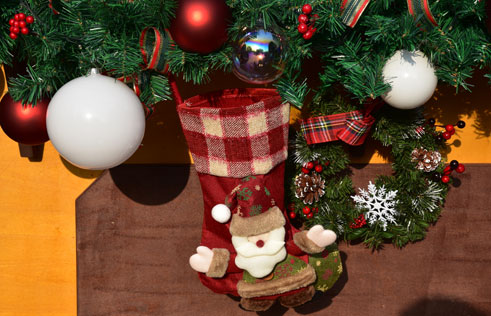
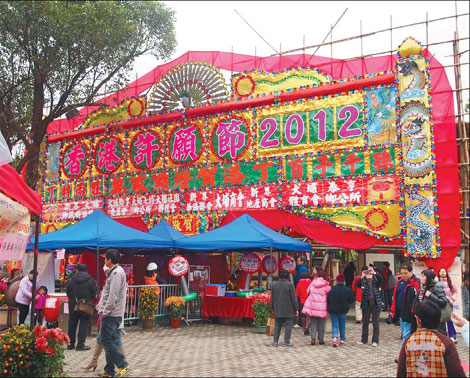
Lam Tsuen's Wishing Festival takes place during the Lunar New Year. |
 |
|
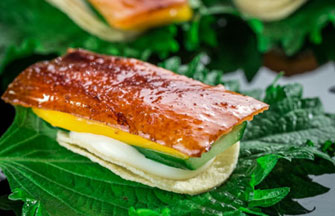
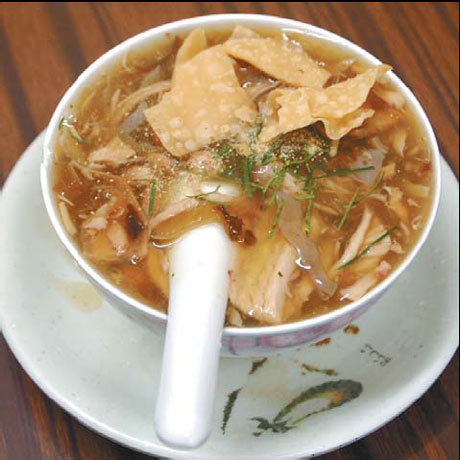
A bowl of tummy-warming snake broth chases away the winter chills. |
There are enough exotic foods in China to please the most bizarre-loving gourmets, but often, it is not the love of the unusual that drives the epicurean quest. Pauline D. Loh discovers the benefits of a bowl of warming snake soup in the cold Hong Kong winter.
It's a delicious bowl of thick broth, redolent with aged citrus peel, thick with strips of mushrooms, black fungus, bamboo shoots, shredded chicken meat and ... snake. After it is served at the table, eager connoisseurs can add a generous sprinkle of white pepper and a scatter of finely sliced lime leaves. Finally, there are thin and crispy cracker shards to sprinkle on top to complete the epicurean adventure.
This is snake soup, traditionally a winter warmer in Hong Kong and southern Chinese cities like Guangzhou and Shenzhen.
Here, they believe nothing chases away the chills more effectively than a bowl of snake. And this year, it was cold enough for snake soup vendors to do roaring business all over the county.
It was 10 C on the ground. To the three of us fresh off the plane from Beijing, it felt like spring had arrived compared to the -13 C at home. But we were too happy too soon.
The temperature dropped to 6 C and we were shivering again.
Hong Kong homes are not equipped with central heating and it was a wet winter in the south. The misty rain dampened our spirits slightly as we kept our scarves and bulky duffels on, but it did not squash our enthusiastic quest for all the delicious food Hong Kong had to offer.
I had only two days and six meals in Hong Kong - far too few by my reckoning and certainly not enough to accommodate all that I wanted to eat.
We had it all planned out. Every meal was to be a highlight of our trip, enjoyed with friends and relatives who we really do not see often enough.
This trip, we decided to stay within the New Territories, where our activities were happily concentrated along the Kowloon-Canton Railway (KCR) stations of Fanling, Tai Po Market and Shatin. There was no necessity to fight the crowds at Tsimshatsui or Central.
Tai Po Market used to be a sleepy station where only farmers congregated. These days, it is a bustling modern township, home to a media hub where major publication and broadcast corporations are housed.
Both Phoenix Cable Television and the South China Morning Post have relocated to Tai Po, and our friends who worked there had homes nearby.
The New Territories also hosts a Wishing Festival at Lam Tsuen, near Tai Wo KCR Station. An entire village turns into a fair ground and you can eat and play all day there.
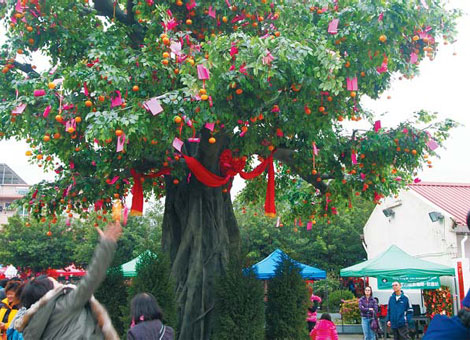
The attraction is an old banyan tree that is believed to grant your heart's desires. All you have to do is to toss your written request up the tree with the help of an orange, and if it catches, it comes true.
Savvy village elders also introduced an easier way to for dreamers. You float a lighted lotus lantern around a pond. If it comes full circle, your wish gets granted.
Neighboring Tai Po hides some surprises for visiting gourmets, including one of the best snake soups on the peninsula.
Snake King Hai is at Tai Po's main market street, and its neighbors are the vegetable stalls and butchers that residents patronize every morning.
It is only open during autumn and winter and closed during the warmer months, so many will make the trip out to the New Territories just to enjoy a meal of snake broth and fried glutinous rice.
We were there early, but the little restaurant with its five or six tables was already packed. Fortunately, we got a table at the back quickly and settled down to browse the menu. You could order a la carte or take advantage of the sets.
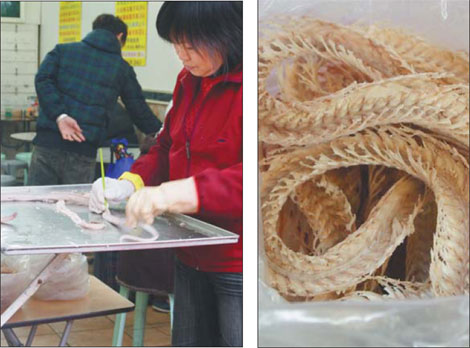
A bowl of thick broth costs HK$30 ($3.85) for a small portion and HK$48 for a large. If you eat in the restaurant, you get a complimentary bowl of clear snake soup brewed from pork and snake bones with Chinese angelica root added. The slightly bitter sweetness of the angelica advertises its healing properties.
You pay a little more for sets that include broth and either the sticky rice or a plate of mustard greens. The shop also sells turtle soup.
For all the fact that snakes are cold-blooded, in traditional Chinese pharmacology they are believed to warm the body when eaten in broth or soup. That is the reason why snake is so popular in winter.
For me, the medicinal benefits are purely secondary concerns. I think the broth is a masterly culinary creation that marries texture, taste and color in one steaming bowl.
I can't help but suspect the medicinal benefits were added to assuage the faint flickers of guilt over enjoying the snake so much.

My first bowl of snake broth was eaten when I was about 12, under the shade of a huge banyan tree near the Temple Street night market.
We perched on rickety wooden stools next to the vendor stirring his huge vat of snake soup, one eye open for anti-hawking enforcement officials on the prowl.
I remember that first bowl was garnished with white chrysanthemum petals, as well as lots of white pepper and the exciting anticipation that anytime now, we may have to run from the officers.
Snake King Hai doesn't offer diners chrysanthemum petals, but his bowl of broth is still a feast first for the eye, then for the mouth. And I'm pretty sure he pays his rent and is totally legal.
When did we start eating snakes?
I reckon it was when people were still so hungry they had to eat anything they could lay hands on, including hibernating snakes in winter that were somnambulistic and heavy with stored fat.
Somewhere along the way, even after the lean years were long gone, folks remembered how good snake tasted, and they stayed on the menu.
And they were wise enough to eat snakes only in winter, so the creatures had time to recover from the annual feast, procreate and grow fat once more for the next year. Besides, I heard the snakes we are eating now are raised in farms.
This year is the Year of the Dragon and the snake is known as the "little dragon". I guess with a little bit of little dragon in us all, we can face up to any challenges.
Besides, it's a delicious way to gear up against the winter chills. I wish they sold snake soup in Beijing. We really need it.
You may contact the writer at paulined@chinadaily.com.cn.
 |
|
Tossing up hopes to the Wishing Tree in Lam Tsuen has become an annual ritual. |
 |
|
After the meat is stripped off, the snake bones are made into nourishing bowls of herbal soup. Photos by Pauline D. Loh / China Daily |