Salt, more than just condiment


"I have eaten more salt in my life than you have eaten rice," an experienced Chinese elder would say so to a young man to emphasize his authority.
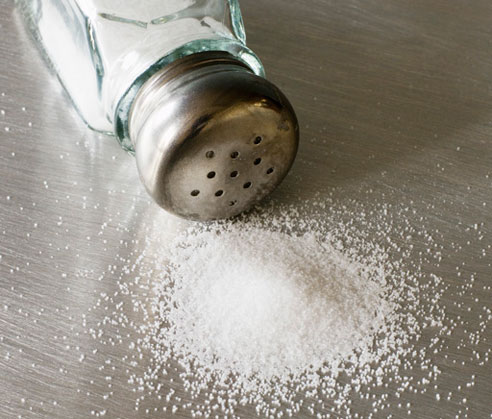
Salt is the most important flavor in any dish and no other seasonings can replace it. People in northern China especially prefer heavy, salty food. Salted pickles were eaten on dry and cold winter days when fresh vegetables were scarce and expensive. Today they are still a breakfast favorite.
There is extensive textual documentation on salt manufacture in ancient China, with reliable records going back to the fourth century BC. At that time, the salt industry was already well developed, and its origins certainly go back to much earlier times.
Salt is so critical for survival that in the past it was traded ounce for ounce for gold, and was also the cause of bitter wars. In the early Western Han Dynasty (206BC-AD24) a nephew of the emperor, who was enfeoffed with fertile land rich in salt, rebelled against the emperor. The revolt was suppressed and a law was made that monopolized the sale of salt ever since.
A Glimpse of Salt Manufacture
Traces of religious worship connected with salt production were consistently found in Sichuan, and there is a great deal of salt-related folklore. Many prosperous small towns developed in the vicinity of brine springs during recent centuries.
Zigong, the "salt capital" of Sichuan province, has a fascinating museum devoted to the history of the salt industry, and various parts of early factories are now preserved as industrial monuments.
The advanced brine well-drilling techniques developed here since circa AD 1000 are among the great achievements of the history of technology in China. The salt-making technique observed at the still-operating factory was virtually identical in its basic principles to that reflected by the earliest remaining depictions of saltworks from the second century AD.